Tin, Light, and the Window by Ronnie Glover
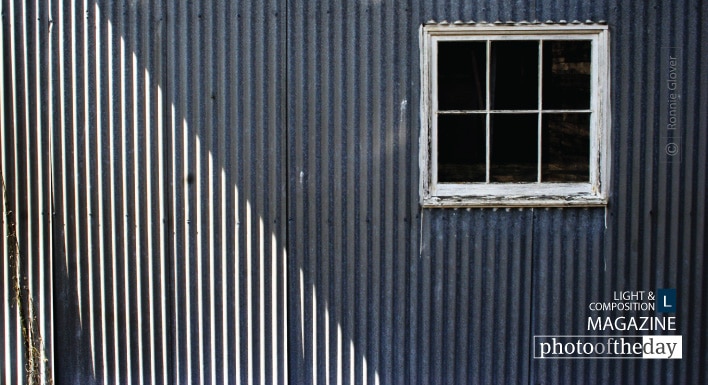
Captured along the historic docks of Gig Harbor, Washington, this photograph explores the interplay between industrial texture and natural illumination. The photographer was drawn to the stark contrast between the weathered tin surfaces and the deep, mysterious void of the window, using the angle of light to define the composition. By focusing on these subtle architectural details, the image transforms a mundane harbor scene into a compelling study of light and shadow. Its award-worthy quality lies in the photographer's ability to elevate simple, everyday materials into a sophisticated still life, demonstrating a keen eye for geometry and atmospheric mood.
Ronnie Glover
Based in Gig Harbor, Washington, Ronnie Glover is a dedicated photographer whose artistic journey was shaped by formal training at the Southeastern Center for the Arts in Atlanta. His extensive experience includes fourteen years of capturing the rugged beauty of Alaska, which profoundly influenced his appreciation for nature and cultural storytelling. Beyond his traditional work, Glover explores diverse genres ranging from sports to mobile photography, consistently aiming to foster a deeper global understanding through his lens. His work serves as an invitation for viewers to connect with the inspiration found in both the natural world and human physical pursuits.
Resonance Score Breakdown
Transparency Note: The resonance score (11.9/20) is calculated based on social engagement metrics collected before the award announcement.
Expert Photography Reviews · 8
The Weight of Weathered Things
I remember an old shed in my grandfather’s garden that smelled perpetually of damp earth and rusted iron. He used to say that things don’t really break; they just change their shape to better fit the passage of time.
Read the reflection →The Quiet Weight of Time
There is a particular grace in things that have been left to weather. We often rush to polish the surface, to hide the marks of the seasons, yet there is a profound honesty in the way a material accepts the sun and the rain.
Read the reflection →Reviews & Comments
Share your thoughts about this award-winning photograph. Your reviews contribute to the community engagement score.
1/250sec at f/11, ISO 400, 25mm. The choice of f/11 is the only logical path here. It renders the tin’s oxidation with clinical precision, ensuring the depth of field doesn’t collapse into soft focus. I’ve spent years looking at harbor shots that drift into blur, but this holds its ground. It’s sharp, cold, and technically sound. Honestly, the lack of chromatic aberration in those high-contrast edges is a relief. Glover got the math right.
The tin’s oxidation, a bruised, metallic violet, hums against the window’s hollow, ink-drenched obsidian, evoking the quiet, dusty stillness of a Morandi study. It’s a melancholic, salt-crusted palette that I find utterly devastating; one feels the damp, Pacific chill seeping through the frame. The light doesn’t merely illuminate these weathered surfaces, it caresses them with the pale, shivering luminescence of a winter dawn, turning industrial decay into a haunting, chromatic symphony of shadow and silver.
Most submissions I see in this category rely on heavy-handed texture to hide a lack of intent. Glover avoids that trap. By pinning the light against the rusted tin, he forces us to confront the decay of the harbor. It’s a quiet, brutal geometry. I’ve stared at this window for ten minutes, and I still feel a strange, cold ache in my chest. That’s why it endures. It doesn’t just show us rust; it shows us time.
The light hits that tin and the frame snaps into focus. It’s a tight, industrial close-up, the kind of shot that anchors a slow-burn thriller. I love how the window pulls the eye into a dark, silent void. It’s a perfect cut. The rhythm here is deliberate, heavy, and still. Glover didn’t need movement; he caught the exact second the harbor went quiet. I’d keep this frame in the edit every single time.
We look at these rusted sheets and we don’t see mere metal; we see a life lived against the salt air. Ronnie Glover listened to the docks before he clicked. That dark, hollow window feels like a secret kept by the harbor itself. It’s a portrait of absence, really. I find myself shivering, imagining the hands that touched this tin. It’s a photograph that asks to be returned to, because it holds a quiet, human ache.
The frame doesn’t collapse under the weight of the tin. It’s a rigid geometry. The window acts as a dark fulcrum, anchoring the chaotic texture of the metal against the vertical plane. I’m genuinely unsettled by how the light refuses to soften the edges. It’s clinical, precise, and entirely devoid of sentiment. The composition holds because the negative space is earned. It’s a rare instance where the architecture of the frame dictates the viewer’s pulse.
The tin holds the light. It doesn’t ask for attention. It just exists. I’ve spent minutes staring at that dark window, waiting for something to emerge. Nothing does. That’s the point. It’s a quiet breath in a loud world. I feel a sudden, sharp ache for this stillness. Nothing here is accidental. The empty corner is not empty. It’s a pause. A deep, heavy silence that finally lets me hear my own thoughts.
Before the eye identifies the tin, something in the chest tightens. It’s the cold, metallic weight of the harbor pressing against the ribs. The light doesn’t just hit the surface; it demands a physiological stillness, a held-breath moment. I’ve returned to this window three times today, and each time, the darkness inside feels heavier, more personal. It’s a quiet ache. I don’t just see the rust; I feel the salt air chilling my own skin.