Quiet Morning by Shirren Lim
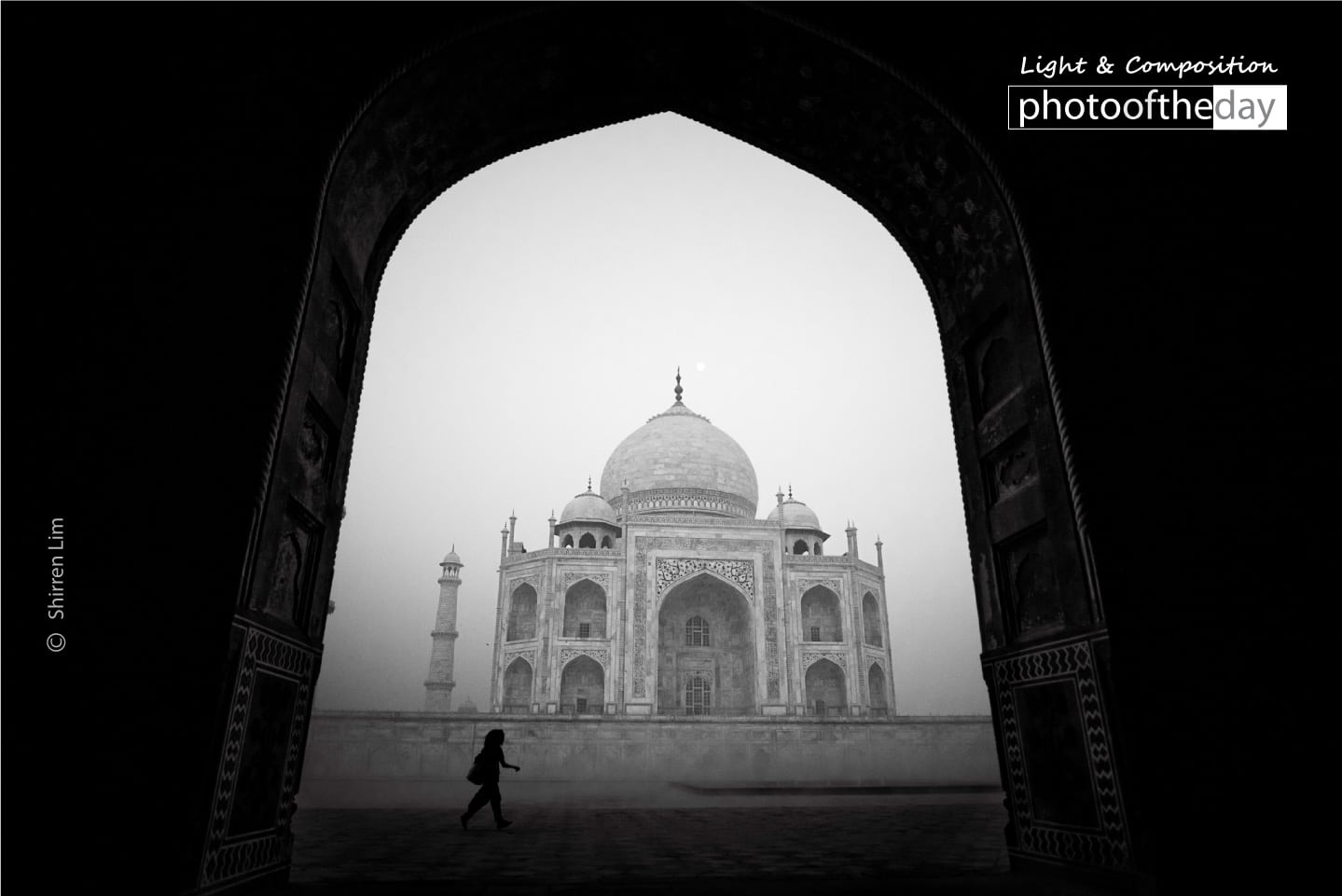
Captured during a misty, cold morning at the Taj Mahal, this photograph reflects the photographer's patient pursuit of the perfect frame. After scouting the compound, the photographer positioned herself within a grand doorway, waiting for the ideal subject to traverse the scene. The resulting image masterfully utilizes the ethereal, low-light conditions of Northern India to create a quiet, atmospheric narrative. This work is award-worthy for its deliberate composition and the way it transforms a world-renowned landmark into a deeply personal, intimate moment of human presence, showcasing a keen eye for light and storytelling.
Shirren Lim
Born in Penang Island, Malaysia, in 1970, Shirren Lim is a Jakarta-based photographer who discovered her true passion for the craft in 2009. She specializes in portraiture, striving to capture the raw sincerity and uncovered expressions of humanity with an intense, earthy aesthetic. Inspired by the evocative storytelling of Steve McCurry, Lim seeks to create powerful imagery that resonates globally, with her work having been featured in various international web and print publications.
Resonance Score Breakdown
Transparency Note: The resonance score (11.3/20) is calculated based on social engagement metrics collected before the award announcement.
Expert Photography Reviews · 3
The Architecture of Silence
In the early hours, before the world has fully committed to its noise, there is a particular quality to the air. It feels heavy, not with humidity, but with the weight of unsaid things.
Read the reflection →The Architecture of Silence
In the deep winter, the forest floor enters a state of profound dormancy, where the mycelial network beneath the soil slows its pulse to a near-halt, waiting for the precise shift in light that signals the end of the frost.
Read the reflection →Reviews & Comments
Share your thoughts about this award-winning photograph. Your reviews contribute to the community engagement score.
The frame functions as a rigid grid, anchored by the vertical axis of the doorway. Lim’s 20mm focal length forces a steep perspective, creating a powerful vanishing point that pulls the eye toward the distant silhouette. The negative space in the upper quadrant balances the dense, dark mass of the archway perfectly. It’s a precise spatial equation. I’m genuinely moved by how the geometry isolates the figure, turning a chaotic landmark into a singular, quiet vector of human existence.
Framing the Taj Mahal through a dark, arched aperture echoes the calculated geometry of Frith’s 19th-century albumen prints, yet Lim’s 20mm perspective feels startlingly modern. It’s a delicate balance; she avoids the postcard cliché by embracing the mist’s reductive quality. I’ve spent decades studying these monuments, but the way she isolates that singular figure against the void genuinely took my breath away. It’s a quiet, haunting conversation with the past that finally feels entirely her own.
Mist clings to the stone. A single figure walks through the archway. It’s a heavy, cold silence. I find myself holding my breath, waiting for the sound of footsteps that never arrive. The vast, grey void of the courtyard isn’t just space; it’s a weight. Nothing here is accidental. The empty corner is not empty. It’s a relief to see such restraint in a place so often crowded with noise. I’ve finally found peace.