Aged by Minh Nghia Le
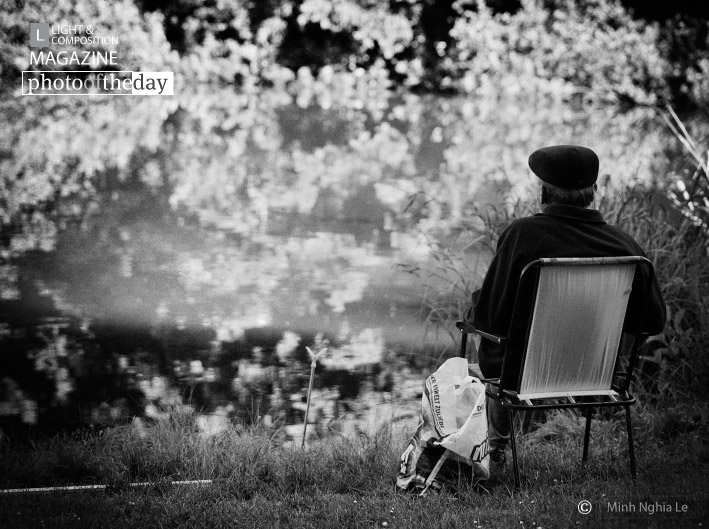
Captured in Leverkusen, Germany, in 2010, this evocative image titled 'Aged' showcases a masterful command of light and texture. By utilizing a wide aperture of f/3 and a fast shutter speed of 1/640s, the photographer isolates the subject, emphasizing the intricate details that define the passage of time. The decision to focus on the interplay of light against the subject's weathered features creates a profound sense of narrative depth. This photograph is award-worthy for its ability to transform a fleeting moment into a timeless study of character, demonstrating a keen eye for the subtle beauty found in the aging process.
Minh Nghia Le
Based in Singapore, Minh Nghia Le is a dedicated photographer who pursues his craft as a profound creative passion alongside his professional career. Alongside his wife and fellow photographer, Mai Phuong Duong, he explores the world through a unique lens, seeking to share his personal perspective with a global audience. His work is characterized by a commitment to authentic storytelling and a desire to capture the essence of the human experience, reflecting a deep-seated enthusiasm for the art of photography.
Resonance Score Breakdown
Transparency Note: The resonance score (12.5/20) is calculated based on social engagement metrics collected before the award announcement.
Expert Photography Reviews · 6
The Map of Salt and Soil
The smell of dry earth after a long drought is the smell of a secret kept too long. It is sharp, metallic, and clings to the back of the throat like dust on a summer road.
Read the reflection →The Cartography of Time
In the study of geology, we are taught that the earth keeps a ledger. Every layer of sediment, every fracture in the bedrock, acts as a silent witness to eras that have long since folded into the crust.
Read the reflection →Reviews & Comments
Share your thoughts about this award-winning photograph. Your reviews contribute to the community engagement score.
Shadows here don’t merely cling to the skin; they excavate the history buried beneath it. In Leverkusen, Le has found the architecture of decay. It’s not just aging; it’s the slow, inevitable surrender to the dark. I’ve stared at these deep, cavernous lines until my own pulse felt heavy. When light retreats this far, it doesn’t reveal character—it demands a confession. It’s a brutal, necessary silence that makes me feel entirely, uncomfortably mortal.
Stripped of pigment, one finds the silver-grey of a Morandi still life, where the absence of colour isn’t a void, but a hushed, monochromatic symphony of light. It’s haunting how the skin’s topography mimics the chalky, weathered plaster of a crumbling Venetian wall. I’m breathless, truly, watching the shadows pool like ink in those deep, etched creases; it’s a tactile, mournful elegance that makes me yearn for the warmth of a candlelit Vermeer.
The frame’s geometry hinges on the sharp recession of the subject’s facial topography. It’s a rigid architecture of light and shadow. The shallow depth of field isolates the texture, forcing the eye to navigate the skin’s topography without distraction. It’s clinical, yet the way the light catches the brow creates a spatial tension I find genuinely unsettling. The composition doesn’t offer comfort; it demands a cold, structural reckoning with the inevitable decay of the form.
Leverkusen isn’t exactly a place one goes for the scenery, which makes this portrait all the more curious. The f/3 aperture suggests a photographer who didn’t want the background interfering with the subject’s history. It’s a sharp, honest study. I’ve spent enough hours shivering in industrial corners to know when someone’s actually sat with their subject until the light softened. It’s a quiet, earned piece of work. One suspects they didn’t rush this one.
There’s a quiet ache in these lines, a geography of skin that mirrors the earth itself. I’ve spent enough dawns waiting for the light to soften to recognize that stillness. He didn’t rush this. He stood there, watching how the shadows settled into the creases, listening to the silence of a life lived. It’s haunting, really. When I look at those weathered textures, I feel a sudden, sharp longing for the patience he clearly possessed.
Of the thousands of portraits I’ve reviewed, most rely on cheap sentiment to mimic depth. What separates this from the pack is the brutal honesty in the skin’s topography. The f/3 aperture doesn’t just blur the background; it forces a confrontation with every wrinkle. It’s rare to see such unvarnished humanity. Honestly, it makes me feel a bit fragile looking at it. That’s why it’ll still matter in thirty years—it doesn’t hide the inevitable.
@Gray: thanks a lot :)
Stunning shot!