Pelicans Resting by Rabih Madi
Captured during a serene June vacation at Eagle Beach, this photograph highlights a quiet moment of stillness amidst the rhythmic activity of the Caribbean coast. The photographer observed a group of pelicans perched upon their respective poles, having recently finished their energetic dives for fish. By choosing a wide 24mm focal length and a crisp f/8 aperture, the image captures the birds in sharp detail against the expansive backdrop of the sea. This composition is award-worthy for its ability to transform a simple wildlife observation into a balanced, peaceful study of nature, showcasing the photographer's keen eye for timing and environmental harmony.
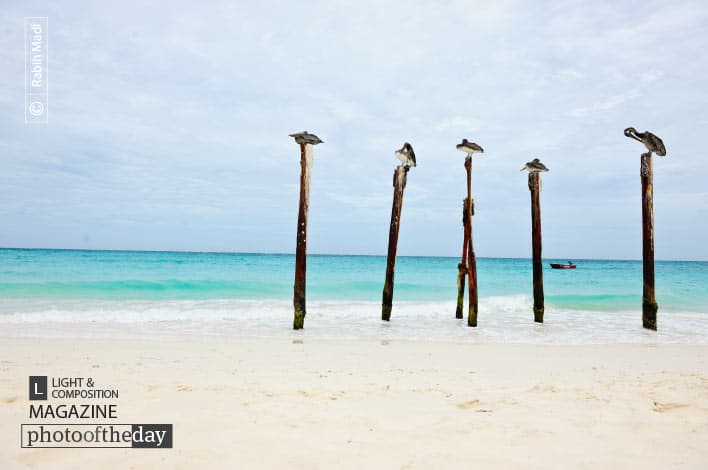
Exposure 1/400sec @ f/8.0 | ISO 100 | Focal Length 24mm
Rabih Madi
Based in Laval, Quebec, Rabih Madi is a dedicated travel and photography enthusiast with a diverse portfolio spanning weddings, macro, food, and corporate work. Since acquiring his first DSLR in 2009, he has rapidly advanced his technical proficiency and professional reach, driven by a lifelong ambition to document the beauty of the world. His work is characterized by a versatile approach and a persistent drive to showcase his creative talent through international photography platforms.
Resonance Score Breakdown
Transparency Note: The resonance score (13.1/20) is calculated based on social engagement metrics collected before the award announcement.
Expert Photography Reviews · 4
The Architecture of Waiting
To wait is to practice a kind of quiet architecture. We often imagine that life happens only in the plunge, in the frantic dive toward the silver flash beneath the surface, but there is a profound geometry to the pause that follows.
Read the reflection →The Salt on the Skin
The air near the water has a specific weight, a damp heaviness that clings to the back of your throat like fine, invisible sand.
Read the reflection →Reviews & Comments
Share your thoughts about this award-winning photograph. Your reviews contribute to the community engagement score.
It’s a pleasant enough scene, though one suspects the photographer simply wandered down from a sun lounger with a cold drink in hand. The composition is tidy, but the pelicans look like they’re waiting for a bus rather than a tide. I’ve spent enough mornings shivering in salt spray to know the difference between a lucky snap and a hard-won frame. It’s pretty, certainly, but it hasn’t cost the photographer a drop of sweat.
Poles rise from the Caribbean. Pelicans occupy their stations. The horizon line doesn’t divide; it anchors. I’ve spent minutes watching the water between them. It’s the weight of the air that catches me. A stillness I haven’t felt in years. Nothing here is accidental. The empty corner is not empty. It’s a breath held. Madi understands that to see the birds, one must first respect the space they don’t occupy. It’s quiet. Finally.
Most wildlife shots are just snapshots of feathers. What separates this from the thousands of mediocre bird photos I’ve reviewed is the deliberate geometry of those poles. By using a 24mm lens, Madi forces the viewer into the water with them. It’s a quiet, rhythmic stillness that I find deeply grounding. In thirty years, this won’t be a dated travel photo; it’ll be a rare, honest record of a moment where nature simply paused.
The horizontal alignment of the pilings establishes a rigid grid, anchoring the pelicans against the vast, featureless horizon. It’s a disciplined geometry. The negative space above the birds creates a necessary vacuum, preventing the frame from collapsing into mere wildlife documentation. I’m genuinely unsettled by how the repetition of the poles forces the eye into a rhythmic, almost mechanical scan. It doesn’t rely on sentiment. The structural tension holds the composition together with cold, precise efficiency.