Yummy Fish Cakes by Diep Tran
Diep Tran captures the essence of a classic afternoon snack in this evocative food photograph. Drawing inspiration from a cherished family recipe, the image highlights the intricate textures of whitebait fish cakes, enhanced by a vibrant blend of fresh dill, coriander, and onion. By employing a macro lens, the photographer emphasizes the dish's tactile qualities, transforming a simple culinary preparation into a visually compelling subject. The composition succeeds by balancing the warmth of home-cooked tradition with a professional aesthetic, making the final presentation both appetizing and artistically refined.
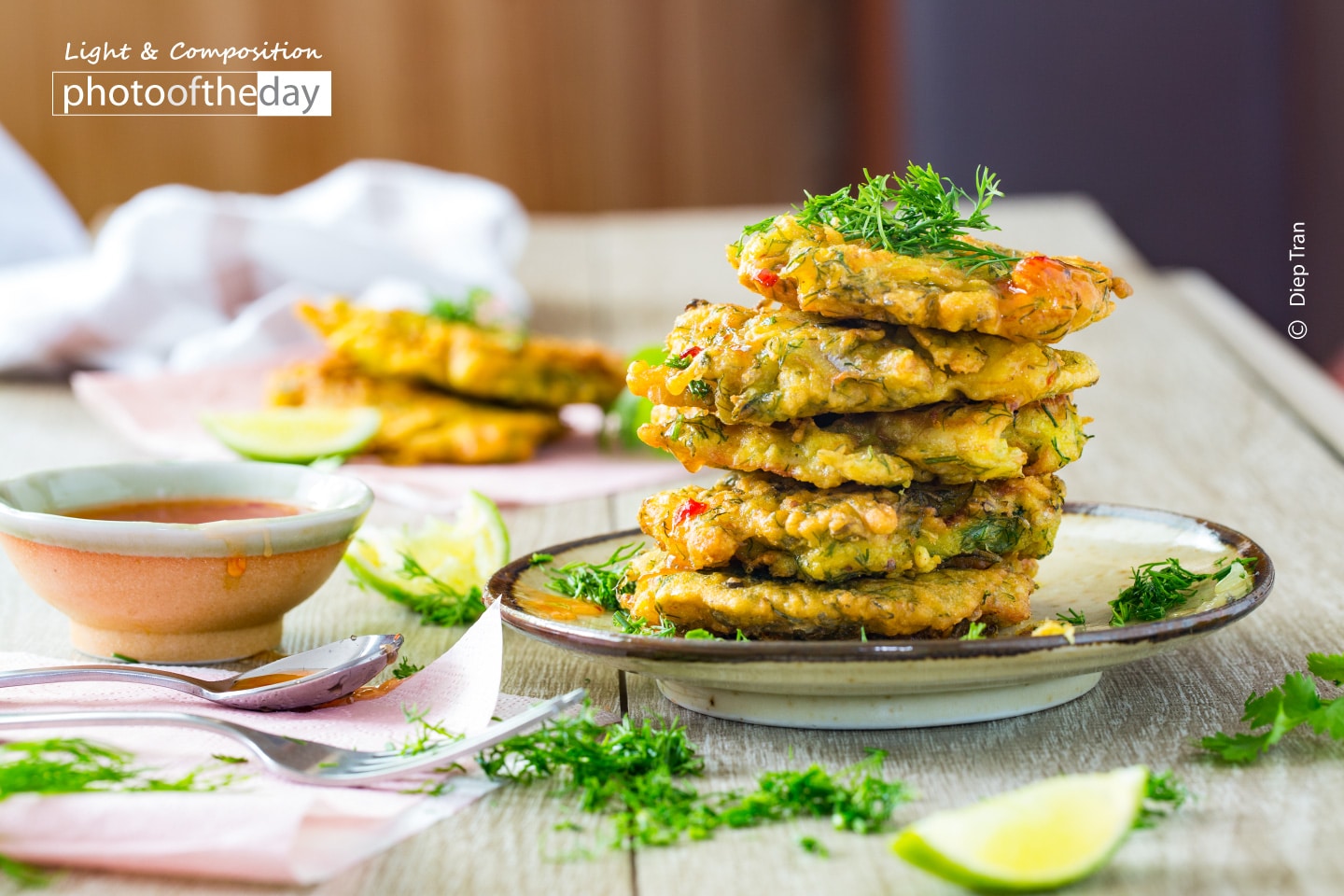
Diep Tran
Born in Vietnam and currently based in Brisbane, Australia, Diep Tran finds beauty in the simplicity of domestic life and the human experience. Her photographic practice is deeply influenced by a Buddhist upbringing, which fosters a profound appreciation for the natural and man-made world. Through her travels and observations of diverse cultures, she has developed a keen interest in the interplay of light and shadow, consistently striving to translate her global perspective into evocative, high-quality imagery.
Resonance Score Breakdown
Transparency Note: The resonance score (11.4/20) is calculated based on social engagement metrics collected before the award announcement.
Expert Photography Reviews · 8
The Alchemy of the Hearth
We often forget that the kitchen is a laboratory of memory.
Read the reflection →The Weight of Hunger
We eat to fill the hollow spaces. Not just the stomach, but the quiet that settles in the house when the work is done and the light begins to fail. There is a specific memory in the scent of herbs crushed against a board, a sharpness that cuts through the fatigue of a long day.
Read the reflection →Reviews & Comments
Share your thoughts about this award-winning photograph. Your reviews contribute to the community engagement score.
The focal plane here is razor-thin, isolating the serrated edges of the dill against the porous, fried surface of the fish cake. At this magnification, the diffraction limit hasn’t softened the crisp, golden crust. I’m genuinely moved by how the lens resolves the microscopic oil droplets; they’re suspended like tiny, glowing amber beads. It’s a clinical dissection of texture that makes me hungry. You’ve captured the physics of flavor with such startling, crystalline precision.
Macro lenses often strip away the context of a meal, turning heritage into mere texture. Why does this Nha Trang street snack feel so sanitized, so clinical? The dill and coriander look like stage props rather than ingredients from a local market. It’s technically sharp, sure, but I’m left hungry for the actual heat and chaos of the stall. Does this framing honor the cook, or does it just commodify their labor for a glossy feed?
The rough, weathered grain of the wooden table anchors these fish cakes, grounding the dish in a tactile, lived-in reality. I’m struck by how the light catches the crisp, fried edges, echoing the warmth of a Nha Trang kitchen. It’s not just food; it’s a portrait of a place. The vibrant herbs don’t just garnish; they tell a story of local soil. I’d love to pull up a chair and join this afternoon ritual.
The oil’s shimmer on these fish cakes is a static mess. In sports, you’re looking for the apex of tension; here, the composition is just resting. I’m craving the kinetic energy of the fry—the exact millisecond the batter hits the heat and curls. Instead, it’s all settled. It’s technically sharp, sure, but it’s dead air. I’ve spent my life chasing the perfect frame, and this one just doesn’t have the pulse I need.
You’ve captured the steam and the sharp scent of dill so well I can almost taste the Nha Trang air. It’s not just a plate of fish cakes; it’s a memory of a kitchen. I’ve spent enough time in Vietnam to know that specific, humble warmth. You didn’t just photograph food; you honored the hands that fried it. There’s something honest happening here. You waited for the right light, and I’m genuinely hungry now.
Whitebait are fragile, silver flashes in the surf, not merely ingredients for a snack. Seeing them fried into cakes feels like a gut punch after years spent tracking their movements in the wild. While the macro detail is sharp, it’s an extraction of life, not a celebration of it. I’d trade all this culinary polish for a single, honest shot of these fish schooling in the blue. It’s technically proficient, but ethically hollow.
The macro lens here evokes the clinical precision of Blossfeldt’s plant studies, yet it’s applied to the humble Nha Trang fish cake. It’s a curious tension. While the lighting lacks the dramatic chiaroscuro of a Dutch still life, the textural focus on the dill and coriander feels refreshingly tactile. I’ve spent decades cataloging such domesticity, but the way the oil glistens against the whitebait—it actually makes me hungry. That’s a rare, visceral victory for food photography.
Seeing these whitebait cakes, I’m struck by the irony of their terrestrial presentation. Below the surface, these tiny fish are shimmering, translucent ghosts, their bodies perfectly adapted to scatter light. Here, they’ve been transformed by heat and oil. It’s a strange, jarring shift. I’ve spent my life fighting the ocean’s refractive index to capture these creatures alive; seeing them plated like this makes me hungry, yet I can’t help but miss their fluid, silver grace.