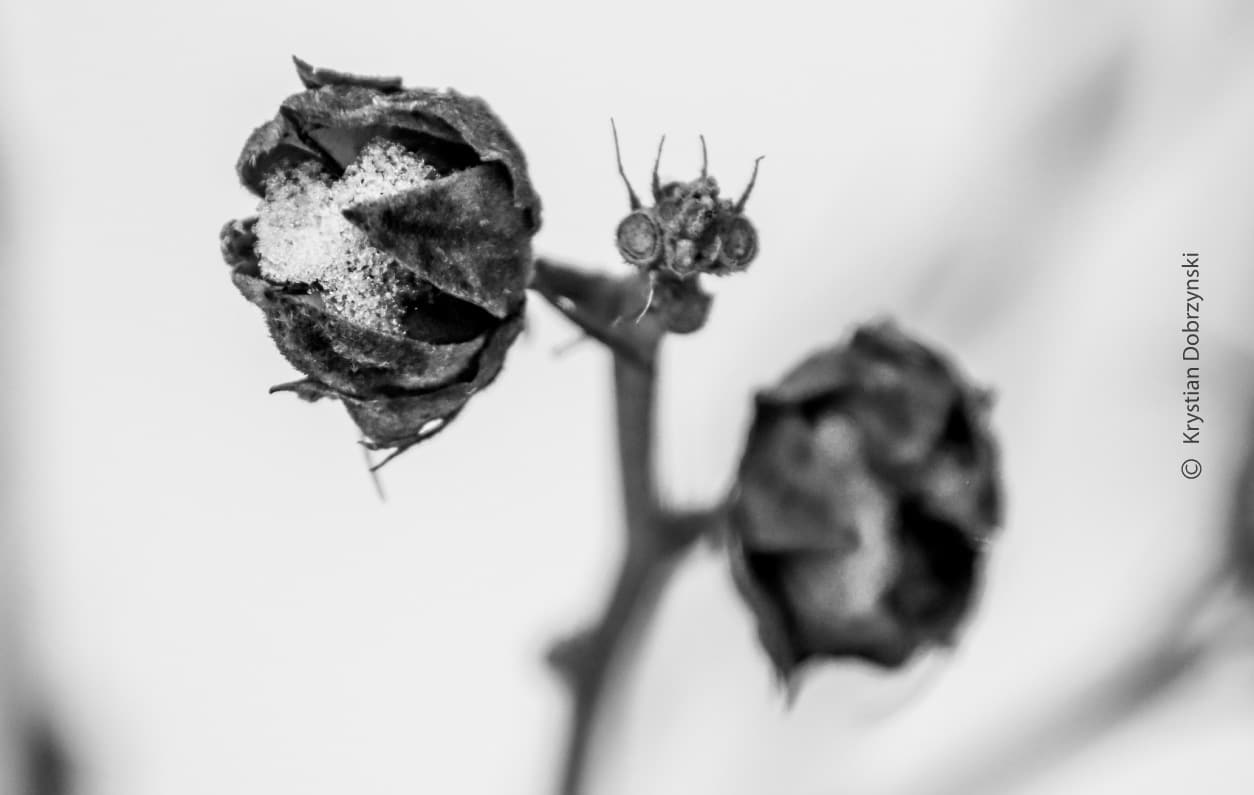
Winter Alien by KD
Captured on a frigid, overcast winter day, this macro study explores the delicate transformation of nature within a garden setting. The photographer focused on the remnants of a hibiscus flower, crystallized by the season's first frost and a dusting of snow. This intimate perspective reveals an otherworldly structure, prompting the title 'Winter Alien' as the photographer observed the plant's metamorphosis into a mysterious, extraterrestrial-like form. The image is award-worthy for its ability to elevate a simple, overlooked garden detail into a compelling, abstract narrative through precise focus and a keen eye for the quiet beauty of winter decay.
KD
Based in Lisbon, Portugal, for the past several years, KD developed a profound passion for photography while exploring the local landscape with camera in hand. His work is defined by a deep appreciation for the natural world and the vibrant energy of street art. Through his lens, he seeks to document the subtle shifts in his environment, blending technical precision with a creative curiosity that captures the essence of his surroundings.
Resonance Score Breakdown
Transparency Note: The resonance score (10.6/20) is calculated based on social engagement metrics collected before the award announcement.
Expert Photography Reviews · 7
The Architecture of Silence
We often mistake the end of a season for a disappearance, yet the earth is merely folding its secrets inward. When the warmth retreats, the world does not simply vanish; it hardens into a different language.
Read the reflection →The Architecture of Cold
It is 3:14 am. The house has settled into a silence so heavy it feels like a physical weight against my ribs. In the dark, the things we leave behind don’t just vanish; they change.
Read the reflection →Reviews & Comments
Share your thoughts about this award-winning photograph. Your reviews contribute to the community engagement score.
There’s a cold, crystalline stillness here that I find haunting. It’s a beautiful study of decay, yet I can’t help but miss the pulse of a living subject. I’ve spent my life looking for the flicker of a soul behind the eyes, and while this hibiscus is technically precise, it’s a silent, distant thing. It doesn’t look back at me. I crave that human connection, that shared breath, even in the frost.
Before the eye identifies the hibiscus, a sudden chill settles in the chest. It’s the physiological shock of the frost, that crystalline stillness that makes me hold my breath. When I return to it, the decay feels less like death and more like a slow, alien expansion. I’ve found myself shivering in the middle of July just thinking about those jagged, frozen edges. It’s a quiet, haunting intrusion that doesn’t leave the nervous system.
Frost doesn’t settle on a dying hibiscus with such precise, crystalline intent for the casual passerby. One suspects KD spent a shivering morning waiting for the light to catch those frozen edges just so. It’s a cold, lonely business, and I’ve spent enough hours in similar misery to appreciate the commitment here. The composition is sharp, almost clinical. It’s an earned piece of work, and frankly, it makes my own fingers ache just looking at it.
The hibiscus structure anchors the frame with cold, geometric precision. Frost-laden edges create a sharp, jagged periphery that demands total attention. It’s a rigid architecture of decay. The negative space doesn’t merely surround; it isolates the subject into a singular, crystalline fulcrum. I’ve rarely seen such brutal clarity in a macro study. The composition holds because it refuses to soften. It’s a calculated, icy triumph of form over the inevitable entropy of the season.
We look at this hibiscus and we don’t see a flower; we see a traveler from a distant, frozen world. KD listened to the silence of the Warsaw frost, waiting until the petals surrendered their softness to become something crystalline and strange. It’s a portrait of decay that feels alive. I’ve stared at these icy veins for an hour, and I’m still shivering. It’s a photograph that asks to be returned to, again and again.
Frost turns a hibiscus into a jagged, extraterrestrial relic, yet I’m unsettled by the title. Why must we label the natural decay of a Warsaw garden as alien? It’s a beautiful macro study, sure, but it feels like we’re distancing ourselves from the earth’s own cycles. Does calling it an alien make it easier to ignore the cold reality of the season? I find the icy, sharp edges haunting, but I wish we’d stop exoticizing our own backyard.
Frost clings to the hibiscus. It’s a brittle, quiet geometry. I’ve spent minutes staring at the crystalline edges, feeling the cold seep into my own skin. The background doesn’t exist. It’s just a void, holding the subject in suspension. Nothing here is accidental. The empty corner is not empty. It’s the breath between heartbeats. I find myself holding my own, afraid to disturb the stillness. It’s a rare, sharp silence. I love it.