Watching You by Diep Tran
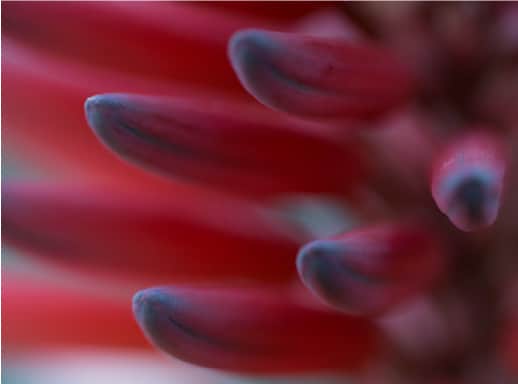
While exploring the Aloe section of the Mt. Coot-tha Botanic Gardens, the photographer was struck by the vibrant, oversized pink blossoms. Drawn to the unique petal buds, she captured a macro perspective that imbues the flora with a sense of sentience, as if the plants themselves were observing the photographer. By utilizing a 100mm lens, she isolated the intricate textures and soft hues of the flowers against a blurred background. This image is award-worthy for its intimate perspective and the evocative, almost human quality it attributes to the natural world, transforming a simple botanical study into a compelling narrative.
Diep Tran
Born in Viet Nam and currently based in Brisbane, Australia, Diep Tran finds inspiration in the beauty of everyday objects and the human connections found in her travels. Her photographic practice is deeply influenced by a Buddhist upbringing, which fosters a profound appreciation for the quality of life in both natural and man-made environments. By focusing on the interplay of light and shadow, Tran seeks to elevate simple subjects into artistic expressions that reflect her global perspective and evolving creative vision.
Resonance Score Breakdown
Transparency Note: The resonance score (12.0/20) is calculated based on social engagement metrics collected before the award announcement.
Expert Photography Reviews · 4
The Pulse Beneath the Skin
There is a specific, waxy coolness to the underside of a leaf that stays with you long after you have walked away from the garden. It is a damp, velvet resistance against the fingertip, a secret language of moisture and slow-moving sap.
Read the reflection →The Silent Witness
Does the world look back at us with the same curiosity we cast upon it? We walk through forests and gardens, convinced that we are the observers, the ones who assign meaning to the shapes and colors of the earth.
Read the reflection →Reviews & Comments
Share your thoughts about this award-winning photograph. Your reviews contribute to the community engagement score.
Karl Blossfeldt’s systematic botanical studies sought the architectural geometry of nature, but Tran’s macro work feels altogether more unsettling. By isolating these Aloe buds at f/4, she’s bypassed the clinical detachment of the New Objectivity movement. It’s a strange, anthropomorphic gaze that caught me off guard; I felt truly watched. While the 100mm compression echoes the intimacy of Imogen Cunningham’s flora, Tran’s focus on sentience adds a modern, almost eerie psychological layer I haven’t encountered before.
The light here isn’t just illumination; it’s a conversation. Diep waited until the garden’s pulse slowed, catching these Aloe buds in a soft, diffused glow that makes them feel alive. I’ve spent enough hours in the dirt to know that look—the plants are truly watching back. It’s unsettling, really, how they hold your gaze. She didn’t rush the moment. She simply listened until the flowers decided it was time to be seen.
The obsession with macro sharpness here feels a bit safe, doesn’t it? Tran captures these Aloe buds with clinical precision, yet I’m left craving a disruption. Why resolve every petal so perfectly? I’d have preferred a deliberate motion blur to evoke that sentience she describes. It’s technically sound, sure, but it lacks the visceral, painterly tension of a Sugimoto. I’m bored by the clarity; I want to see what happens when the lens finally lets go.
Those bruised, cyclamen-pink petals possess a fleshy, almost Vermeer-like luminosity that’s frankly unsettling. One finds oneself caught in a chromatic dialogue where the soft, desaturated greens of the background recede like a Morandi still life, leaving the foreground to pulse with a sentient, humid heat. It’s a visceral, unsettling encounter; I’ve felt my own pulse quicken under that botanical gaze, as if the colour itself were breathing, watching, and waiting for me to finally look away.