Wah Taj by Dipsankar Saha
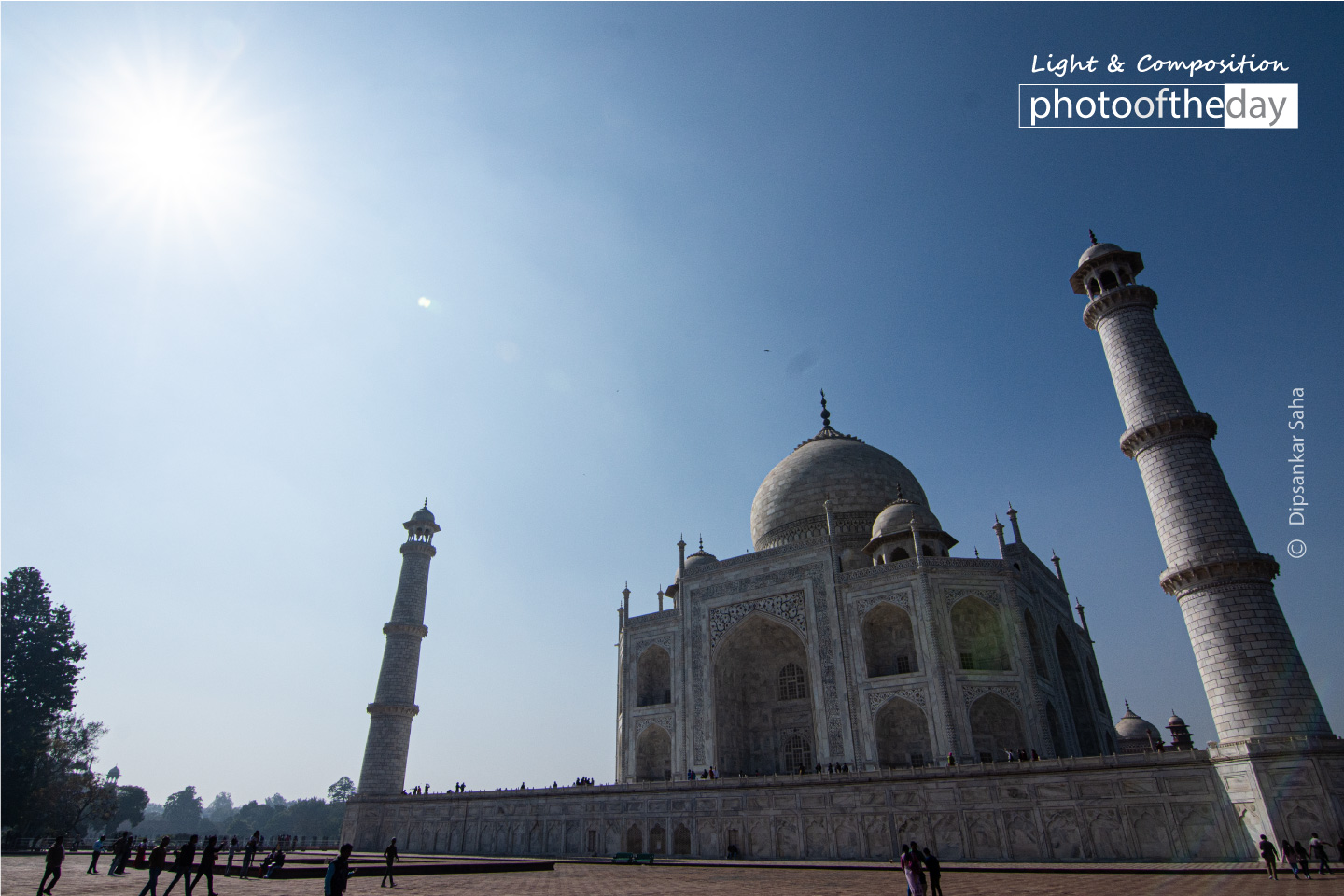
Captured during a second visit to the iconic Taj Mahal, this photograph highlights the architectural brilliance of the Mughal masterpiece under a dramatic sun. The photographer was struck by the interplay of light as the sun’s rays illuminated the structure, causing the white marble to glow with renewed intensity. By choosing a wide-angle perspective, the photographer successfully framed the monument against the vast sky, emphasizing its grandeur. This image is award-worthy for its masterful handling of natural light and its ability to transform a globally recognized landmark into a fresh, luminous vision that captures the timeless spirit of the site.
Dipsankar Saha
Born and based in the vibrant city of Kolkata, India, Dipsankar Saha is a dedicated explorer with a passion for discovering new landscapes and cultures. His photography serves as a profound medium for deepening his experiences and engaging with the world around him. Through his extensive travels, Saha seeks to capture the essence of diverse environments, using his lens to translate his adventurous spirit and cultural curiosity into compelling visual narratives for an international audience.
Resonance Score Breakdown
Transparency Note: The resonance score (4.1/20) is calculated based on social engagement metrics collected before the award announcement.
Expert Photography Reviews · 3
The Weight of White
There is a specific, blinding quality to light when it hits a surface that refuses to absorb it.
Read the reflection →The Weight of Silence
I spent this morning trying to fix a loose hinge on my kitchen cabinet. It was a small, annoying task that I had been putting off for weeks. I kept turning the screwdriver, but the wood was stripped and nothing would hold.
Read the reflection →Reviews & Comments
Share your thoughts about this award-winning photograph. Your reviews contribute to the community engagement score.
1/2000sec at f/11, ISO 200, 11mm. Stopping down to f/11 was the right call to maximize the D5200’s sensor resolution across that wide frame. It’s a sharp, clinical execution. I’ve seen the Taj a thousand times, but this light actually made me pause. The shutter speed is overkill, but it’s safe. You didn’t waste the dynamic range. It’s a cold, calculated success. The geometry holds up. It’s technically sound, and that’s enough.
The Taj Mahal is a sequence of thresholds, yet here, the 11mm lens flattens that profound spatial progression into a singular, static icon. While the light hits the marble with a crisp, luminous intensity, I’m left craving the weight of the solid-void relationship. It’s technically sharp, but it misses the human scale entirely. I’ve walked those gardens; I wish this frame felt less like a postcard and more like the breath-stealing reality of the site.
The wide-angle lens distorts the Taj Mahal’s verticality, forcing an awkward tilt that disrupts the frame’s equilibrium. While the marble’s luminosity is undeniable, the composition lacks a singular fulcrum. It’s too sprawling, too loose. The negative space above the dome doesn’t anchor the structure; it merely drifts. I’ve seen this monument captured with far more geometric discipline. It’s a technically competent exposure, but the visual architecture fails to hold the weight of its own ambition.