Two Towers by Ersavaş Güdül
Captured during a crisp January afternoon in the historic Balat district, this photograph juxtaposes two iconic architectural landmarks: the Phanar Greek Orthodox College and the minaret of Darülmesnevi Camii. The photographer expertly framed these structures to highlight the rich cultural layering of Istanbul, utilizing a fast shutter speed to freeze the ambient light of the winter day. This image is award-worthy for its clean composition and the deliberate way it bridges the gap between different historical and religious traditions, turning a simple neighborhood walk into a compelling study of urban heritage and structural harmony.
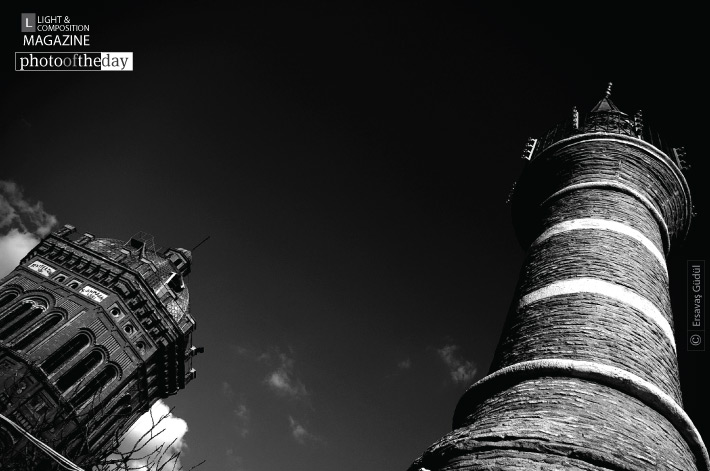
Exposure 1/1000sec @ f/5.6 | ISO 200 | Focal Length 18-55mm
Ersavaş Güdül
Born in Istanbul in 1977, Ersavaş Güdül is a telecommunications professional who balances his technical career with a dedicated passion for photography. Having lived and studied in both Turkey and Germany, he brings a diverse cultural perspective to his work, capturing the architectural nuances of his surroundings with a keen eye. Though he approaches photography as a hobby rather than a full-time pursuit, his ability to document the intersection of history and modern life demonstrates a sophisticated understanding of composition and light.
Resonance Score Breakdown
Transparency Note: The resonance score (14.2/20) is calculated based on social engagement metrics collected before the award announcement.
Expert Photography Reviews · 4
Stone Against the Sky
We build to outlast the winter. We stack stone upon stone, hoping the weight of our hands will anchor us to a place that is otherwise indifferent to our passing. There is a specific silence in old cities, a hum that vibrates through the mortar when the wind drops.
Read the reflection →The Weight of Echoes
In the quiet corners of old cities, stone does not merely sit; it remembers. We often think of architecture as a static endeavor—a rigid set of lines meant to hold back the sky or define a boundary.
Read the reflection →Reviews & Comments
Share your thoughts about this award-winning photograph. Your reviews contribute to the community engagement score.
Istanbul in January is a bitter, bone-chilling affair, yet Güdül has managed to capture the light without it looking like a hurried tourist snap. One wonders how many mornings he spent shivering in Balat before the shadows aligned just so. It’s a clean, disciplined frame. I’ve spent enough hours waiting for stone to catch the right sun to appreciate the patience here. It’s a quiet, earned piece of work. I’d have liked to have been there.
The terracotta brick of the Phanar College glows with the bruised, melancholic warmth of a late Vermeer, bleeding into the pale, chalky sky like Morandi’s muted palette. It’s a quiet, shivering brilliance that catches one’s breath in the throat. I’ve found myself utterly transfixed by how the winter light clings to those stones, turning the historic dust of Istanbul into a soft, golden ache that feels almost too fragile to hold against the encroaching, icy shadows.
Istanbul’s winter light doesn’t reveal; it interrogates. Between the Phanar’s red brick and the minaret’s pale stone, Güdül finds a silence that feels almost heavy enough to crush the frame. I’ve walked these streets, and it’s the shadows here that truly hold the history, not the masonry. They’re cold, sharp, and unforgiving. It’s a haunting geometry. I find myself shivering, not from the January air, but from the realization that these towers are merely waiting for the dark.
Most architectural shots from Istanbul settle for postcard sentimentality, but this frame earns its place. By aligning the red brick of the college with the minaret’s stone, Güdül forces a dialogue between two histories that usually ignore each other. It’s a rare, quiet geometry. I’ve seen thousands of cityscapes, yet this one makes me want to stand on that Balat street corner myself. It’s a document that will still matter when the light changes.