There Is No Conqueror Except Allah by Ahmed Al.Badawy
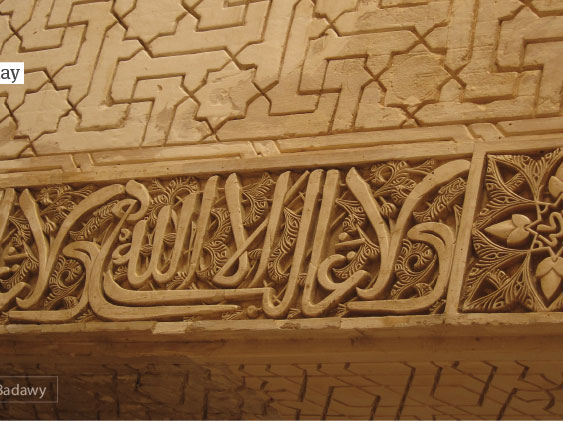
Captured at the historic Alhambra Palace, this photograph reflects on the profound inscription, 'There is no Conqueror except Allah,' etched into the walls of a fading civilization. The photographer masterfully frames the architectural details to evoke a sense of spiritual resilience and historical reflection, inviting viewers to contemplate the intersection of faith and human legacy. By focusing on the intricate textures of the palace, the image serves as a poignant reminder of the lessons embedded within Al-Andalus. Its award-worthy quality lies in the seamless blend of architectural precision and deep, contemplative storytelling that transcends the physical structure to touch the soul.
Ahmed Al.Badawy
Born in Mansoura, Egypt, in 1985, Ahmed Al.Badawy is a professional architect and photographer who co-founded the design studio Gozour. Since beginning his photographic journey in 2010, he has developed a distinct visual style deeply influenced by his architectural background and a fascination with historical sites. Al.Badawy is known for his belief in the beauty of simplicity, often finding inspiration in the mundane elements of his surroundings to create evocative, character-driven imagery that bridges the gap between structural design and artistic expression.
Resonance Score Breakdown
Transparency Note: The resonance score (12.0/20) is calculated based on social engagement metrics collected before the award announcement.
Expert Photography Reviews · 8
The Echo of Stone
We build our monuments as if we are writing a letter to the future, carving our names into the skin of the earth, hoping the stone will hold the weight of our intentions.
Read the reflection →The Echo of the Stone
We often speak of history as if it were a solid thing, a foundation we stand upon to reach for the future. But if you spend enough time in old rooms, you begin to suspect that history is actually a form of erosion. It is the slow, patient wearing away of the ego.
Read the reflection →Reviews & Comments
Share your thoughts about this award-winning photograph. Your reviews contribute to the community engagement score.
At f/4.0, the S90’s sensor captures the Alhambra’s stucco with surprising fidelity, though I’m sensing the diffraction limit encroaching on the finer geometric reliefs. The focal plane is razor-thin, isolating the calligraphy against the soft, atmospheric bokeh of the background. It’s technically modest, yet the way the light grazes those ancient, weathered inscriptions genuinely moves me. It’s a quiet, optical meditation on impermanence; I’ve rarely seen such a small sensor articulate the weight of history so elegantly.
We stand before these walls and we don’t just see stone; we hear the whispers of a civilization that knew its own transience. Ahmed Al-Badawy listened to the Alhambra before he framed it. The inscription isn’t just decoration; it’s a heartbeat. I feel a sudden, heavy ache in my chest looking at these carvings. It’s a portrait of a faith that outlived its builders. This is a photograph that asks to be returned to, again and again.
The Alhambra’s stone doesn’t merely hold light; it interrogates it. Al.Badawy captures the calligraphy not as decoration, but as a jagged scar against the encroaching gloom. I’ve stood in these halls, and the weight of that silence is suffocating. It’s a brutal, honest darkness that refuses to offer comfort. When the shadows swallow the inscription, they aren’t hiding history—they’re preserving the only truth that remains when the empire finally turns to dust. It’s haunting.
Most architectural shots of the Alhambra are just postcards, but this one hits differently. By framing the script against the decaying stucco, Al.Badawy forces a confrontation between human hubris and divine permanence. I’ve seen thousands of travel photos, yet this one actually makes me hold my breath. It’s the way the light catches the texture of the stone that does it. It’s not just a record of a wall; it’s a quiet, heavy meditation on time.
A PowerShot S90? One doesn’t usually associate such modest kit with the Alhambra’s weight, yet here we are. It’s a quiet, disciplined frame. I’ve spent enough afternoons in Granada to know that light doesn’t just sit there waiting for tourists; it demands a vigil. Al-Badawy clearly didn’t rush this. There’s a stillness in the geometry that suggests he actually stood there until the shadows stopped shifting. It’s a rare, earned bit of grace.
Before the eye identifies the script, something in the chest tightens. It’s the weight of centuries pressing against the plaster. I feel a sudden, sharp chill—a phantom draft from the Alhambra’s halls. When I return to this, the intricate carvings don’t just sit there; they demand a rhythmic, measured breath. It’s a quiet confrontation with impermanence. I’ve spent hours here, yet the silence of that stone still follows me into my own sleep.
The frame holds a silence so heavy it vibrates. Light spills across the stucco, catching the calligraphic rhythm of the Alhambra like a slow pan across a dying empire. It’s a locked-off shot, steady and precise, where the geometry of faith meets the decay of stone. I’ve stared at this for ten minutes, and honestly, it makes me want to weep for the history we’ve forgotten. The cut would have been a mistake. It’s perfect.
The low, raking light of Granada doesn’t just graze these walls; it breathes through them. I’ve stood in such silence, waiting for the stone to reveal its history. Ahmed felt the weight of that inscription, I’m sure, as the shadows lengthened across the stucco. It’s a quiet, aching reminder that we are merely passing through. Looking at these textures, I feel a sudden, sharp humility. He didn’t rush the light. He simply let it speak.