The Taste of Asian Cuisine by Diep Tran
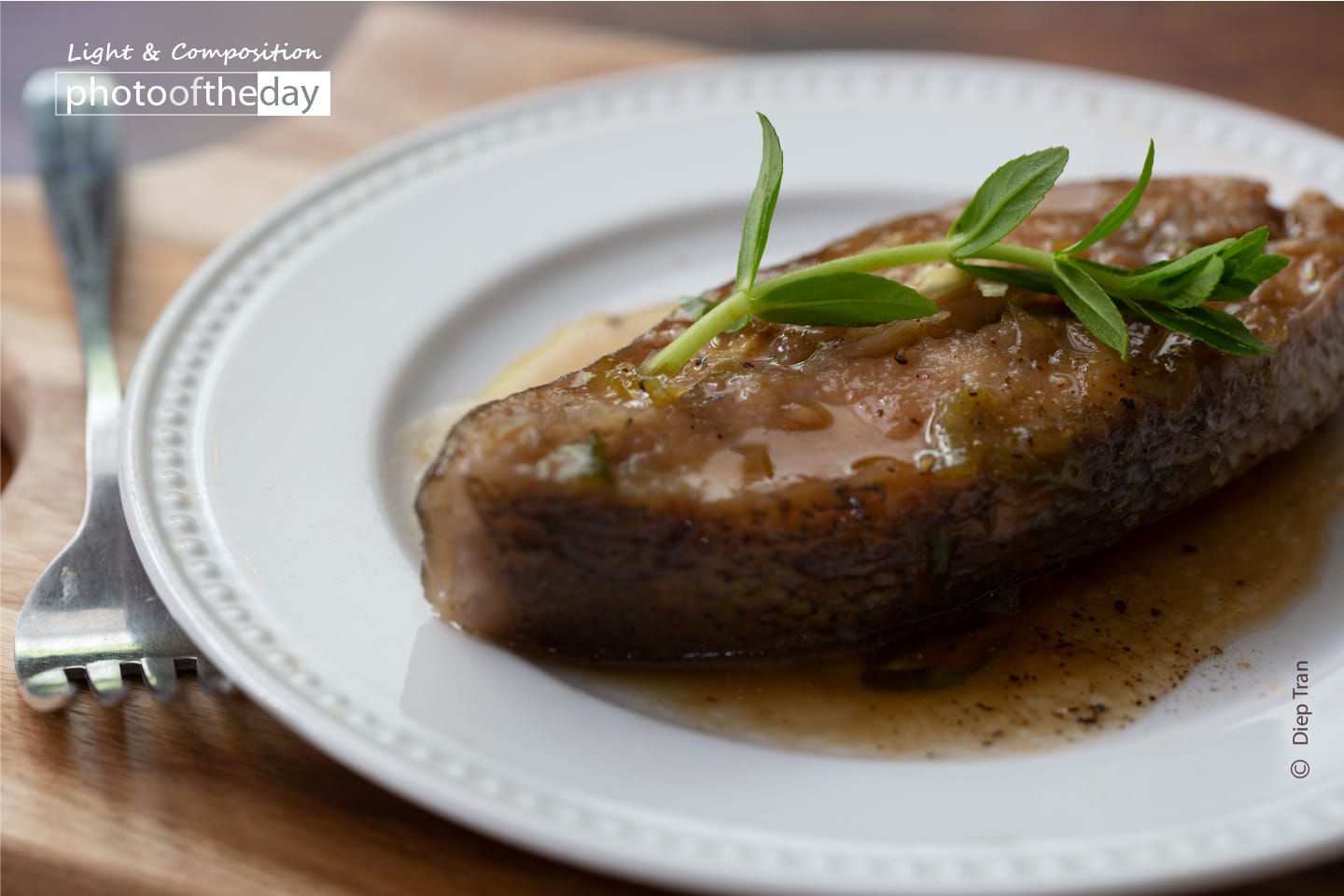
This evocative photograph captures the essence of a cherished family tradition: fish cooked in a clay pot, a staple of Asian cuisine. By focusing on the humble yet aromatic ingredients—fish sauce, oil, pepper, palm sugar, and chili—the photographer transforms a simple winter meal into a visual narrative of warmth and heritage. The image is award-worthy for its ability to elevate a domestic culinary moment into a refined study of texture and light, inviting the viewer to experience the comfort and cultural significance inherent in this traditional dish.
Diep Tran
Born in Vietnam and currently based in Brisbane, Australia, Diep Tran finds inspiration in the beauty of everyday objects and the intimate moments shared with family and friends. Her photographic practice is deeply influenced by her Buddhist upbringing, which fosters a profound appreciation for the natural and man-made world. Through her exploration of light, shade, and the nuances of timing, Tran seeks to capture the quiet quality of life, reflecting her diverse experiences from her travels across various climates and cultures.
Resonance Score Breakdown
Transparency Note: The resonance score (11.7/20) is calculated based on social engagement metrics collected before the award announcement.
Expert Photography Reviews · 7
The Alchemy of the Hearth
Memory is a kitchen that never truly cools. We spend our lives trying to recreate the scent of a particular afternoon, the way the air felt heavy with the promise of a meal that was more than just sustenance.
Read the reflection →The Steam of Memory
There is a specific quality to the light in a kitchen during the deepest part of winter, when the sun is too tired to climb high and instead presses itself horizontally against the glass.
Read the reflection →Reviews & Comments
Share your thoughts about this award-winning photograph. Your reviews contribute to the community engagement score.
Warmth and heritage, the curators claim. But whose heritage are we consuming here? The composition is undeniably polished, yet it feels like a staged performance for an outsider’s palate. Why must we aestheticize poverty-adjacent ingredients into a refined study? It’s technically sharp, sure, but I find the commodification of this domestic intimacy unsettling. Does the frame exclude the labor behind these spices? I’m left wondering if we’re celebrating a culture or merely decorating it.
The clay pot’s rim anchors the frame, establishing a rigid circular geometry. The interplay of viscous sauce and charred aromatics creates a compelling spatial tension. It’s a disciplined study of texture, though the periphery occasionally drifts into soft focus. I’d argue the composition’s weight is its only saving grace. It doesn’t rely on sentiment; it relies on the geometry of the ingredients. The frame holds, barely, but the visual architecture remains undeniably precise.
We look at this clay pot and we aren’t just seeing dinner; we’re seeing a lineage. Diep Tran hasn’t just captured ingredients; she’s listened to the quiet hum of a kitchen where heritage is simmered into fish sauce and chili. It’s a portrait of a meal that feels like a conversation between generations. I’m moved by how the steam seems to hold a memory. It’s a photograph that asks to be returned to, again and again.
The focal plane here is razor-thin, isolating the viscous sheen of the fish sauce against the clay’s porous texture. At this aperture, the bokeh renders the background heat as a soft, chromatic blur, preventing diffraction from softening the pepper’s sharp edges. It’s a brilliant optical dissection of steam and spice. I’ve spent years studying light, yet the way it catches those chili oils makes me genuinely hungry for the warmth of that kitchen. It’s technically exquisite.
Before the eye identifies the clay pot, a sudden, phantom warmth settles in the chest. It’s the visceral memory of steam hitting a cold kitchen. The pepper and chili don’t just sit on the surface; they trigger a sharp, salivary activation that makes me miss a home I’ve never known. When I return to this, I don’t see ingredients. I feel the quiet, heavy comfort of a winter evening, lingering like a ghost in my own pulse.
Steam rises like a prayer in the cooling kitchen air. Diep Tran didn’t just document a meal; she waited for the light to catch the glaze of the clay pot, turning humble fish sauce and pepper into something sacred. It’s quiet, intimate work. I’ve spent hours watching the sun shift across a valley, and I recognize that same stillness here. It makes me hungry for home, for the warmth of a fire that never truly goes out.
The composition relies on a tight, off-center focal point where the clay pot’s circular rim intersects the frame’s lower-left quadrant. It’s a study in balanced mass; the dark, dense stew anchors the bottom, while the scattered aromatics create a rhythmic, diagonal vector leading the eye upward. I’m genuinely drawn to how the steam’s soft diffusion softens the rigid geometry of the table. It’s a perfectly solved spatial equation, turning domestic chaos into a precise, satisfying visual equilibrium.