The Swan by Evdokiya Witwicki
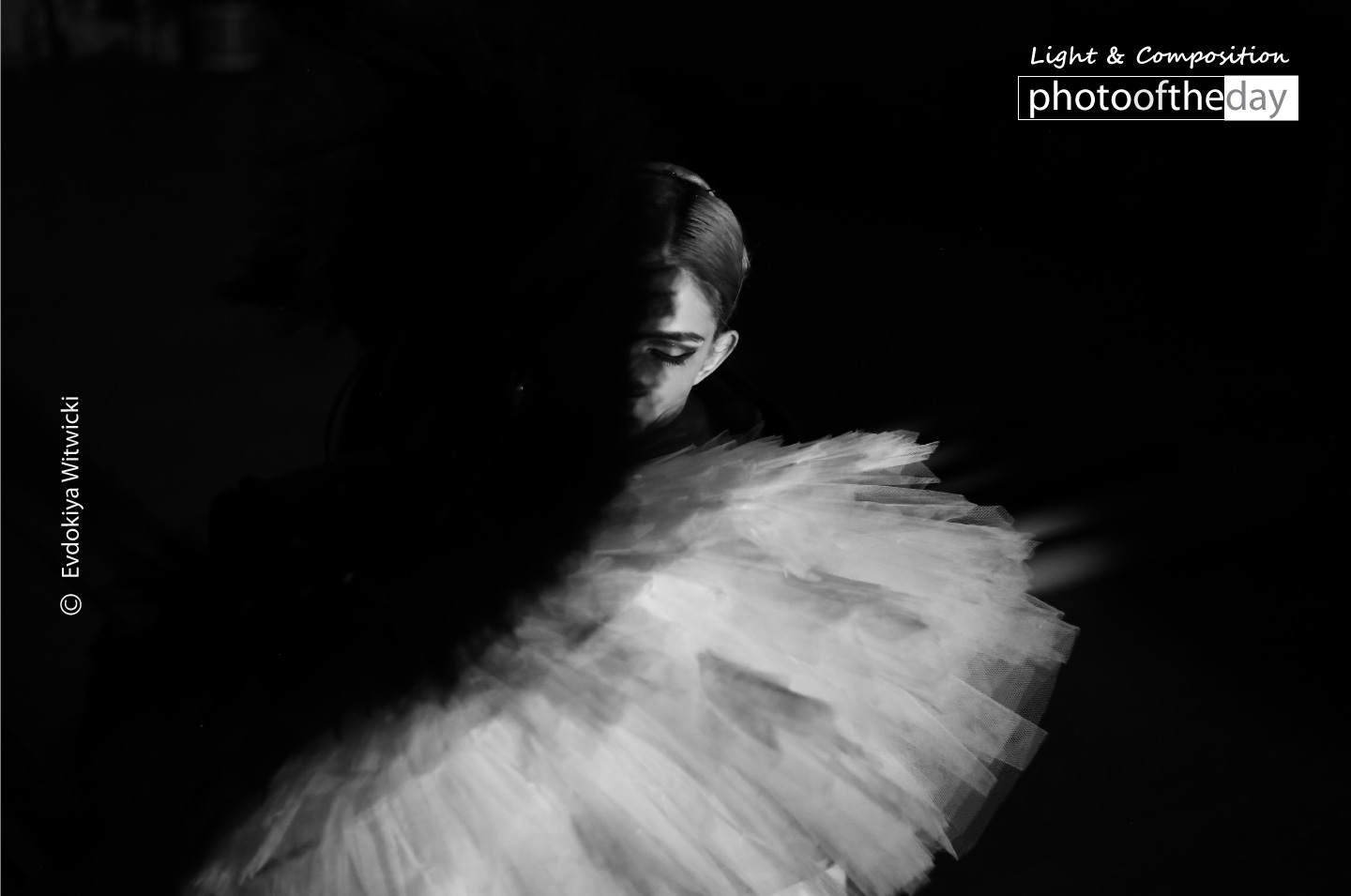
Captured on February 21, 2020, in Moscow, this evocative portrait documents a quiet, intimate moment behind the scenes of the Classical Russian Ballet. As soloist Elizaveta Taranda prepares to take the stage for 'The Swan Lake,' the photographer focuses on the intricate details of the swan costume held within her hands. This image is award-worthy for its ability to transform a fleeting backstage preparation into a narrative of anticipation and artistry. By isolating the delicate textures of the costume against the backdrop of the performer’s focus, the photographer captures the profound transition from reality to performance.
Evdokiya Witwicki
Born in Moscow 35 years ago, Evdokiya Witwicki is a dedicated photographer and art educator who shares her passion for creativity in local schools and kindergartens. A frequent traveler who finds inspiration in the mountains and the sea, she specializes in a diverse range of subjects, including nature, wildlife, and emotional portraiture. Her work is defined by a keen eye for reportage and a deep appreciation for the beauty found in both natural landscapes and the human experience.
Resonance Score Breakdown
Transparency Note: The resonance score (8.7/20) is calculated based on social engagement metrics collected before the award announcement.
Expert Photography Reviews · 7
The Weight of the Costume
We often view the city as a collection of public squares and transit arteries, but the most profound urban experiences occur in the hidden, liminal spaces where labor is transformed into myth.
Read the reflection →The Weight of Becoming
How much of our identity is held in the things we carry, and how much is shed the moment we step into the light? We spend our lives preparing for the roles we are meant to play, stitching together fragments of expectation and desire until they form a second skin.
Read the reflection →Reviews & Comments
Share your thoughts about this award-winning photograph. Your reviews contribute to the community engagement score.
Before the eye identifies the swan costume, a sudden stillness settles in the chest. It’s the weight of the fabric, the way the feathers seem to hold a breath before the stage lights hit. I’ve felt that same heavy, quiet anticipation in my own life. When I return to this, I don’t see a dancer; I feel the threshold of transformation. It’s a fragile, aching reminder of how we prepare to become someone else.
The swan’s feathers emerge from a void that swallows the dancer’s intent. It’s not merely fabric; it’s a shroud of impending transformation. I’m unsettled by how the darkness clings to the costume’s lace, refusing to let the light define the form. When the shadows bite this deeply, the performance hasn’t begun—it’s already mourning its own inevitable end. It’s a haunting reminder that beauty is just a fragile resistance against the encroaching, silent dark.
It’s a relief to see a swan that doesn’t involve a telephoto lens shoved into a nesting site. I’ve spent weeks in freezing blinds waiting for a single feather to ruffle, and honestly, the stillness in these hands feels familiar. It’s earned, not extracted. While it’s just fabric, the focus here respects the subject’s space. I find myself breathing easier knowing no bird was harassed for this quiet, elegant study of anticipation.
The focus is on the costume, not the dancer’s kinetic potential. I’ve spent my life watching bodies coil before the explosive release, and here, the tension is missing. It’s a quiet study, sure, but it lacks the physiological snap of a performer about to launch. I wanted to see the muscle fibers in her hands tighten as she grips that fabric. It’s technically clean, but it’s just the calm before the storm, not the storm itself.
We look at Elizaveta’s hands, cradling the swan’s feathers like a fragile secret. Before the stage lights, there was a silence here, a quiet conversation between the dancer and her craft. I feel a sudden, sharp ache in my chest seeing that focus; it’s the weight of a transformation held in the palms. She isn’t just dressing for a role; she’s becoming the bird. It’s a photograph that asks to be returned to, again and again.
Elizaveta’s hands cradle the swan costume, a delicate nebula of lace and tulle. It’s a quiet, terrestrial gravity, yet I’m struck by how she holds that fabric like a dying star’s final light. While I usually track photons across eons, here the focus is human, fleeting, and fragile. It’s a beautiful, sharp contrast to the cold, infinite dark I’m used to. I find myself holding my breath, watching her prepare for a performance that’s already history.
Feathers. A blur of white against the dark. It’s the stillness before the movement begins. I’ve spent minutes watching the way the fabric holds the light. It doesn’t demand attention. It waits. The dancer’s hands are barely there, yet they anchor the frame. Nothing here is accidental. The empty corner is not empty. It’s the breath before the music starts. I feel a sudden, sharp ache for that quiet. It’s a rare, perfect pause.