The Other Side by Anastasia Markus
Captured during an autumn photoshoot in Kyiv, this image explores the interplay between reality and reflection. The photographer utilized a mirror to reveal the 'other side' of the environment, experimenting with various angles and moods to create a compelling visual narrative. By moving beyond a standard portrait, the photographer successfully transformed a playful session into a meaningful, artistic exploration of space and subject. The image stands out for its creative use of reflective surfaces, which adds depth and a sense of discovery to the portrait, ultimately earning recognition for its thoughtful composition and technical execution.
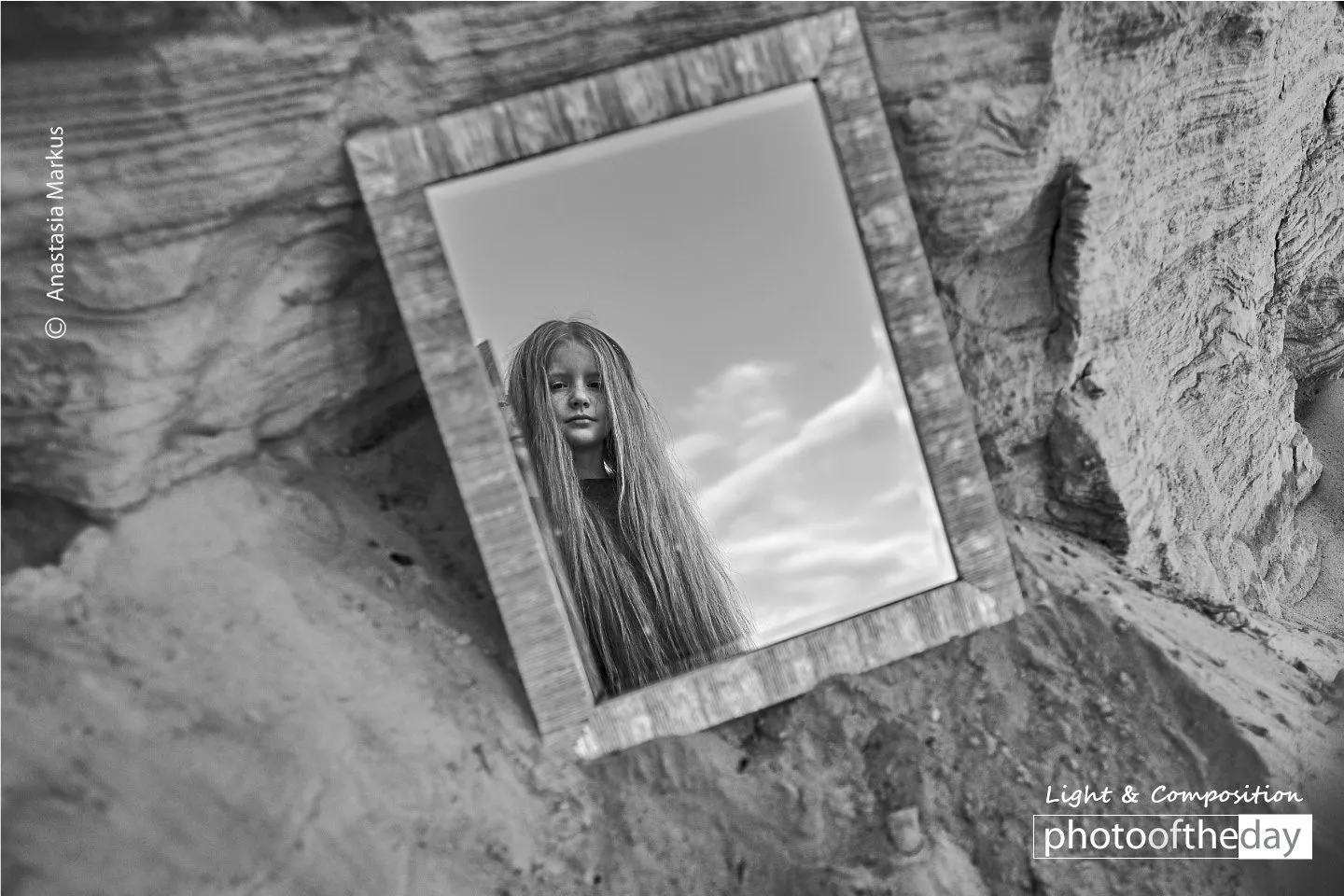
Anastasia Markus
Born in Donetsk, Ukraine, Anastasia Markus transitioned from a background in business to a dedicated career in photography, specializing in children’s, family, and wedding portraiture. After a decade-long hiatus, she has returned to the craft with a renewed passion for creative growth and competitive excellence. Now based in Beer Sheva, Israel, Markus views the challenges of photography competitions as a vital catalyst for artistic evolution and a way to infuse fresh perspectives into her work.
Resonance Score Breakdown
Transparency Note: The resonance score (8.6/20) is calculated based on social engagement metrics collected before the award announcement.
Expert Photography Reviews · 6
The Glass Between Us
There is a particular shop window on a side street in Lisbon where the glass is old, slightly wavy, and prone to catching the ghost of the person standing on the other side.
Read the reflection →The Glass Between Us
There is a specific quality to the light in late October, a thin, brittle clarity that arrives just before the frost settles. It is a light that does not merely illuminate; it separates.
Read the reflection →Reviews & Comments
Share your thoughts about this award-winning photograph. Your reviews contribute to the community engagement score.

Most photographers obsess over the mirror’s clarity, but Markus lets the glass fracture the narrative. It’s closer to Sugimoto’s long-exposure theatres than a standard portrait; she’s chosen not to resolve the boundary between the subject and the reflection. I’m genuinely moved by how the distortion turns a Kyiv autumn into a psychological landscape. Why demand perfect sharpness when you can capture the instability of a moment? It’s a brave, messy refusal of the expected.
The peeling paint and fractured light in this Kyiv interior create a haunting, layered stage. By placing the mirror at an angle, the photographer forces us to navigate two realities simultaneously. I’m truly moved by how the glass captures the room’s decay, grounding the subject’s gaze in a space that feels both fragile and enduring. It’s not just a portrait; it’s a dialogue between a person and the crumbling history they inhabit. It’s simply beautiful.
You didn’t just use a mirror for a trick; you used it to fracture the weight of that city. I’ve spent enough time in Kyiv to know the air there feels heavy, and you’ve captured that tension perfectly. It’s not just a portrait. It’s a quiet, aching look at a world split in two. I felt a genuine shiver looking at the reflection. You waited for the right moment, and it shows. There’s something honest happening here.
Glass divides the world. It’s a thin line between the subject and the ghost. I’ve spent minutes watching the reflection. It doesn’t mirror the girl; it mirrors the quiet of Kyiv. The empty corner is not empty. It’s a breath held in autumn. I feel a sudden, sharp ache for that stillness. Nothing here is accidental. The frame is a vessel for what isn’t there. It’s rare to find such restraint in a city of noise.
Kyiv in autumn is a fragile stage. You’ve used that mirror to slice reality, and honestly, it makes my pulse jump. It’s not just a portrait; it’s a collision. If you’d clicked a fraction later, the reflection would’ve drifted into static. You caught the exact tension where the subject and the glass align. Cartier-Bresson would’ve tipped his hat to this geometry. You were paying attention, and that’s the only thing that matters out here.
The mirror’s edge bisects the frame, creating a brutal, vertical fulcrum. It’s a sharp division of space that forces the eye to reconcile two disparate planes. The negative space surrounding the subject doesn’t collapse; it holds. I’m genuinely unsettled by how the reflection disrupts the subject’s mass. It’s a calculated fracture of reality. The composition demands total attention to these geometric tensions. It’s rare to see such cold, structural discipline survive the chaos of a portrait.