The Osprey by Saniar Rahman Rahul
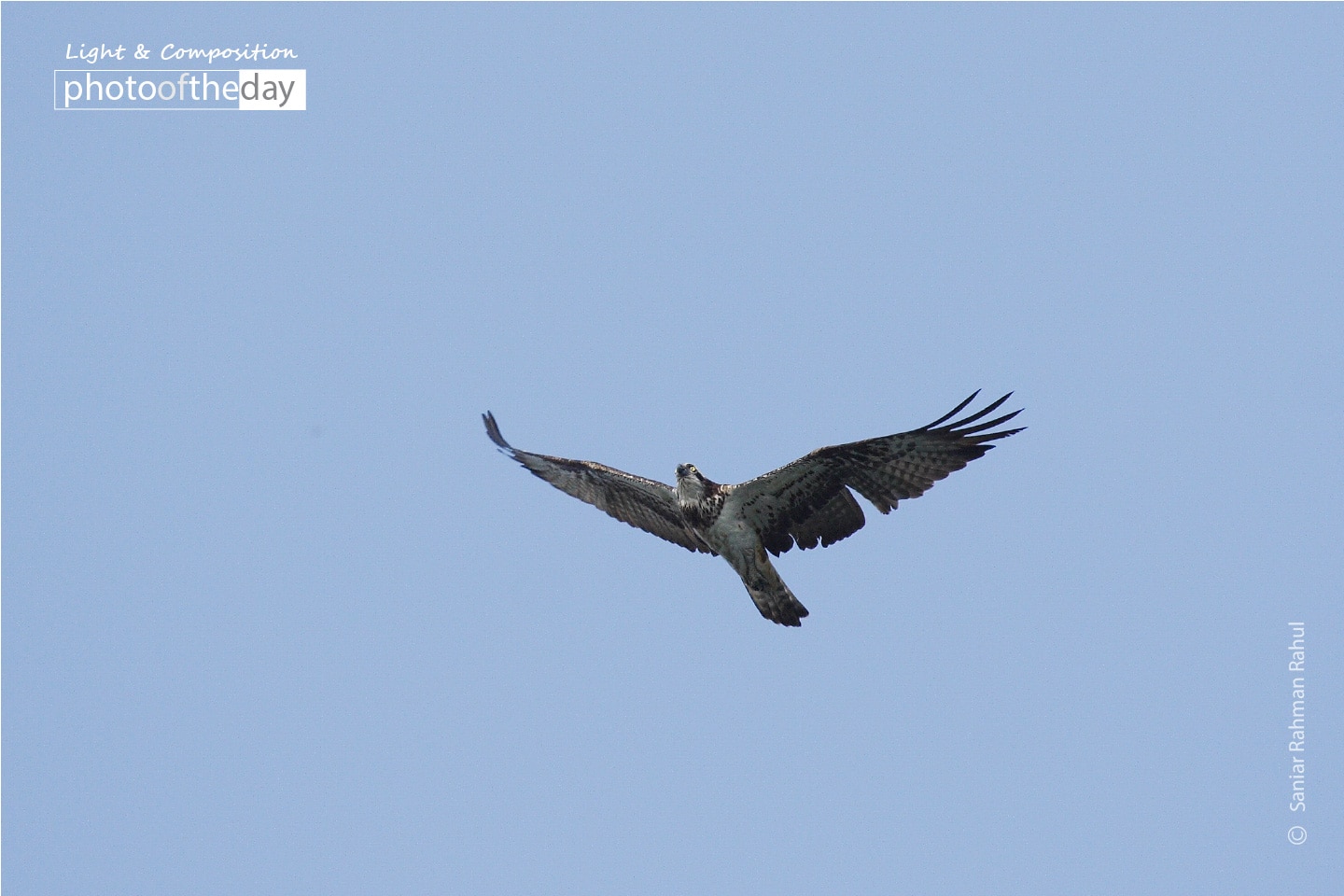
Captured at the scenic Muhuri Dam near the Bay of Bengal, this photograph showcases the osprey, a majestic bird of prey known for its distinct brown upperparts and greyish features. The photographer skillfully documents the bird in its natural habitat, highlighting its adaptability to environments near water sources. The image is award-worthy for its sharp focus on the osprey's form and the serene, atmospheric quality of the dam setting, which provides a perfect backdrop for this diurnal hunter. The composition effectively balances the bird's presence against the expansive, water-rich landscape, capturing a fleeting moment of wildlife in its element.
Saniar Rahman Rahul
Based in Dhaka, Bangladesh, Saniar Rahman Rahul is an accomplished Art Director and photographer whose creative journey began in childhood while observing his father’s work. After establishing a successful career in graphic design and advertising with major agencies like Grey Worldwide, he rediscovered his passion for photography in 1997. His work is defined by a deep appreciation for visual storytelling and a keen eye for wildlife, earning him early recognition as a Photo of the Month winner in 2010.
Resonance Score Breakdown
Transparency Note: The resonance score (12.8/20) is calculated based on social engagement metrics collected before the award announcement.
Expert Photography Reviews · 4
The Geometry of the Hunt
Ospreys possess a unique physiological adaptation: they have a reversible outer toe, allowing them to grasp slippery prey with two talons facing forward and two facing backward.
Read the reflection →The Weight of the Wind
There is a quiet dignity in the way a creature holds its place against the vastness of the sky. We often mistake stillness for inaction, forgetting that to remain poised in the middle of a current requires a profound, internal strength.
Read the reflection →Reviews & Comments
Share your thoughts about this award-winning photograph. Your reviews contribute to the community engagement score.
The shutter speed here is a surgical strike. It freezes the osprey mid-flight, turning a predator’s kinetic energy into a permanent, breathless sequence. I’ve spent hours watching birds over water, but this frame catches the exact millisecond before the dive. It’s the shot the editor keeps, the one that makes the audience lean in. The stillness of the Muhuri Dam backdrop creates a perfect, haunting silence. Honestly, I’m jealous I didn’t capture this tension myself.
The Muhuri Dam isn’t just a backdrop; it’s a datum line defining the horizon. Rahul captures the osprey against this vast, engineered void, yet I’m struck by the tension between the bird’s organic form and the rigid, horizontal geometry of the infrastructure. It’s a stark reminder that we build into the wild. I find myself wanting to know what lies beyond the frame—the scale of the concrete against the water’s edge. It’s hauntingly precise.
f/5.6 at 400mm, 1/2000s, ISO 400. A tight shutter speed for a raptor in flight. It’s the right call. The depth of field is thin, isolating the osprey from the chaotic backdrop of the Muhuri Dam. I’ve seen enough motion blur to know this wasn’t luck. It’s a calculated strike. The focus on the eye is sharp, almost clinical. I actually find myself leaning in to check the feather detail. It’s precise work.
It’s a technically competent wildlife study, but I’m left craving a pulse. By pinning the osprey in such clinical, high-resolution stasis, Rahul misses the kinetic violence of a predator in flight. Why resolve every feather when you could capture the blur of the hunt? This approach is closer to a taxidermy catalog than Hiroshi Sugimoto’s long-exposure theatres. I’d trade that sharp focus for a single, honest smear of motion. It’s just too safe.