The Balinese Bearer by Ryszard Wierzbicki
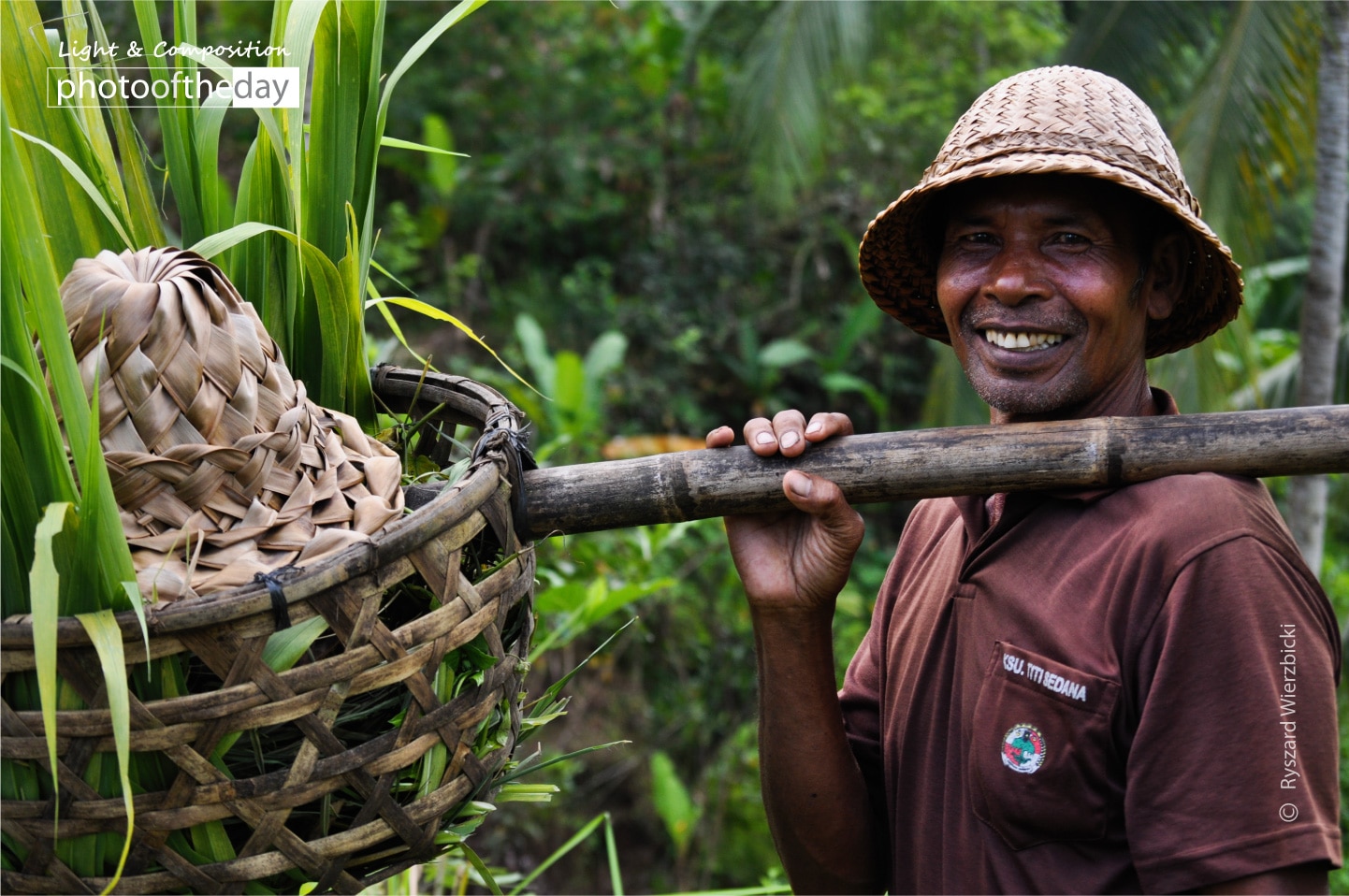
Captured amidst the lush Rice Field Terraces of Bali, this portrait highlights the intersection of local tradition and modern tourism. The photographer focuses on a professional 'crowd artist,' a local figure who has become a fixture for travelers seeking the quintessential Balinese aesthetic. By documenting this man, the image explores the performative nature of cultural exchange and the expectations placed upon local inhabitants. The composition is award-worthy for its candid observation of a human experience that is often overlooked, transforming a fleeting tourist interaction into a thoughtful study of identity, commerce, and the globalized landscape of travel photography.
Ryszard Wierzbicki
Born in 1963, Ryszard Wierzbicki is a Polish-born photographer and traveler currently based in Swindon, United Kingdom. After a diverse career in social sciences, marketing, and education, he transitioned into full-time exploration, focusing his lens on the cultures of South-East Asia. A dedicated scuba instructor and humanitarian volunteer, Wierzbicki channels his passion for discovery into his photography, often sharing his insights through his established travel and photography forums. His work reflects a deep commitment to documenting the human condition across the globe.
Resonance Score Breakdown
Transparency Note: The resonance score (12.0/20) is calculated based on social engagement metrics collected before the award announcement.
Expert Photography Reviews · 5
The Weight of the Mask
Seneca once remarked that we are all actors in a play we did not write, tasked only with playing our assigned role well. He understood that the dignity of a man is not found in the script he is handed, but in the sincerity with which he inhabits his character.
Read the reflection →The Weight of Being Seen
There is a specific exhaustion that comes from being a landmark. It is the hollowed-out feeling of a person who has become a destination, a living monument to someone else’s expectations.
Read the reflection →Reviews & Comments
Share your thoughts about this award-winning photograph. Your reviews contribute to the community engagement score.
The frame’s geometry is tight, yet the subject’s placement creates a precarious imbalance. The verticality of the terraced backdrop fights the horizontal drift of the figure’s gaze. It’s a struggle for dominance within the picture plane. I’m genuinely irritated by the soft focus on the periphery, which weakens the structural integrity of the background. The composition doesn’t quite resolve the tension between the man and the landscape. It’s nearly rigid, but it ultimately collapses under its own weight.
The verdant, humid greens of the Balinese terraces bleed into the bearer’s skin like a Morandi study, yet it’s the ochre of his woven basket that truly arrests one’s gaze, vibrating against the foliage with a dissonance that feels almost tragic. I’m breathless at how the light catches that fabric; it’s a searing, sun-drenched gold that doesn’t just sit there, but demands we acknowledge the heavy, performative burden of his existence within this lush, emerald cage.
You didn’t just snap a portrait; you caught the weight of a man playing a role for strangers. I look at his eyes, and I feel a heavy, quiet exhaustion that hits me right in the chest. It’s the look of someone tired of being a prop in someone else’s vacation. And you waited long enough to see past the costume. You found the human being underneath. That’s the truth I’m always looking for. Well done.
It’s easy to snap a tourist prop in the midday sun, but Wierzbicki clearly lingered until the light softened. One suspects he didn’t just stumble upon this bearer; he likely sat in that humidity for hours, watching the performance fade into something more honest. I’ve spent enough time in damp fields to recognize the patience required here. It’s a quiet, earned study of a man caught between his heritage and the camera lens. Respectable work, truly.
The vibrant, tiered geometry of the rice terraces frames him like a stage set, turning the landscape into a curated backdrop for commerce. I’m struck by how the lush, saturated greens press against his traditional attire, highlighting the friction between heritage and the tourist gaze. It’s a poignant tension. He isn’t just standing there; he’s performing his own culture for a lens. The environment doesn’t just hold him—it defines his labor in this globalized world.