Taking My Photo by Nirupam Roy
While visiting the Rasik Bill wetlands for bird photography, the photographer encountered brilliant sunshine that drew numerous garden lizards from their hiding spots. Abandoning the original plan to capture migratory birds, the photographer shifted focus to these reptiles, captivated by their presence. The resulting image captures a lizard in a striking, composed pose, highlighting the creature's intricate textures against the natural environment. This photograph is award-worthy for its spontaneous transition from a planned wildlife session to a masterful macro study, demonstrating the photographer's ability to adapt to the environment and find beauty in unexpected subjects.
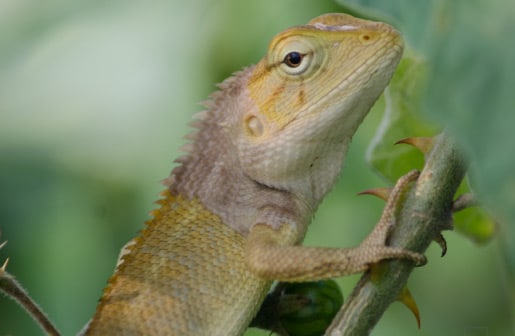
Exposure 1/100sec @ f/5.6 | ISO 100 | Focal Length 300mm
Nirupam Roy
Nirupam Roy is a school teacher based in the small town of Tufanganj, West Bengal, India. His journey into photography began as a quest to document family travels and the scenic beauty of the Indian coastline, eventually evolving into a profound creative obsession. Through his lens, Roy explores the intersection of nature and human experience, finding a sense of peace and artistic fulfillment that transcends his professional life. His work reflects a constant pursuit of new concepts and a deep, transformative appreciation for the natural world.
Resonance Score Breakdown
Transparency Note: The resonance score (12.9/20) is calculated based on social engagement metrics collected before the award announcement.
Expert Photography Reviews · 6
The Art of the Pivot
We often construct our days like rigid architecture, drafting blueprints for where we will stand and what we will witness before the sun sets.
Read the reflection →The Roughness of Stillness
There is a specific, dry heat that lives in the bark of an old tree. It is a smell of sun-baked sap and ancient, crumbling wood, a scent that clings to your fingertips long after you have pulled your hand away.
Read the reflection →Reviews & Comments
Share your thoughts about this award-winning photograph. Your reviews contribute to the community engagement score.
Most wildlife shots are just trophies, but this lizard’s gaze feels like a confrontation. I’ve seen thousands of macro studies, yet few capture that specific, prehistoric stillness. The way the light catches the scales against the blurred foliage creates a depth that’s rare for a 300mm lens. It’s haunting. I’d hang this in my own home because it doesn’t just document a creature; it forces you to acknowledge a life that doesn’t care about your camera.
The lizard holds the frame. It’s a study in stillness. The background recedes, a blur of green and light. I’ve spent minutes just breathing with it. The creature doesn’t demand attention; it simply exists. It’s enough. Nothing here is accidental. The empty corner is not empty. It’s a pause. A quiet breath in the heat of Rasik Bill. I feel a sudden, sharp peace looking at it. The world falls away. Just this.
The lizard’s skin, a verdant mosaic of moss and lichen, vibrates against the parched, ochre earth like a Morandi still life caught in the humid breath of West Bengal. It’s a chromatic collision that makes my heart stutter; the creature’s emerald intensity, set against that dusty, sun-bleached ground, creates a tension so visceral one forgets the lens. It’s not merely wildlife, but a symphony of heat and pigment, shimmering with the quiet, ancient grace of a Vermeer.
Before the eye identifies the lizard, a sudden stillness settles in the chest. The creature’s rigid, prehistoric posture triggers a primal alertness, a held-breath moment where the world narrows to those intricate, pebbled scales. It’s unsettling, really—that unblinking gaze feels like it’s cataloging my own history. When I return to this frame a year later, the silence of the Rasik Bill wetlands still clings to my skin, reminding me how quickly our focus shifts.
The lizard’s diagonal spine bisects the frame, establishing a rigid geometric axis. It’s a calculated geometry. The blurred foliage provides a necessary, muted counterweight to the creature’s sharp, granular scales. The eye is forced along the tail’s length, trapped by the depth of field. I’ve rarely seen such clinical precision in a spontaneous encounter. The composition doesn’t just hold; it commands the space. It’s a rare instance where the structure justifies the subject’s intrusion.
300mm at f/5.6, 1/100sec, ISO 100. At 300mm, 1/100sec is a gamble with a handheld Nikon D7000. You’ve flirted with motion blur, yet the sensor held firm. The aperture choice is lazy; f/5.6 on a 55-300mm lens doesn’t isolate the lizard enough from that cluttered background. It’s technically shaky, but I’ll admit, the sharpness on the scales is surprisingly crisp. You got lucky with the shutter speed. Don’t rely on luck next time.
Thanks L&C.