Surrounding Eternity by Pavel Yudin
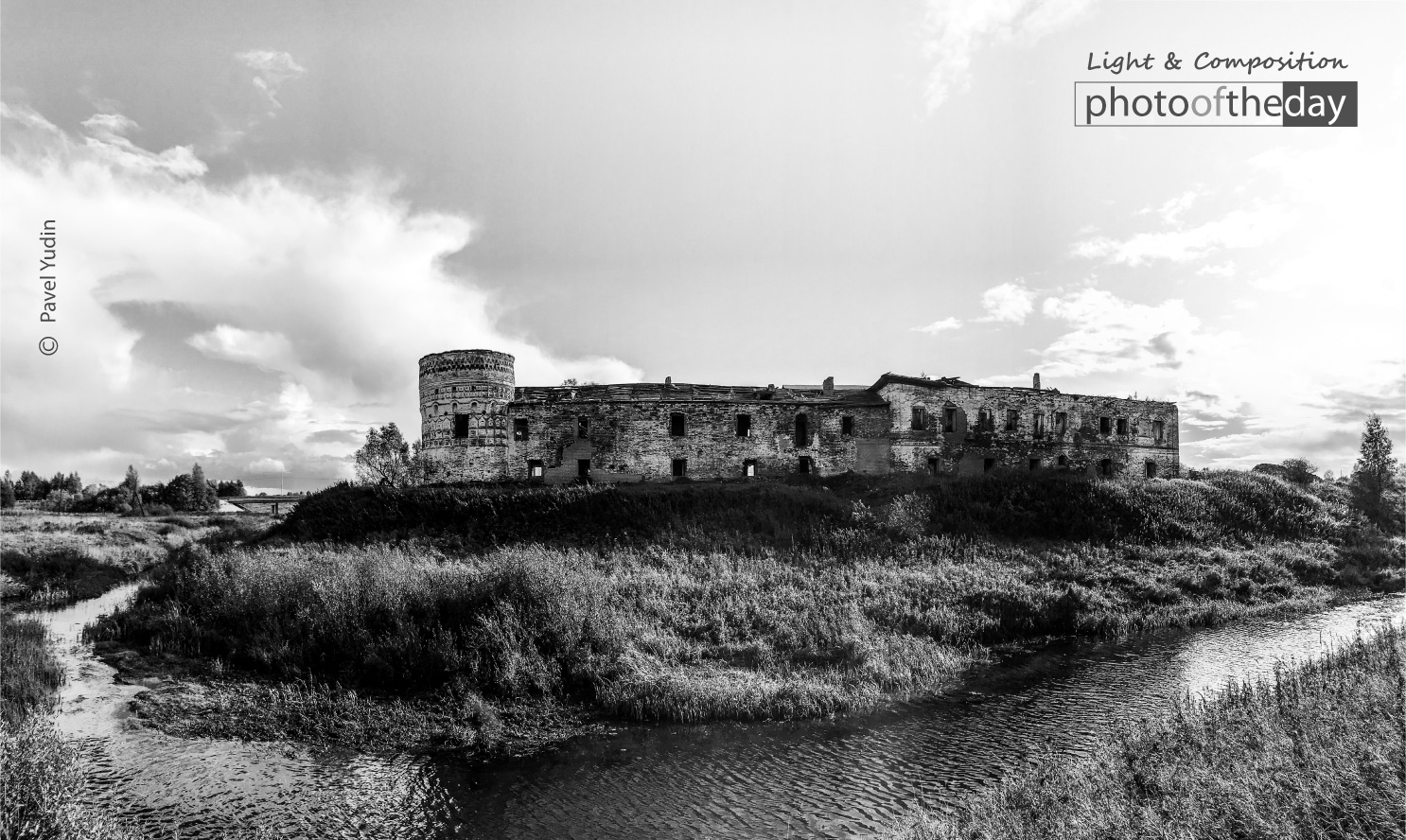
Surrounding Eternity captures the haunting resilience of the Krasnokholmsky St. Nicholas Anthony Monastery, a site founded in 1461 and later devastated during the 1930s. The photographer frames the crumbling architecture as a poignant meditation on the transience of human life versus the endurance of ideas. By juxtaposing the monastery’s weathered stone against the vastness of time, the image invites viewers to contemplate the fragility of material creations. This award-worthy composition succeeds by transforming a historical ruin into a profound philosophical statement, capturing a fleeting moment that bridges the gap between human history and the infinite scale of the universe.
Pavel Yudin
Hailing from the historic city of St. Petersburg, Russia, Pavel Yudin balances a distinguished career in engineering and IT with a profound dedication to the photographic arts. A recipient of the State Prize of the Russian Federation for his contributions to science and technology, he brings a disciplined, analytical eye to his creative pursuits. Yudin finds his primary inspiration in the intersection of technology and human experience, using his camera to document the beauty of travel, connection, and the enduring dreams that define the human spirit.
Resonance Score Breakdown
Transparency Note: The resonance score (9.8/20) is calculated based on social engagement metrics collected before the award announcement.
Expert Photography Reviews · 6
The Weight of Old Stones
I spent this morning trying to fix a loose floorboard in the hallway. It’s a small, annoying thing that has been creaking for months, a tiny protest every time I walk to the kitchen.
Read the reflection →The Weight of Ancient Stone
I often find myself wandering the backstreets of old districts, tracing the cracks in brickwork as if they were lines on a map of someone else’s memory.
Read the reflection →Reviews & Comments
Share your thoughts about this award-winning photograph. Your reviews contribute to the community engagement score.
The ochre of these crumbling walls, bruised by the grey of a Russian sky, evokes the melancholic stillness of a Morandi study, yet it’s the way the light clings to the stone—like the pale, dying gold of a Vermeer interior—that truly breaks my heart. One feels the cold dampness of history here, a palette of desaturated bone and slate that doesn’t merely depict ruin; it breathes the very silence of a forgotten, eternal winter.
Stone doesn’t hold a gaze, but these ruins feel like they’re watching us back. I’ve spent my life looking for the soul in a frame, and while this isn’t a portrait of a person, the monastery’s crumbling arches have a face. It’s lonely, isn’t it? I feel a strange ache in my chest looking at those hollow windows. It’s a portrait of abandonment, where the architecture itself seems to be waiting for someone who never returned.
It’s clear Yudin didn’t just stumble upon these ruins on a Sunday stroll. That light—that specific, bruised grey clinging to the crumbling brick—suggests he’s spent days shivering in the Krasnokholmsky mud waiting for the sky to match the monastery’s decay. I’ve stood in enough Russian winters to know that kind of patience isn’t cheap. It’s a cold, lonely commitment. He didn’t find this shot; he earned it. I find myself shivering just looking at it.
Most architectural photography is trapped in a sterile obsession with detail, but here, the decay feels alive. Yudin’s decision to let the crumbling stone dissolve into the atmosphere is a brilliant subversion of the genre. It’s closer to Hiroshi Sugimoto’s long-exposure theatres than to conventional architectural documentation. I’m genuinely moved by what he chose not to resolve; by blurring the edges of history, he forces us to confront the void rather than just the masonry.
Looking at these ruins, I can’t help but imagine them submerged. If this monastery were resting on a reef, the water would have long ago stripped away those warm, earthy tones, leaving only a monochromatic blue haze. The light here is so crisp, so terrestrial; it’s almost jarring. I’m used to fighting the refractive index and backscatter just to see a stone wall. It’s haunting, really, how much clarity we take for granted up here.
The crumbling brickwork here isn’t merely a backdrop; it’s the monastery’s skin, weathered by centuries of devotion and neglect. I’m struck by how the jagged, exposed masonry frames the void, turning the architecture into a silent, hollowed-out witness. It’s haunting. The light doesn’t just illuminate the ruin; it carves out the history etched into every stone. By focusing on these decaying walls, Yudin forces us to confront the fragility of our own existence against this vast, indifferent eternity.