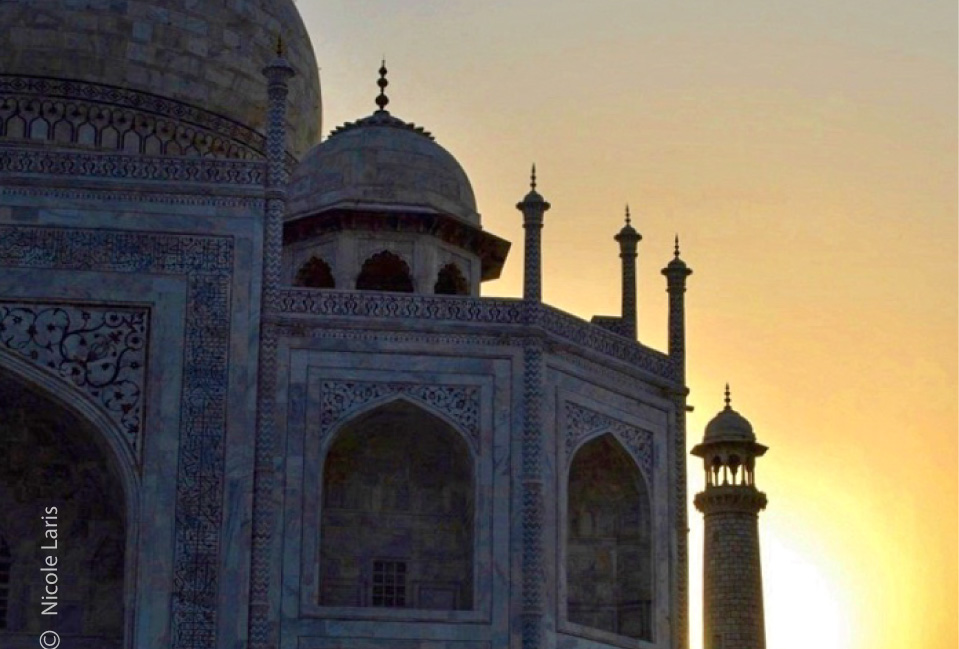
Sunset at Taj Mahal by Nicole Laris
Capturing the Taj Mahal from sunrise to sunset, the photographer sought to move beyond the iconic front-facing views that draw the typical crowds. By positioning herself on the side of the majestic tomb, she waited for the perfect golden hour light to bathe the structure in warmth. This deliberate choice to seek an alternative perspective highlights the architectural grandeur of the monument while imbuing the scene with a serene, intimate atmosphere. The resulting image is a testament to the power of patience and observation, transforming a world-famous landmark into a deeply personal and evocative visual narrative.
Nicole Laris
Born and raised in Mexico City, Nicole Laris is a dedicated photographer currently based in Berlin, Germany. After transitioning from a career in entertainment management, she embraced photography as a transformative life path, focusing on travel and the pursuit of artistic growth. Her work is driven by a commitment to self-discovery and the belief that authentic artistic expression serves as a vital contribution to society, constantly pushing her to refine her craft and overcome the challenges of the creative industry.
Resonance Score Breakdown
Transparency Note: The resonance score (10.8/20) is calculated based on social engagement metrics collected before the award announcement.
Expert Photography Reviews · 5
The Weight of Gold
There is a specific, heavy quality to the light that precedes a true dusk, a thickening of the air that feels like a held breath.
Read the reflection →The Architecture of Memory
Monuments are rarely just stone and mortar; they are the physical manifestation of a society’s desire to freeze time.
Read the reflection →Reviews & Comments
Share your thoughts about this award-winning photograph. Your reviews contribute to the community engagement score.
The Taj Mahal is a monument to a singular, aching love, yet here it feels like a lonely backdrop. I’m looking for a human pulse, but there’s nobody home. It’s technically sound, sure, but where’s the life? I’ve spent my career chasing the warmth of a stranger’s gaze, and this just feels cold. It’s a beautiful building, but it doesn’t tell me a thing about the people who actually live in its shadow.
You stepped away from the postcard view, and that’s where the real work started. I’ve seen a thousand Taj Mahal shots, but yours feels quiet. You waited for the light to soften against the stone, and I can feel the stillness you found there. It’s not just architecture; it’s a moment of genuine peace. You didn’t just take a picture of a monument. You felt the weight of the silence. That’s rare. Good eye.
The marble doesn’t just reflect the sun; it breathes it. She stood here in the cooling hour, waiting for the light to soften against the stone’s flank. It’s a quiet, side-lit grace that the tourists miss entirely. I’ve felt that same stillness, where the air grows heavy and the monument finally stops being a landmark and starts being a presence. It’s deeply moving to see the Taj Mahal finally allowed to simply exist in peace.
It’s a clean composition, but I’m left cold. When I spend weeks in a blind, I’m looking for the pulse of a living thing, not just light hitting stone. Laris waited for the sun, sure, but she didn’t have to account for the Taj Mahal’s flight response. It’s technically sound, yet it feels extracted rather than earned. I’d trade this entire golden hour for one frame where the subject actually had a choice.
Most tourists treat the Taj Mahal like a quick transaction, snapping a selfie before the bus departs. Laris clearly didn’t. She’s sidestepped the postcard cliché, choosing the quiet flank instead. I’ve spent enough hours shivering in damp fields to recognize the ache of waiting for that specific, fleeting warmth on the marble. It’s a rare thing to see someone actually commit to the site rather than just visiting it. She’s earned this one, and it shows.