Spiral by Jack Hoye
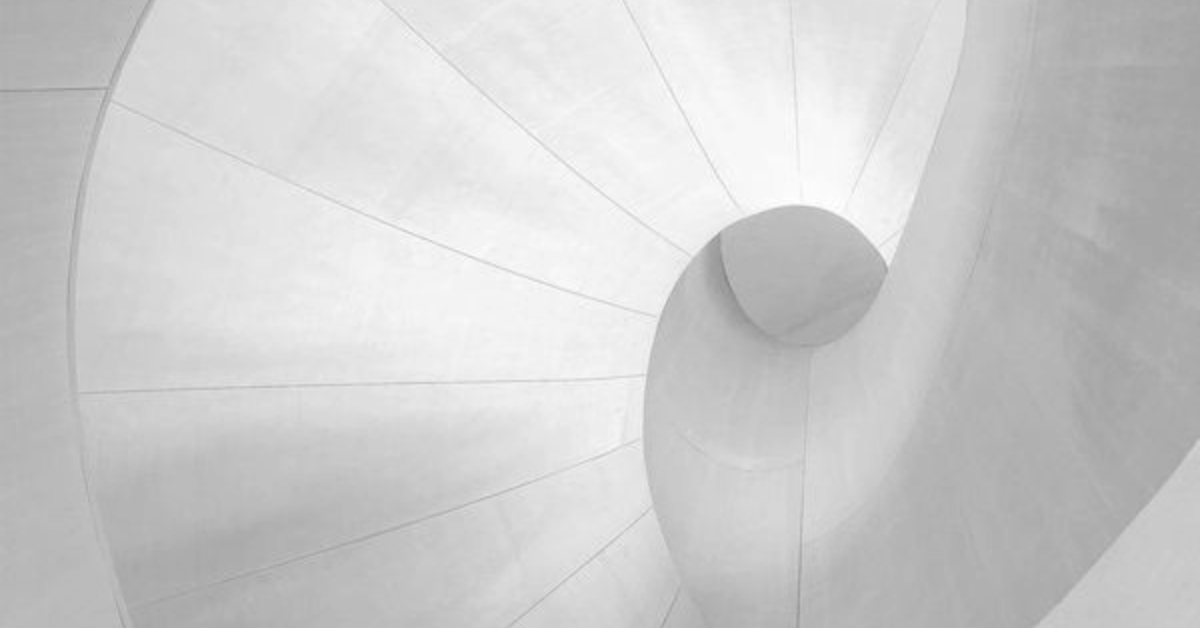
Captured within the Art Gallery of Ontario, this photograph explores the mesmerizing geometry of the institution's iconic wooden spiral staircase. By positioning the camera to look upward from within the helix, the photographer emphasizes the interplay between natural light and the fluid, architectural curves of the structure. The image is award-worthy for its clean, minimalist composition and the way it transforms a functional space into an abstract study of form and rhythm, inviting the viewer to experience the grand scale of the staircase from an intimate, immersive perspective.
Jack Hoye
Jack Hoye is a digital artist and graduate of The Westphal College of Media Arts & Design at Drexel University. His work has garnered international recognition, appearing in publications such as Architectural Digest and Art Market International Magazine, and has been exhibited in venues ranging from New York to Tokyo. Currently based in Cortlandt Manor, New York, Hoye balances his practice as an independent artist and entrepreneur, consistently exploring the intersection of visual arts and architectural form.
Resonance Score Breakdown
Transparency Note: The resonance score (6.8/20) is calculated based on social engagement metrics collected before the award announcement.
Expert Photography Reviews · 6
The Architecture of Ascent
I often find myself lingering in the stairwells of old apartment blocks, those narrow, winding throats of concrete and iron that seem to hold the breath of everyone who has ever climbed them.
Read the reflection →The Geometry of Ascent
Dear reader, I have been thinking about the way we choose to climb. We are always looking for a way up, aren't we? We trace patterns in the air, hoping that if we follow the right curve, we might eventually reach a place where the air is thinner and the view is clearer.
Read the reflection →Reviews & Comments
Share your thoughts about this award-winning photograph. Your reviews contribute to the community engagement score.
The lens tilts, and suddenly the world tilts with it. It’s a dizzying, rhythmic ascent. The wood curves like a film strip frozen mid-roll, pulling the eye into a void that feels infinite. I’ve walked those stairs, but I’ve never felt the vertigo quite like this. It’s a clean, sharp cut of geometry. The shutter caught the exact second the architecture stopped breathing. It’s the frame the editor keeps because it’s already a finished scene.
The spiral’s geometry dictates the frame’s internal logic. It’s a relentless repetition of wooden arcs, forcing the eye into a vertical ascent. The negative space doesn’t merely exist; it anchors the composition, preventing the helix from collapsing into chaos. I’ve rarely seen such disciplined spatial tension. It’s cold, precise, and entirely necessary. The structure holds its weight perfectly. It’s rare to find such structural integrity in a handheld capture. The architecture finally commands the viewer.
We stand beneath the Art Gallery of Ontario’s wooden spine, looking up into a throat of light. It’s a staircase, yes, but it feels like a lung breathing in the silence of the room. I’ve spent my life listening to faces, yet here, the architecture tells the story. It doesn’t need a person to be human; the rhythm of the wood feels like a heartbeat. It’s a photograph that makes me feel small, and I love that.
The staircase doesn’t just ascend; it devours the light. Looking up that wooden throat, I’m struck by a sudden, cold vertigo. It’s not the geometry that haunts me, but the way the shadows cling to the curves like ink in a wound. Hoye hasn’t captured a building; he’s captured the silence of a void. It’s a brutal, honest darkness. I’ve spent hours staring into it, and frankly, it’s the only thing here that feels alive.
Looking up through Gehry’s helix, the rhythm of the timber ribs creates a dizzying datum that pulls the eye toward the skylight. It’s a clever abstraction, yet it flattens the staircase’s true, tactile weight. I’ve walked these stairs; they’re about the friction of wood against palm and the slow, rhythmic ascent. While the geometry is sharp, it’s almost too clean. I miss the human scale, the messy, beautiful reality of people moving through that void.
Looking up that helix, I’m searching for the kinetic snap, but it’s static. Architecture doesn’t have a peak moment like a sprinter’s drive phase, yet the geometry here feels slightly off-balance. The light hits the wood, but the composition misses the precise apex of the curve. It’s a clean shot, sure, but it’s missing the tension of a body mid-air. I’d have shifted the angle to find the true, breathless center. It’s almost there, but not quite.