Simplicity by Fatemeh Tajik
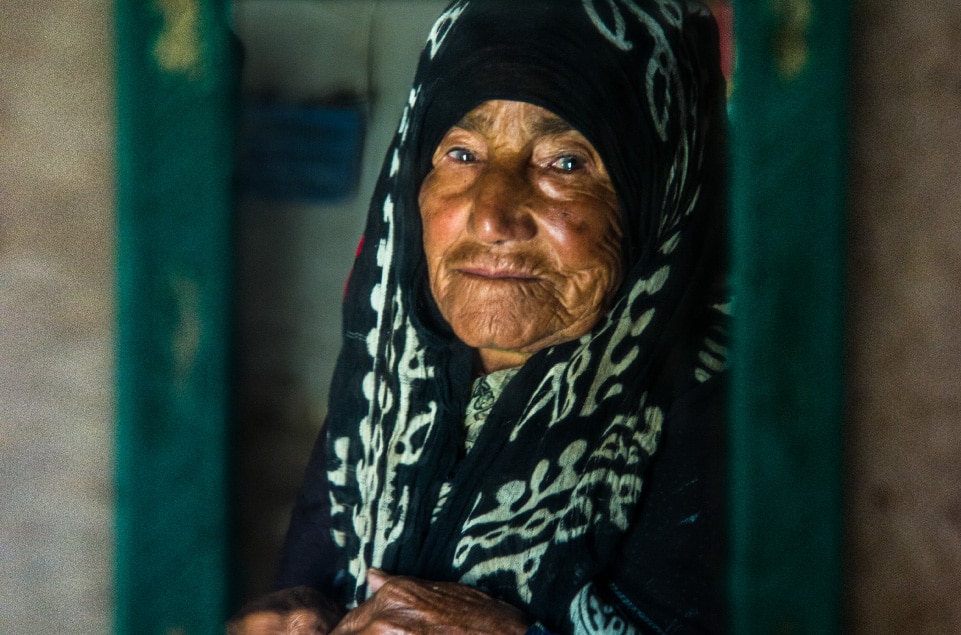
This poignant portrait captures the solitary life of an elderly woman residing in a remote, picturesque village in the Kurdistan region of Iran. Having seen her children depart for the city, she navigates her daily existence with a quiet resilience born from a lifetime of hardships. The photographer masterfully documents this simplicity, focusing on the subject’s weathered features and the stark beauty of her surroundings. The image is award-worthy for its profound emotional resonance and the photographer's ability to elevate a humble, isolated life into a powerful narrative of human endurance and cultural heritage.
Fatemeh Tajik
Born in Iran in 1981, Fatemeh Tajik is a dedicated photographer who has spent the last three years refining her craft. Her artistic practice spans travel, documentary, social, and news photography, often complemented by her background in painting and calligraphy. Having showcased her work in various domestic festivals and group exhibitions, Tajik continues to travel extensively across Iran, driven by a persistent search for new visual experiences and human stories.
Resonance Score Breakdown
Transparency Note: The resonance score (9.9/20) is calculated based on social engagement metrics collected before the award announcement.
Expert Photography Reviews · 6
The Weight of Stillness
There is a specific quality to the light in late autumn, just before the first frost, when the sky turns the colour of wet slate. It is a flat, honest light that refuses to hide the textures of the earth or the lines on a face.
Read the reflection →The Weight of Quiet
I spent this morning clearing out a drawer I haven't opened in years. It was full of old receipts, a broken watch, and a few letters from people I barely speak to anymore.
Read the reflection →Reviews & Comments
Share your thoughts about this award-winning photograph. Your reviews contribute to the community engagement score.
The focal plane sits perfectly on the topography of her skin, resolving the micro-contrast of every furrowed line. It’s a masterclass in managing the diffraction limit; the lens hasn’t softened a single pore. I’m genuinely moved by how the bokeh, a function of a wide aperture, isolates her against the Kordestan landscape. It’s rare to see such optical precision serve human endurance so tenderly. It doesn’t just capture light; it maps a lifetime of resilience.
You didn’t just frame a face; you sat with her. I can feel the weight of those empty rooms in the way she holds her hands. It’s the silence that gets me—that heavy, lived-in quiet of a home where the kids have all left. You waited for the light to catch the lines on her skin, and it tells the whole story. There’s something deeply honest happening here. You really saw her.
Before the eye identifies the weathered skin, something in the chest tightens. It’s a quiet, heavy stillness. I feel the cold of those Kordestan mountains in my own marrow. When I return to this portrait, the woman’s gaze doesn’t just watch; it demands a reckoning with my own solitude. It’s the way she holds the silence—it’s not empty, it’s full. I’ve found myself thinking of her face long after the lights go out.
There’s a stillness here that reminds me of waiting in a blind for a snow leopard to emerge from the crags. You can’t force that kind of presence; it’s earned through silence. I find myself holding my breath, respecting the distance Tajik kept. It’s a rare, honest portrait that doesn’t feel like an intrusion. She didn’t extract this moment; she let the subject exist in her own space. That’s a discipline I rarely see anymore.
The tension in her hands as they grip the fabric isn’t just posture; it’s the exact physiological anchor of a life spent laboring. I’ve spent years watching bodies hit their limit, and there’s a specific, quiet strain here that’s perfectly timed. It’s not the moment of collapse, but the one of holding on. I find myself wanting to reach out and steady her. It’s the frame. Not the one before. Not the one after. This one.
The subject’s face anchors the frame, creating a powerful vertical axis that bisects the composition. Tajik utilizes a 1:2 ratio between the textured, weathered skin and the negative space of the wall, effectively balancing the visual weight. I’m genuinely moved by how the diagonal shadow lines converge toward her gaze, forcing a geometric tension that feels inevitable. It’s a perfectly solved spatial equation; the math here doesn’t just support the portrait, it defines her quiet endurance.