Short-Clawed Otter in the Sundarbans by Saniar Rahman Rahul
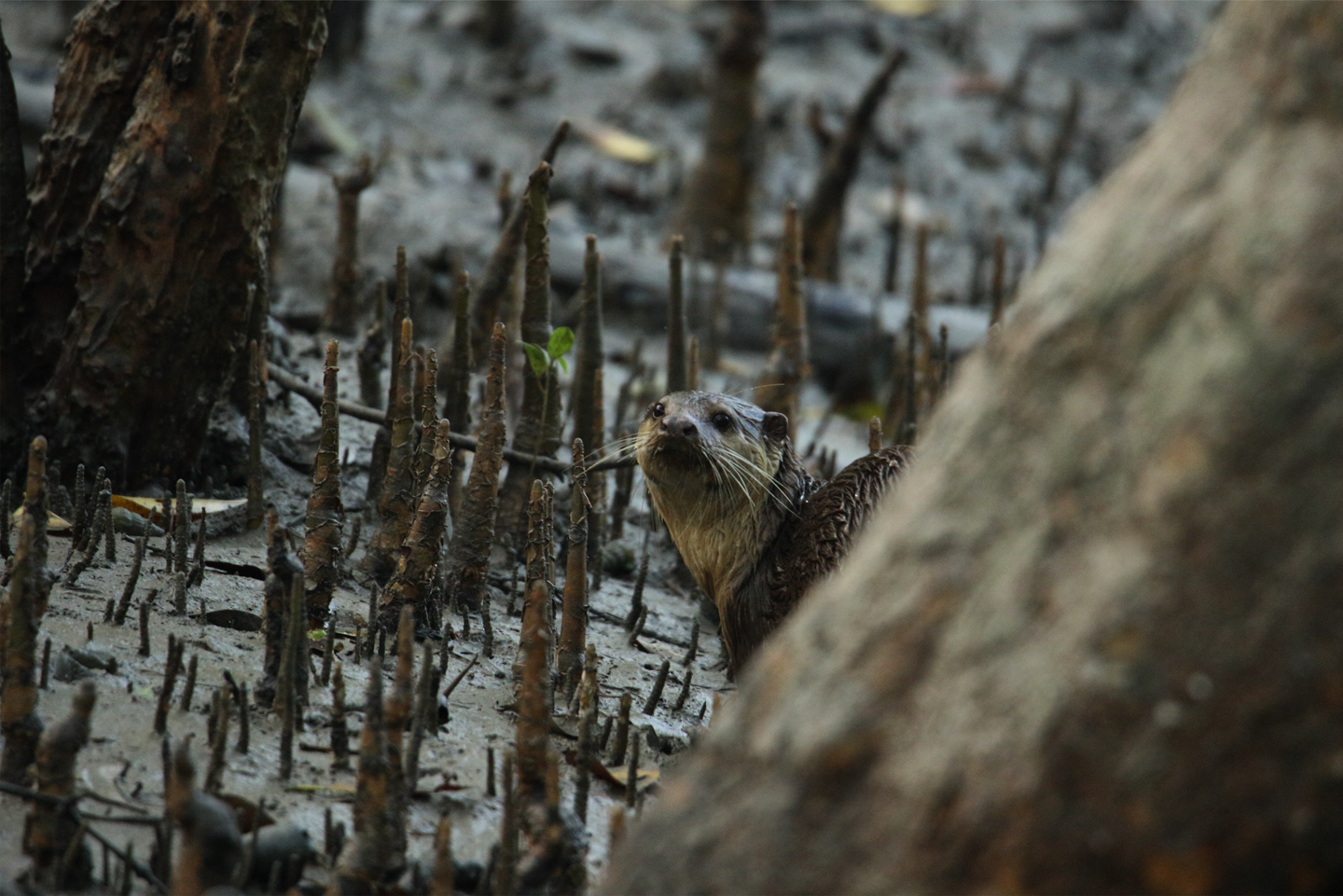
In the quiet, mist-laden embrace of the Sundarbans, the photographer captured a fleeting moment of a short-clawed otter navigating the intricate mangrove roots. The image beautifully contrasts the playful, mischievous spirit of the wildlife against the serene, ancient backdrop of the forest. By utilizing a long focal length, the photographer isolated the subject, allowing the viewer to appreciate the intimate details of the otter’s movement within its natural habitat. This photograph is award-worthy for its ability to transform a candid wildlife encounter into a compelling narrative of life in one of the world's most unique ecosystems.
Saniar Rahman Rahul
Based in Dhaka, Bangladesh, Saniar Rahman Rahul is an accomplished Art Director at Grey Worldwide with a deep-rooted passion for visual storytelling. His journey into photography began in childhood, inspired by his father’s work, and was later refined through a distinguished career in graphic design and advertising. Since winning his first major photography award in 2010, Rahul has dedicated himself to capturing the raw beauty of nature and the human experience, blending his professional design expertise with a keen, artistic eye for composition.
Resonance Score Breakdown
Transparency Note: The resonance score (6.9/20) is calculated based on social engagement metrics collected before the award announcement.
Expert Photography Reviews · 3
The Weight of the Wild
My first instinct was to look away. I have grown weary of the way we romanticize the natural world, turning wild things into soft, accessible icons for our own comfort.
Read the reflection →The Rhythm of the Wild
There is a quiet language spoken in the places where the land meets the water, a conversation between the roots and the tide that does not require our interference.
Read the reflection →Reviews & Comments
Share your thoughts about this award-winning photograph. Your reviews contribute to the community engagement score.
The Sundarbans don’t offer second chances. Rahul caught that otter mid-stride, muscles coiled against the tangled roots. It’s raw. If he’d fired a fraction later, the creature would’ve vanished into the mist, leaving only empty mud. I’ve spent years chasing that exact tension. Seeing this, I actually held my breath. It’s the perfect, fleeting intersection of predator and place. He didn’t just take a picture; he caught the forest’s heartbeat. That’s the decisive moment, pure and simple.
The otter’s placement against the verticality of the mangrove roots creates a necessary spatial tension. It’s a rigid geometry that anchors the frame. The negative space doesn’t collapse; it breathes. I’d argue the shallow depth of field is the only thing keeping the chaos of the forest from overwhelming the subject. It’s a disciplined capture. Honestly, the way the creature’s whiskers align with the root textures is the only reason this frame holds together.
The Sundarbans aren’t merely a backdrop; they’re a suffocating, primordial silence. Rahul’s otter emerges from the gloom, yet it’s the encroaching darkness of the mangrove roots that truly commands the frame. It’s a haunting reminder that life here is a fragile intrusion upon an ancient, indifferent void. I’ve stared at these tangled shadows until my eyes ached, feeling the weight of the creature’s isolation. It doesn’t play; it survives the encroaching dark. It’s a profound, lonely victory.