Shopping Promenade Leipzig Station by Wilfried Claus
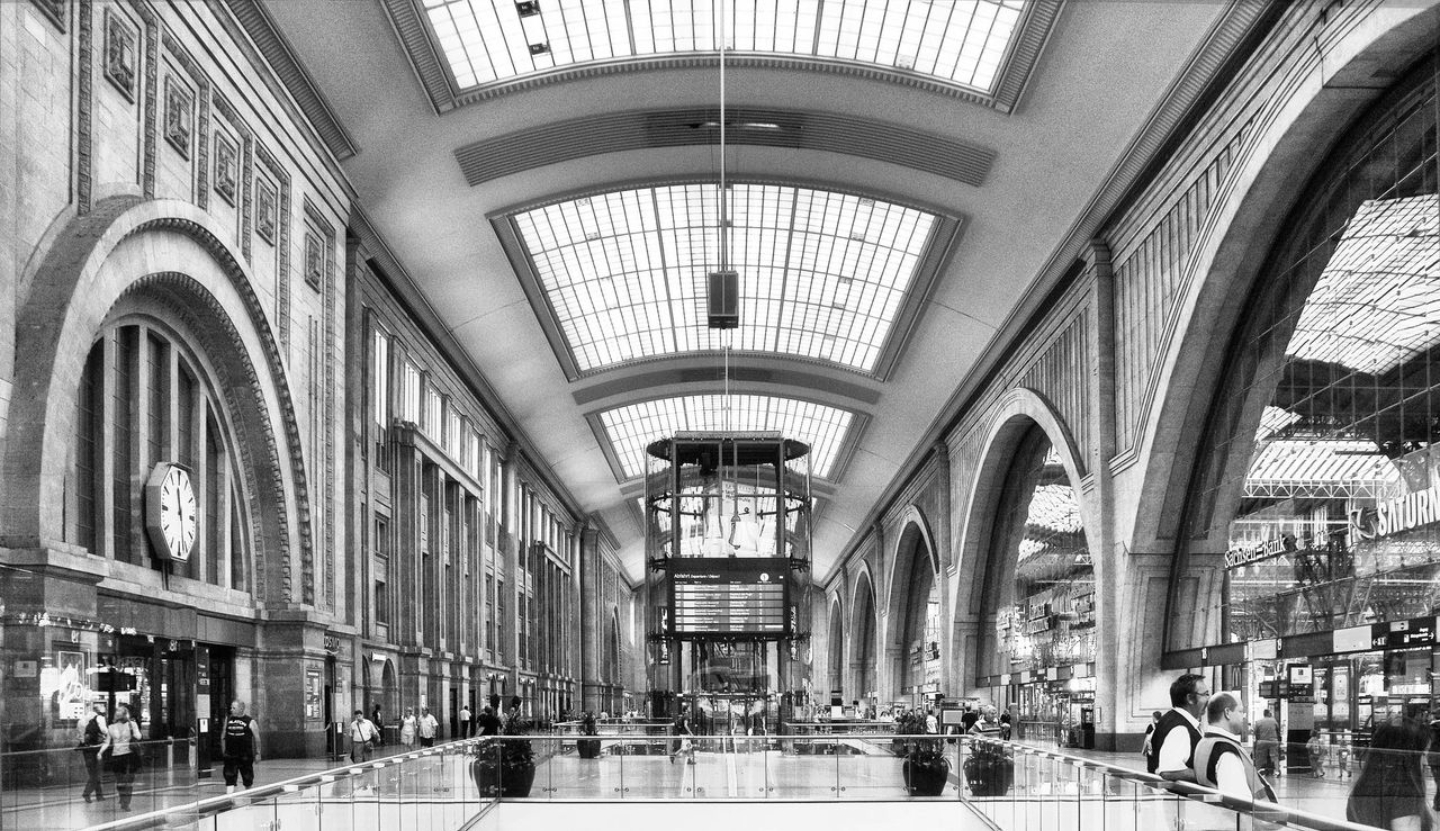
The photograph captures the grand scale and architectural elegance of the Leipzig Station, one of Europe's largest and most impressive transport hubs. By focusing on the transverse platform hall, the image highlights the harmonious integration of a three-storey shopping promenade beneath sweeping arcade arches. The photographer expertly utilizes a wide-angle perspective to convey the immense volume of the space, emphasizing the interplay between historical structure and modern consumer utility. This composition is award-worthy for its ability to transform a bustling transit environment into a serene, symmetrical study of light and geometry, showcasing the station's unique character as both a functional terminal and a monumental architectural landmark.
Wilfried Claus
Born in Cologne in 1947, Wilfried Claus transitioned from a dedicated career as a teacher and headmaster to a focused life in the arts following his retirement in 2009. He established a professional studio to refine his craft, with a primary specialization in portraiture and documentary photography, including the detailed recording of architectural restoration projects. Beyond his technical work, Claus has been instrumental in the cultural life of his community, co-founding a theatre in a repurposed factory that serves as both a creative venue and a subject for his evocative photography.
Resonance Score Breakdown
Transparency Note: The resonance score (6.9/20) is calculated based on social engagement metrics collected before the award announcement.
Expert Photography Reviews · 6
The Architecture of Transit
I often find myself thinking about the places we pass through but never truly inhabit. There is a specific, hollow ache to a train station at dusk, a feeling of being suspended between the life you just left and the one you are rushing toward.
Read the reflection →The Echo of Transit
We are all just temporary tenants in the architecture of movement. A station is a cathedral built for the restless, a place where the air is thick with the dust of arrivals and the quiet, lingering scent of departures.
Read the reflection →Reviews & Comments
Share your thoughts about this award-winning photograph. Your reviews contribute to the community engagement score.
We walk into the Leipzig Station and find a silence that shouldn’t exist in such a place. The arches pull our eyes upward, but it’s the people—tiny, blurred ghosts—that ground us. They’ve become part of the architecture, rhythmic pulses in a stone heart. I feel a sudden, quiet loneliness looking at them, as if we’re all just passing through time itself. It’s a portrait of a building that has learned to listen to its travelers.
The arches pull the eye upward. It’s a vast, hollow lung. I find myself holding my breath, waiting for the commuters to vanish. They don’t. They’re just ghosts in the geometry. The light doesn’t land; it lingers. It’s quiet here, despite the steel. I’d walk through this frame if I could. Nothing here is accidental. The empty corner is not empty. It’s a pause. A rare, heavy silence in a place built for noise.
The vanishing point anchors the frame with surgical precision. Symmetry dictates the rhythm of the arcade arches, forcing the eye toward the terminal’s depth. It’s a rigid, disciplined geometry that leaves no room for the chaos of transit. The negative space beneath the vaults provides a necessary, cooling silence. I’m genuinely unsettled by how perfectly the vertical lines align. It doesn’t just hold; it commands. The composition is a triumph of structural restraint over visual noise.
1/60sec at f/4, 17mm. The Foveon sensor’s micro-contrast is wasted here. At f/4, the corners are soft, losing the structural rigidity this architecture demands. It’s a wide-angle compromise that blurs the transition between historical ironwork and modern retail clutter. I’ve spent years analyzing these sensor outputs; seeing this lack of sharpness in the periphery genuinely irritates me. You’ve prioritized the shutter speed over the aperture’s potential for depth. It’s technically lazy. The geometry deserved better glass discipline.
Leipzig Station demands a rhythm, yet Claus captures it in a state of suspended animation. He’s caught the commuters mid-stride, but the timing is off by a fraction. I’m looking for the moment the heel strikes or the toe leaves the marble; instead, he’s hit the frame where they’re just shuffling. It’s technically sharp, but it lacks the kinetic tension of a true peak moment. I wanted to feel the rush, but it’s just static.
Leipzig Station is a cathedral of transit, but Claus treats it like a museum. The symmetry is clean, almost clinical. I’m looking for the pulse, the human friction that Winogrand lived for. It’s technically sharp, sure, but where’s the chaos? One tenth of a second later and a commuter’s stride could’ve broken that rigid geometry. I crave the mess of life. It’s beautiful, but it’s too quiet. I wanted to feel the station breathing.