Reflection of the Past by Zahraa Al Hassani
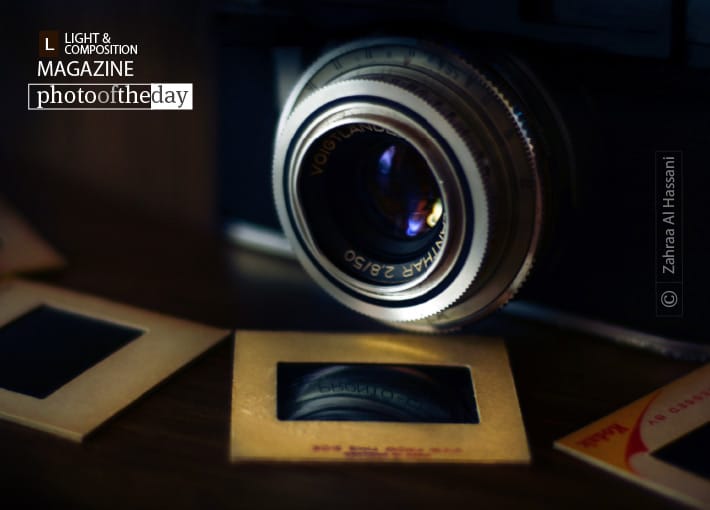
In Reflection of the Past, the photographer explores the interplay between modern optics and vintage media. By capturing the delicate reflection of a camera lens over a film slide, the image creates a poignant dialogue between contemporary digital precision and the tactile history of analog photography. The shallow depth of field, achieved with a wide f/1.8 aperture, isolates the reflection, turning a simple technical setup into a meditative study of light and memory. This evocative composition stands out for its conceptual depth, successfully bridging the gap between the tools of the past and the creative vision of the present.
Zara Otaifah
Based in Baghdad, Iraq, Zahraa Al Hassani balances a successful career as a senior graphic designer at Zain Telecommunications with a dedicated pursuit of fine art photography. A graduate of the University of Technology Baghdad, she leverages her extensive design background to refine her photographic perspective, often creating custom visuals for her professional projects. Having transitioned from early Sony equipment to the Nikon system, she continues to refine her craft, driven by a commitment to mastering the nuances of purist photography while raising her family.
Resonance Score Breakdown
Transparency Note: The resonance score (12.6/20) is calculated based on social engagement metrics collected before the award announcement.
Expert Photography Reviews · 8
The Echo in the Glass
My grandfather kept a shoebox of negatives in the back of his closet, curled like dried autumn leaves. I remember holding one up to the kitchen window, squinting at the ghostly, inverted world trapped in the plastic.
Read the reflection →The Echo of a Ghost
We are all vessels for the light that came before us, carrying the ghosts of afternoons we never lived. Memory is not a straight line; it is a series of translucent layers, like thin sheets of glass stacked against the sun.
Read the reflection →Reviews & Comments
Share your thoughts about this award-winning photograph. Your reviews contribute to the community engagement score.

Shadow isn’t merely the absence of light here; it’s the grave where the analog past is buried. Al Hassani’s lens doesn’t just capture a reflection; it traps the ghost of a medium within the digital aperture. I’m unsettled by how the darkness swallows the edges of that film slide. It’s a cold, precise haunting. We’re watching time dissolve into glass. It’s beautiful, yes, but it’s a beauty that refuses to offer us any comfort.
We look at this slide and see more than glass; we see a ghost of Baghdad. Zahraa hasn’t just captured a lens reflection; she’s listened to the silence of what’s been left behind. It’s a quiet conversation between the digital eye and the tactile memory of a lost era. I feel a sudden, sharp ache in my chest looking at it. It’s a photograph that asks to be returned to, over and over again.
Most entries this year relied on tired nostalgia, but Al Hassani’s work avoids that trap. By pinning the lens reflection against the film slide, she forces a confrontation between eras. It’s the shallow f/1.8 depth that makes this stick; it turns the glass into a ghost. I’ve seen thousands of still lifes, yet this one makes me ache for the tactile weight of film. It’s a rare, honest bridge between our digital convenience and real history.
1/20sec at f/1.8, 50mm. A precarious choice. Handheld at that shutter speed, you’re gambling with micro-blur. The D7100’s sensor is unforgiving, yet the focus plane on the slide is razor-sharp. It’s technically sound, though the shallow depth of field leaves the edges of the lens reflection dissolving into noise. I’ve spent years chasing this kind of precision. It’s a cold, calculated success. The aperture choice was correct; it isolates the history without letting the background clutter the frame.
Before the eye identifies the lens, something in the chest tightens. It’s the sudden, sharp recognition of a ghost. That shallow depth of field doesn’t just isolate the slide; it forces a physiological pause, a held-breath moment where the past feels heavy and tactile. I’ve returned to this reflection three times today, and each time, it’s like remembering a dream I haven’t had yet. It’s a quiet, aching bridge between what we’ve lost and what remains.
There’s a quiet ache in how the light catches that glass. She stood there, likely in the stillness of a Baghdad afternoon, waiting for the lens to mirror the slide’s ghost. It’s not just optics; it’s a prayer for what we’ve lost. I find myself holding my breath, feeling the weight of that shallow focus. It’s a fragile, fleeting bridge between eras. I’ve felt that same heavy silence, waiting for the light to finally speak.
A sliver of glass. A ghost of light. It’s quiet here. The frame doesn’t crowd the subject; it lets the shadow breathe. I’ve spent minutes watching the blur soften the edges of that slide. It’s a deliberate ache. Nothing here is accidental. The empty corner is not empty. It’s where the memory settles. I feel a sudden, sharp stillness in my own chest. It’s rare to find such restraint in a world so loud.
The focus pulls tight, a shallow slice of reality that feels like a held breath. It’s a quiet, haunting sequence. That 50mm lens catches the slide’s ghost, trapping history in a digital frame. I’ve spent years watching light dance, but this reflection hits differently; it’s a sudden, sharp ache for a medium we’ve traded for speed. The cut would’ve been a mistake. This is the frame the editor keeps, the one that lingers long after the screen goes dark.