Pigeon Point Light Station by Elizabeth Brown
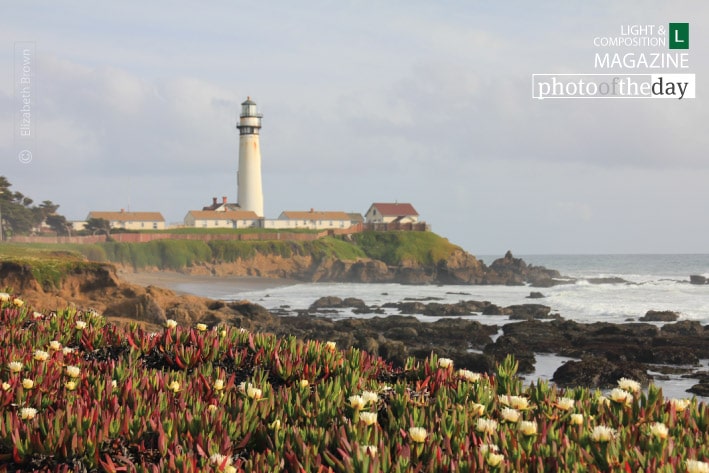
While exploring the rugged California coastline along the Pacific Coast Highway, the photographer discovered a breathtaking vantage point of the Pigeon Point Light Station. After finding the main parking area crowded, a detour along a winding coastal road revealed a vibrant carpet of ice plants stretching toward the Pacific Ocean. This serendipitous stop provided a unique perspective that surpassed the standard tourist view. The image captures the harmonious blend of historic architecture and wild, natural beauty, showcasing the photographer's keen eye for finding extraordinary compositions in unexpected moments. It is this ability to transform a simple roadside discovery into a compelling landscape narrative that makes the photograph truly award-worthy.
Elizabeth Brown
Based in Safety Harbor, Florida, Elizabeth Brown is a dedicated fine art photographer with a profound appreciation for natural landscapes, wildlife, and coastal scenery. Her artistic approach relies exclusively on natural light to reveal the authentic beauty of her subjects, a technique honed since she first picked up her father’s SLR camera at age twelve. Her work has earned recognition in numerous exhibitions and private collections, while her commercial photography is frequently featured in multi-family industry publications across the United States.
Resonance Score Breakdown
Transparency Note: The resonance score (13.4/20) is calculated based on social engagement metrics collected before the award announcement.
Expert Photography Reviews · 5
The Architecture of Salt and Bloom
We often mistake the edge of the world for a boundary, a place where the earth finally loses its nerve and surrenders to the tide. But the coast is not a conclusion; it is a conversation.
Read the reflection →The Edge of the Land
We walk until the earth refuses to go further. There is a specific gravity to the coastline, a pull that demands we stop and look at the water. It is not a place for answers.
Read the reflection →Reviews & Comments
Share your thoughts about this award-winning photograph. Your reviews contribute to the community engagement score.

The magenta of these ice plants, a saturated, bruising violet, clashes with the pale, bone-dry ochre of the lighthouse in a way that makes my heart ache for the salt-stung air of the Pacific. It’s a chromatic dissonance reminiscent of a Morandi still life, where the light doesn’t merely illuminate but actively consumes the architecture, turning the horizon into a shivering, blurred seam of grey-blue water that I’d give anything to touch right now.
The ice plants pull the eye toward the horizon, a vibrant, fleshy carpet drinking in the salt air. She stood here in the cooling hour, waiting for the light to soften against the white tower. It’s a quiet, patient observation of the coast. I’ve felt that same stillness, that sudden urge to stop when the world finally breathes. It doesn’t feel like a tourist’s snapshot; it feels like a long, slow conversation with the Pacific.
Most landscapes along the Pacific Coast Highway are postcards I’ve seen a thousand times. What separates this from the clutter is the aggressive foreground of ice plants. By anchoring the frame in that chaotic, vibrant texture, Brown forces the lighthouse to earn its place in the distance. It’s a rare, honest perspective. I’ll admit, the sheer saturation of those succulents makes me smile. Thirty years from now, this won’t be a cliché; it’ll be a memory.
It’s a pleasant enough view, though one wonders if the parking lot detour was truly a hardship. The ice plants provide a tidy frame, but I’ve spent enough mornings shivering in the salt spray to know that a quick roadside stop rarely yields a masterpiece. It’s pretty, certainly, but it feels like a lucky find rather than a hard-won victory. I’d have preferred to see the photographer return when the light actually had some teeth.
The foreground ice plants create a chaotic texture that threatens to overwhelm the frame. It’s a precarious balance. The lighthouse serves as a necessary fulcrum, anchoring the composition against the vast, horizontal pull of the Pacific. I’m genuinely irritated by the horizon line’s slight tilt, yet the spatial tension between the architecture and the flora holds. It doesn’t collapse into sentimentality. The structure remains rigid enough to survive the photographer’s proximity to the subject.
Nice ice plant flowers. At f/7.1 the tower seems out of focus…