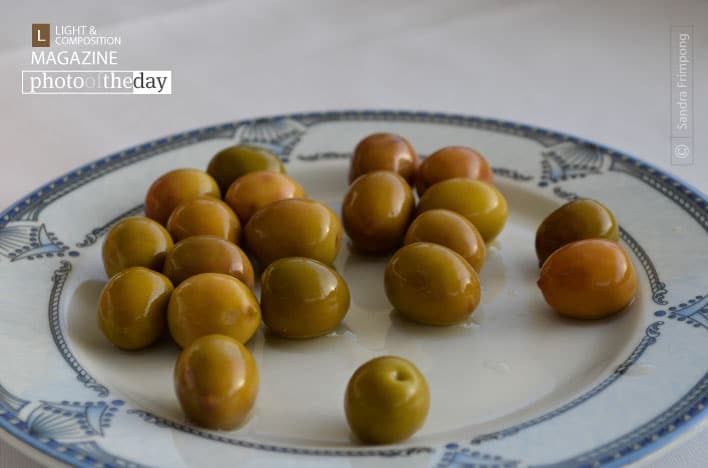
Olives by Sandra Frimpong
Captured during a tranquil winter morning at a beachside restaurant along the Gulf of Gaeta, this photograph transforms a simple culinary moment into a study of texture and light. While waiting for a meal, the photographer was struck by the vibrant, glistening appeal of the olives, prompting an immediate creative response. By isolating the subject against the ambient light of the Italian coast, the image elevates a mundane dining experience into a compelling visual narrative. The photograph is award-worthy for its ability to find profound beauty in the everyday, demonstrating a keen eye for detail and a masterful use of natural light to enhance the subject's organic appeal.
Sandra Frimpong
Born and raised in Ghana, Sandra Asantewaa Frimpong later moved to the United States, where she served in the Navy and pursued higher education in business. Her global travels during her military service ignited a deep passion for photography, leading her to document the simple, often overlooked beauty of daily life. Now residing in Italy, she continues to refine her craft through formal study and community-focused projects, aiming to bridge cultures and connect with her international audience by capturing the intimate, fleeting details of the world around her.
Resonance Score Breakdown
Transparency Note: The resonance score (12.9/20) is calculated based on social engagement metrics collected before the award announcement.
Expert Photography Reviews · 5
The Weight of the Harvest
To eat is to participate in a slow, quiet violence. We take what the earth has spent months preparing, the sun-warmed fruit, the bitter oil, and we make it part of our own blood. There is a gravity to this.
Read the reflection →The Salt of the Earth
In the ancient groves of the Mediterranean, there is a rhythm to the harvest that predates our modern obsession with speed. We often forget that the things which sustain us—the oil, the fruit, the brine—are born from a slow, deliberate patience.
Read the reflection →Reviews & Comments
Share your thoughts about this award-winning photograph. Your reviews contribute to the community engagement score.
It’s a pleasant enough study of brine and skin, though one suspects the olives were eaten shortly after the shutter clicked. There’s no scent of the long haul here; it’s a snapshot born of convenience, not commitment. I’ve spent enough mornings shivering on Italian coastlines to know that true light requires more than just waiting for a lunch order. It’s technically competent, certainly, but it hasn’t cost the photographer a single sleepless night.
The table is vast. A single bowl of olives sits in the corner. It’s a quiet geometry. The light from the Gulf of Gaeta pulls the salt and oil into focus. I’ve spent minutes looking at the wood grain surrounding the fruit. It’s enough. Nothing here is accidental. The empty corner is not empty. It’s a breath. I feel a sudden, sharp hunger for this stillness. It’s rare to find such peace in a meal.
Most food photography is just catalog filler, but these olives caught me off guard. It’s the way the brine catches that specific, pale winter light of the Gulf of Gaeta; it feels cold, almost sharp. I’ve seen thousands of plates, yet this one lingers because it doesn’t try to be art. It’s just an honest, glistening moment. In thirty years, we’ll still recognize that light. It’s a quiet, perfect anchor for a memory.
These olives don’t merely sit; they endure the harsh Mediterranean glare. Frimpong forces us to confront the brine and the pit, stripping away the romanticism of the Italian coast. I’m unsettled by how the shadows cling to the plate, refusing to yield to the morning sun. It’s a cold, existential stillness. When I look at these dark, glistening spheres, I don’t see a snack. I see the heavy, unyielding weight of time itself, waiting to be consumed.
These olives possess the bruised, melancholic violet of a Morandi still life, resting in a brine that catches the light like the shallow, silvered tidal waters of a winter Mediterranean dawn. It’s a quiet, saline rapture that I find utterly intoxicating; the way the light clings to their oily, obsidian skins makes my heart ache for the coast. One doesn’t merely see these fruits; one tastes the cold, salt-heavy air of Sperlonga through their dark, glistening depths.