New York City Subway by Rodrigo Luft
Captured within the subterranean depths of a New York City subway station south of Manhattan, this photograph masterfully utilizes the inherent geometry of urban transit architecture. The photographer exercised immense patience, waiting for the platform to clear to isolate the station's striking symmetry. By stripping the scene down to its essential lines and shadows, the image transforms a mundane transit space into a compelling study of form. The decision to render the composition in black and white emphasizes the rhythmic repetition of the station's structure, earning it recognition for its clean execution and sophisticated visual balance.
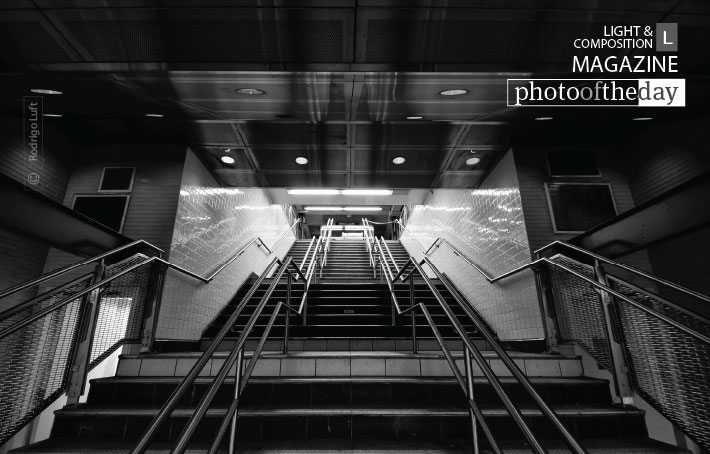
Exposure 1/15sec @ f/3.5 | ISO 320 | Focal Length 10mm
Rodrigo Luft
Born in southern Brazil, Rodrigo Luft continues to live and work in his home country, where he balances his professional life with a dedicated pursuit of photography. His artistic practice spans landscapes, architecture, and abstract studies, often exploring the beauty found in everyday objects with a particular affinity for black-and-white aesthetics. An accomplished amateur, Luft has gained international recognition, including a 2013 exhibition at the 'History of Creative' showcase in New York, and he maintains an active presence on platforms like 500px and Flickr to share his evolving creative vision.
Resonance Score Breakdown
Transparency Note: The resonance score (12.4/20) is calculated based on social engagement metrics collected before the award announcement.
Expert Photography Reviews · 8
The Architecture of Waiting
I once spent three hours in a transit station in Berlin, waiting for a train that had been delayed by a signal failure. At first, I paced the platform, checking my watch and tapping my foot against the cold tile.
Read the reflection →The Architecture of Echoes
We are often told that silence is an absence, a hollow space waiting to be filled by the noise of our own making. But there is a weight to the quiet that gathers in places built for transit, a subterranean hum that lingers long after the crowd has dispersed.
Read the reflection →Reviews & Comments
Share your thoughts about this award-winning photograph. Your reviews contribute to the community engagement score.
The platform is vacant. It’s a rare, quiet lung in a city that doesn’t breathe. I’ve stood in stations like this, waiting for the crowd to vanish. It’s lonely. The geometry pulls the eye toward a vanishing point that refuses to resolve. Nothing here is accidental. The empty corner is not empty. It’s a deliberate pause. Luft has found the silence beneath the noise. It’s enough. I feel a sudden, sharp relief in the stillness.
Most subway shots are cluttered, noisy messes. What separates this from the thousands I’ve reviewed is the brutal, rhythmic silence Luft found. By pinning the perspective to that central vanishing point, he turns a transit tunnel into a cathedral of steel. It’s cold, yes, but it’s honest. I’ve walked these platforms a hundred times, and looking at this, I actually feel the hum of the third rail. That’s why it’ll still matter in thirty years.
Beneath the city’s frantic pulse, Rodrigo found a rare, hollow silence. He stood here in the cooling hour, waiting for the commuters to vanish so the architecture could finally breathe. It’s a subterranean cathedral of steel and shadow. Looking at these stark, rhythmic lines, I feel a sudden, sharp ache for the stillness he captured. He didn’t just photograph a subway; he listened to the station until it revealed its own lonely, geometric soul.
1/15sec at f/3.5, ISO 320, 10mm. Wide-open at 10mm creates significant barrel distortion, yet here it anchors the converging lines of the subway tiles. It’s a risky shutter speed for handheld work, but the lack of motion blur suggests a steady hand or a braced stance. I’ve spent years in these tunnels; the stillness captured here is genuinely unsettling. The technical choices don’t just support the composition; they define the geometry. It’s a precise, cold execution.
The vanishing point anchors the frame with clinical precision. It’s a rigid geometry that demands total submission from the viewer. The rhythmic repetition of the pillars creates a spatial tension that doesn’t falter. I’m genuinely unsettled by how the light bleeds across the platform, forcing the eye toward the dark void. It’s a cold, calculated architecture. The frame holds because it refuses to offer the viewer any comfort. It’s structural perfection in a subterranean cage.
Before the eye identifies the subway tiles, a sudden stillness settles in the chest. It’s the silence of a city holding its breath. The geometry pulls me into a rhythmic, subterranean trance, stripping away the noise of 5th Avenue. I’ve walked these platforms, yet here, the shadows feel heavy, almost tactile. It’s a lonely, beautiful void. When I return to it, I still feel that slight, cold shiver of being entirely, perfectly alone underground.
Stripping away the chromatic spectrum feels like a profound loss here, as if one has silenced a choir to study the architecture of the pews. I’m left yearning for the bruised, subterranean ochres and the flickering, sickly mercury-vapor greens that usually haunt these tunnels, for without that visceral, atmospheric tension, the subway’s geometry feels cold, almost clinical—it’s a beautiful, skeletal structure, yet I can’t help but mourn the vibrant, light-drenched ghosts that aren’t allowed to breathe.
At 10mm, the Nikon’s barrel distortion is remarkably controlled, pinning the station’s geometry to a rigid focal plane. Shooting wide open at f/3.5, Luft avoids the diffraction limit, keeping those subterranean tiles razor-sharp. I’m genuinely moved by how the light bleeds into the shadows; it’s a rare, clinical beauty. The lens resolves the rhythmic repetition of the architecture with such precision that it’s almost unsettling. It’s a cold, calculated triumph of optics over the mundane.