Never Waste Time by Kirsten Bruening
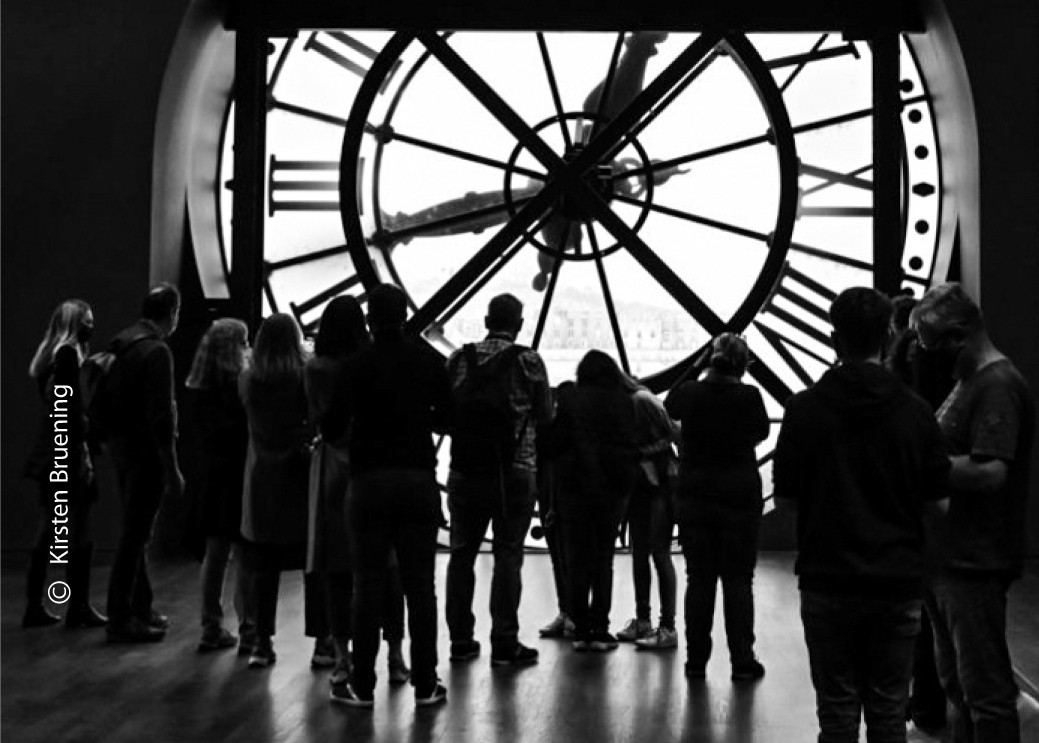
Captured at the Museum Orsay, this evocative image serves as a poignant visual manifesto on the fragility of our natural world. By utilizing a wide 24mm focal length, the photographer draws the viewer into a space that bridges the gap between human artifice and the urgent need for environmental stewardship. The composition emphasizes the stark beauty of light and shadow, transforming a moment of quiet reflection into a powerful call to action. This photograph is award-worthy for its ability to marry technical precision with a profound, timely message regarding the irreversible loss of biodiversity, urging humanity to protect the planet before it is too late.
Kirsten Bruening
Based near Cologne, Germany, Kirsten Bruening is a dedicated photographer whose creative journey began in childhood with an early fascination for analogue techniques. Following a fifteen-year hiatus, she returned to the medium with a renewed focus on the expressive power of black and white imagery. Her work spans nature, portraiture, and wildlife, consistently highlighting her belief that the interplay of light and shadow best captures human emotion and natural beauty. Currently pursuing formal studies in photography, she continues to refine her technical expertise and artistic vision.
Resonance Score Breakdown
Transparency Note: The resonance score (8.9/20) is calculated based on social engagement metrics collected before the award announcement.
Expert Photography Reviews · 5
The Clock That Stopped
There is a specific silence that lives in the lobby of a train station after the last departure has cleared the platform. It is not the silence of peace, but the silence of a held breath.
Read the reflection →The Persistence of Shadows
The mycelial network beneath a forest floor operates in a state of constant, silent negotiation, connecting disparate root systems to share nutrients across vast distances.
Read the reflection →Reviews & Comments
Share your thoughts about this award-winning photograph. Your reviews contribute to the community engagement score.
The Orsay’s clock face has been framed a thousand times, yet Bruening’s 24mm perspective avoids the usual tourist clichés. It’s reminiscent of Kertész’s geometric rigor, though the high ISO grain adds a grit that feels surprisingly contemporary. I’ve spent decades staring at these silhouettes, but the way she balances that harsh, artificial light against the void of the glass actually made me catch my breath. It’s a sharp, necessary intervention in a tired, well-worn conversation.
We stand in the Orsay, watching a figure caught between the stillness of stone and the rush of time. Kirsten didn’t just point her lens; she waited for the silence to settle. It’s a quiet conversation between the subject and the weight of history. I find my own breath catching as I look at those shadows. It’s a haunting reminder that we’re all just passing through. This is a photograph that asks to be returned to.
The Orsay’s vaulted ironwork creates a powerful datum, yet Bruening’s frame ignores the building’s inherent rhythm. By flattening the fenestration, she loses the tension between solid and void that defines this space. It’s a shame, because the way light rakes across those cold, industrial surfaces is genuinely haunting. I’ve walked these halls a thousand times, and while this composition misses the movement of the architecture, it captures the lonely, hollow ache of being small.
Before the eye identifies the Orsay’s clock, a sudden stillness settles in the chest. It’s a heavy, rhythmic quiet. The wide frame pulls me into that cavernous light, and I feel my pulse sync with the shadows. When I return to it, the urgency of the ticking hands feels like a personal reprimand. It’s haunting. I’ve spent hours staring at this, and it still makes me hold my breath, waiting for time to stop.
It’s a decent enough frame, though one wonders if the photographer simply stood there until the tourists cleared. Waiting for the Orsay’s clock to align with the light isn’t exactly scaling the Eiger, is it? I’ve spent weeks shivering in damp hides for a single decent exposure, so this feels a bit like a Sunday stroll. Still, the geometry holds up. I’ll admit, the stark monochrome makes me miss the quiet of a truly empty gallery.