Mountain Spigolino by Antonio Biagiotti
Captured amidst the shifting moods of the Regional Park of Corno alle Scale, this photograph highlights the dramatic potential of overcast mountain weather. Despite forecasts promising intermittent sun, the photographer embraced the diffused, moody light that transformed the landscape into a scene of quiet intensity. By utilizing a large-format camera and a long exposure, the image achieves a remarkable depth and tonal range that captures the raw, ethereal beauty of the Italian Apennines. The deliberate technical precision and the photographer's patience in waiting for the perfect atmospheric balance make this a compelling study of light and form.
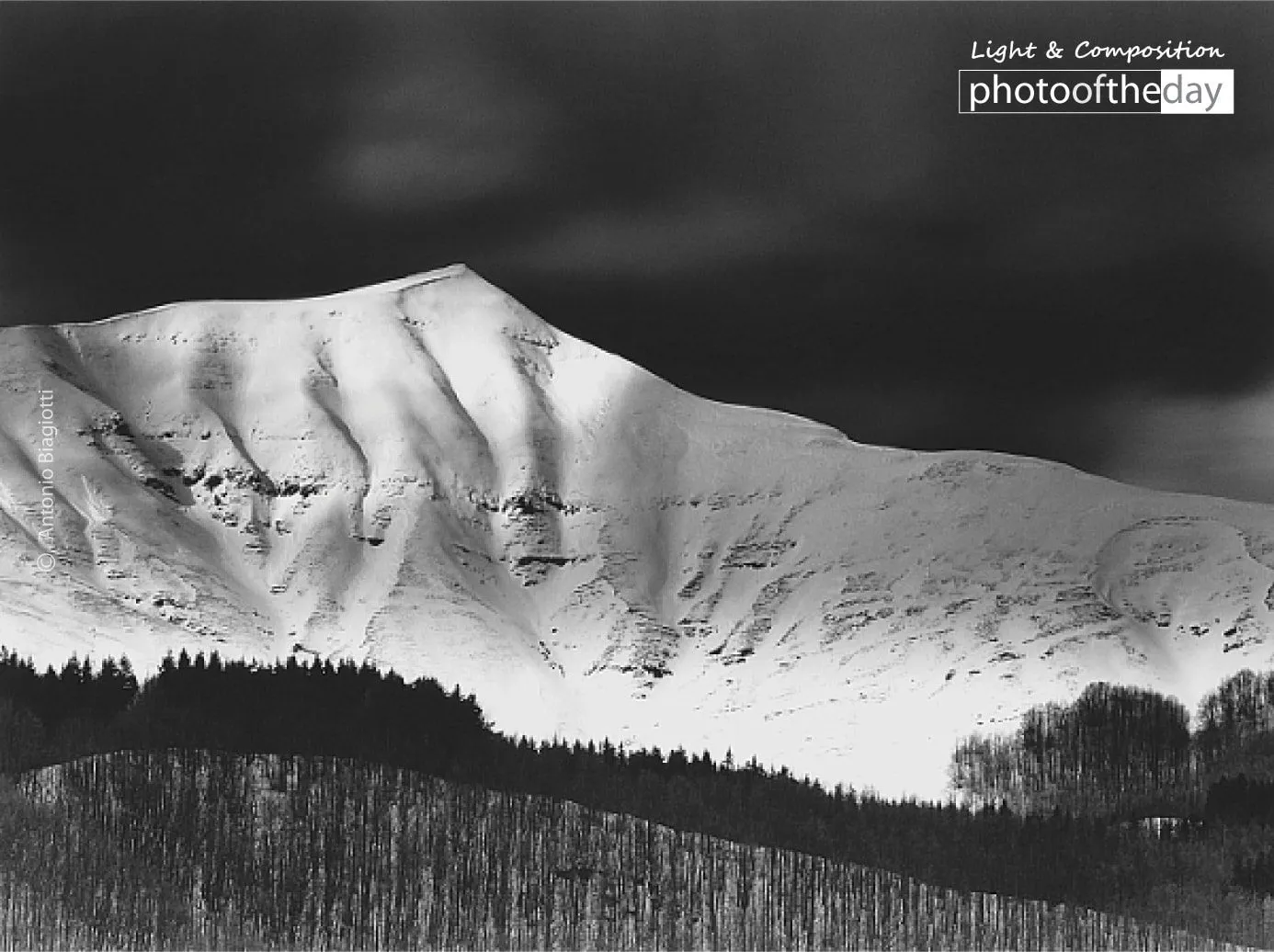
Exposure 2min @ f/64 | ISO 100 | Focal Length 350mm
Antonio Biagiotti
Born in 1971 in Porretta Terme, Italy, Antonio Biagiotti resides and works within the scenic landscape of the Appennino Tosco-Emiliano. A dedicated practitioner of traditional techniques, he specializes in large and medium format black-and-white photography, personally managing the development and printing process in his own darkroom. His work is deeply influenced by his passion for the mechanics of light and framing, consistently seeking to capture the timeless essence of the natural world through his meticulous, analog-focused approach.
Resonance Score Breakdown
Transparency Note: The resonance score (11.3/20) is calculated based on social engagement metrics collected before the award announcement.
Expert Photography Reviews · 5
The Breath of Stone
There is a specific chill that lives in the marrow of high places, a dampness that tastes of wet slate and ancient, unmoving air. When I close my eyes, I can feel the grit of granite against my palms, the way the rock holds the cold long after the sun has surrendered to the mist.
Read the reflection →The Weight of Grey
There is a particular density to the air just before the mist settles, a heavy, silvered stillness that feels like a held breath. In the north, we learn to respect this weight.
Read the reflection →Reviews & Comments
Share your thoughts about this award-winning photograph. Your reviews contribute to the community engagement score.
Two minutes at f/64? That’s a lifetime for a street shooter like me. I’m used to the frantic pulse of Winogrand, where a tenth of a second decides everything. But looking at Biagiotti’s mountain, I’m silenced. The stillness is heavy, almost suffocating. It’s not the decisive moment of a human gesture, but the decisive moment of the atmosphere itself. I feel the cold air hitting my lungs. It’s a gamble that actually paid off.
The mountain dissolves into grey. Two minutes of exposure have smoothed the air, turning the Apennines into a breath held in the throat. I’ve spent long minutes staring at the fog. It’s not an absence. It’s a weight. Nothing here is accidental. The empty corner is not empty. It’s the silence of the summit. I feel my own pulse slow down. It’s a rare, quiet relief to finally see nothing at all.
We look at these peaks and we don’t see a landscape; we see an elder. Antonio Biagiotti didn’t just point his lens at the Apennines; he sat with them until they whispered their history. That two-minute exposure isn’t just technique—it’s patience. It’s the sound of silence held in stone. I feel a sudden, quiet ache in my chest looking at it. It’s a portrait of a mountain that finally felt heard. It’s truly haunting.
The frame doesn’t collapse under the weight of the Apennines. It’s a rigid exercise in tonal stratification. The Apo-Tele-Xenar compression forces the mountain’s mass against the picture plane, creating a claustrophobic, vertical tension. I’m genuinely unsettled by how the negative space refuses to offer the eye an exit. It’s a brutal, disciplined architecture. The long exposure flattens the atmosphere into a singular, impenetrable slab. It’s cold, precise, and entirely unforgiving. It holds.
Mountain Spigolino doesn’t invite the eye; it demands a reckoning with the void. By choosing a two-minute exposure, Biagiotti has bled the light until only the architecture of silence remains. It’s a cold, heavy stillness that reminds me of the crushing solitude I felt in the high Alps years ago. The shadows here aren’t merely absent; they are the weight of the mountain itself, pressing against the frame, refusing to let the light breathe.