Mount Cook Road by Manon Mathieu
Captured during a serene autumn morning, this photograph showcases the breathtaking interplay of light over Lake Pukaki and the snow-dusted peaks of Mount Cook. The photographer, traveling by camper van, seized the perfect moment when the morning sun illuminated the valley, creating a dreamlike atmosphere. By utilizing a telephoto focal length, the image compresses the vast, rugged landscape, emphasizing the dramatic scale of the mountains against the tranquil water. This piece is award-worthy for its evocative composition and the photographer's ability to translate the quiet, majestic beauty of the New Zealand wilderness into a compelling visual narrative.
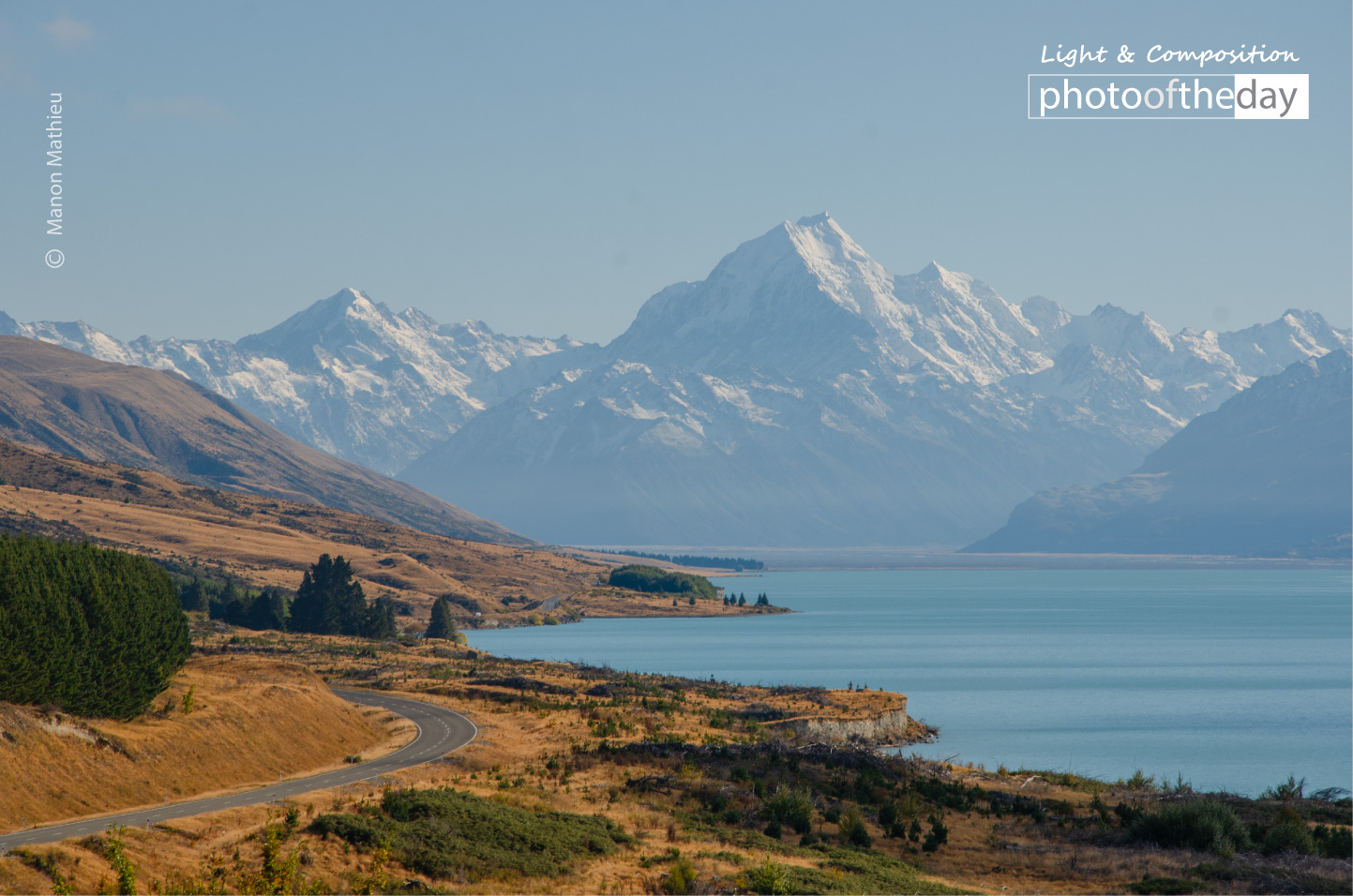
Exposure 1/100sec @ f/11 | ISO 250 | Focal Length 105mm
Manon Mathieu
Born in the south of France, Manon Mathieu is a journalist who has resided in Paris, Marseille, and Provence. She currently documents her global travels from the interior of a camper van, focusing on the discovery of remote landscapes, coastal walkways, and hidden towns. Her photographic work is driven by a deep desire to capture the natural beauty that moves her, reflecting a nomadic lifestyle dedicated to exploring the world one frame at a time.
Resonance Score Breakdown
Transparency Note: The resonance score (11.3/20) is calculated based on social engagement metrics collected before the award announcement.
Expert Photography Reviews · 8
The Weight of the Horizon
I remember sitting in a roadside diner in the South Island, watching a man map out his route on a paper atlas. He traced a line toward the mountains with a calloused thumb, his coffee going cold beside him.
Read the reflection →The Architecture of Silence
There is a particular weight to the air when the world is still waking, a thin, crystalline layer of silence that sits between the earth and the sky. It is in these moments that the landscape reveals its true bones, stripped of the frantic noise of the day.
Read the reflection →Reviews & Comments
Share your thoughts about this award-winning photograph. Your reviews contribute to the community engagement score.
Compression is a dangerous tool, yet here it creates a powerful datum between the glacial water and the jagged peaks. By flattening the distance, Mathieu forces a dialogue between solid and void that feels almost architectural. It’s a claustrophobic, beautiful tension. I’ve driven this road, and honestly, the sheer scale usually makes me feel small; here, the light hitting those ridges makes the mountain feel like a wall I could reach out and touch.
You’ve captured that specific, biting chill of a New Zealand morning. I can almost feel the frost on the lens. By pulling the mountains close with that 105mm, you’ve made the landscape feel intimate rather than just vast. It’s not just a pretty view; it’s the quiet solitude of being alone on the road. You waited for the light to hit those peaks just right. There’s something honest happening here. It’s a beautiful, lonely moment.
We look at these mountains and we don’t just see stone; we see a listener. Manon Mathieu didn’t just point a lens at Lake Pukaki; she waited for the earth to finish its morning prayer. The compression of the peaks feels like a held breath. It’s quiet, isn’t it? I feel a sudden, sharp ache for that stillness. It’s a portrait of a landscape that has finally been heard, and that’s a rare, beautiful thing.
The compression here is tidy, though one wonders if the camper van ever left the roadside. It’s a pleasant enough view, but it feels like a lucky morning rather than a hard-won victory. I’ve spent weeks shivering in that valley waiting for the light to actually do something interesting, and frankly, it’s a cold, miserable business. This shot is pretty, but it doesn’t smell of the frost. It’s a tourist’s souvenir, not a photographer’s conquest.
The compression here is clever, but it’s a tourist’s view of a landscape that demands more intimacy. I’ve spent weeks in the Southern Alps waiting for the light to hit those peaks; it’s a brutal, patient process. Mathieu’s shot feels like a quick pull-over from a camper van. It’s technically sound, sure, but it lacks the soul of someone who’s actually lived in that cold. I don’t feel the mountain’s weight, just a fleeting, convenient glance.
The light hits those peaks and my heart skips a beat. It’s that fleeting, golden transition where the valley wakes up. Mathieu caught the compression perfectly; a tenth of a second later and the sun’s edge would’ve lost that sharp, biting clarity against the snow. It’s not a street scene, but it’s got that Winogrand instinct—the hunger to grab the light before it dies. You were ready. You didn’t blink. That’s the decisive moment.
Before the eye identifies the peaks, something in the chest tightens. It’s the compression of that blue water against the jagged, snow-dusted stone. I feel a sudden, sharp drop in my pulse, a quietude that mimics the thin air of the South Island. When I return to it, I’m still looking for the silence I lost. It’s a cold, crystalline ache that follows me into sleep, reminding me of places I’ve never actually been.
The air at Lake Pukaki holds a peculiar, glacial weight. Manon stood here in the cooling hour, waiting for the light to finally touch the peaks. It’s a quiet, compressed compression of distance that makes my own breath hitch. She didn’t force the scene; she listened until the valley opened up. I’ve felt that same stillness, where the shutter click feels like an intrusion on the silence. It’s a rare, honest conversation between the earth and lens.