Most Photogenic by Subhashish Nag Choudhury
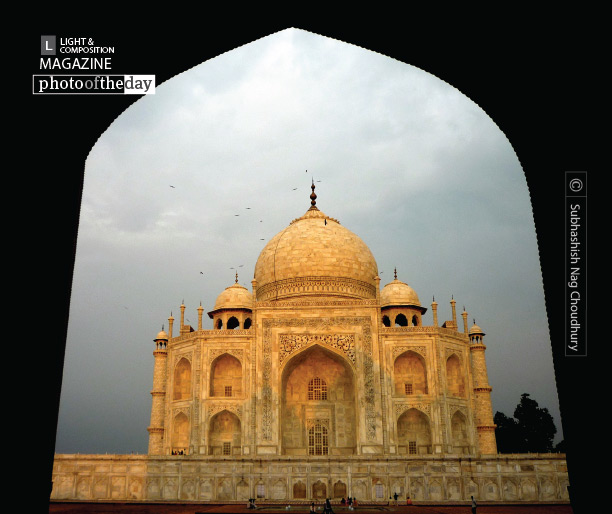
Subhashish Nag Choudhury captures the Taj Mahal through a unique, contemplative lens, framing the iconic monument within a dark, moody silhouette. Driven by a desire to reimagine one of the world’s most photographed structures, the photographer experimented with unconventional angles to reveal a fresh perspective on the Great Taj. This intentional choice of framing transforms a familiar landmark into a striking architectural study, emphasizing form and shadow. The image is award-worthy for its creative vision, successfully balancing the grandeur of the subject with a bold, artistic composition that challenges the viewer to see beyond the traditional postcard aesthetic.
Subhashish Nag Choudhury
Based in Kolkata, India, Subhashish Nag Choudhury balances a professional career in information technology with a deep-seated passion for the visual arts. A dedicated traveler and observer, he views photography as a sophisticated blend of technical precision and expressive storytelling. His diverse portfolio spans nature, wildlife, and landscape photography, often characterized by a willingness to experiment with artistic techniques. Driven by a desire to explore the world through his lens, he consistently seeks out compelling moments and unique perspectives that define his evolving creative identity.
Resonance Score Breakdown
Transparency Note: The resonance score (12.6/20) is calculated based on social engagement metrics collected before the award announcement.
Expert Photography Reviews · 4
The Weight of Stone
We build to outlast the winter. We stack stone upon stone, hoping the weight of our intent will anchor us to the earth long after the breath leaves our lungs. There is a strange arrogance in this.
Read the reflection →The Architecture of Silence
We spend our lives memorizing the faces of things, convinced that if we look long enough, we will finally understand the secret they keep. But familiarity is a veil.
Read the reflection →Reviews & Comments
Share your thoughts about this award-winning photograph. Your reviews contribute to the community engagement score.
The frame doesn’t collapse under the weight of its own cliché. By obscuring the Taj Mahal within a severe, dark silhouette, the composition forces a structural dialogue between mass and void. It’s a disciplined rejection of the postcard. The negative space isn’t just empty; it’s a tactical barrier. I’ve rarely seen such restraint applied to such a tired subject. The geometry holds, and frankly, it’s a relief to see the architecture finally dictate the terms.
The Taj Mahal isn’t just stone here; it’s a ghost emerging from the deep, velvet dark. He stood in the cooling hour, waiting for the light to surrender its claim on the details. I’ve felt that same stillness, where the world narrows to a silhouette. It’s a brave choice to hide such grandeur in shadow. Looking at this, I feel a sudden, quiet ache for the silence he must have heard before the shutter clicked.
We look at the Taj Mahal here, but it’s not the monument we know. It’s a silhouette, a dark memory held in the frame. Subhashish didn’t just look at the stone; he listened to the silence surrounding it. It feels like a secret whispered in the dark. I find myself holding my breath, waiting for the marble to speak. It’s a portrait of a ghost, and honestly, it’s the most intimate I’ve ever seen this place.
The Taj Mahal is usually a scream of white marble, but here, it’s a whisper of obsidian. By plunging the monument into silhouette, Choudhury forces us to confront the architecture’s skeletal truth rather than its tourist-trap vanity. I’ve spent years avoiding this building, yet this darkness finally makes me feel its crushing weight. It’s a brave refusal of light. When we strip away the surface, we’re left with the only thing that matters: the void.