Manhatta by Keith Goldstein
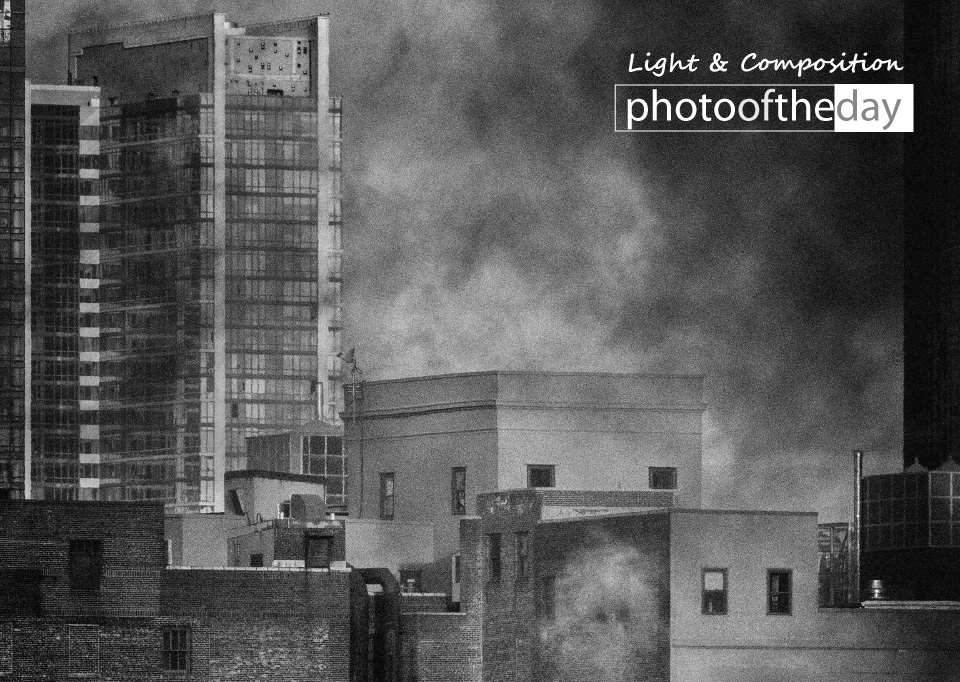
Inspired by the seminal film work of Paul Strand and Charles Sheeler, Keith Goldstein captures the urban geometry of New York City from a high-altitude vantage point. By transitioning from his usual street-level, wide-angle perspective to a long telephoto lens, the photographer compresses the cityscape into a series of abstract, light-drenched slices. This homage to 'Manhatta' moves beyond mere documentation, embracing a pictorialist approach that prioritizes personal emotional resonance over strict optical fidelity. The result is an award-worthy study of atmosphere, shadow, and the rhythmic interplay of light across the iconic architecture of the financial district.
Keith Goldstein
Based in New York City, Keith Goldstein is a seasoned photographer who has been exhibiting his evocative work since 1980. After earning an MFA in Photography, he spent over a decade refining his artistic vision, eventually building a diverse career that spans fine art, corporate event photography, and editorial work. His extensive portfolio has been featured in numerous international publications and on various book covers, reflecting a philosophy that values simplicity and creative freedom. Goldstein continues to explore the world through his lens, capturing the intersection of human experience and urban environments.
Resonance Score Breakdown
Transparency Note: The resonance score (10.0/20) is calculated based on social engagement metrics collected before the award announcement.
Expert Photography Reviews · 4
The Architecture of Silence
It is 3:14 am. The city outside my window has finally stopped pretending it is alive. In this hollowed-out silence, I find myself thinking about the weight of stone and the way we build cages to house our ambitions.
Read the reflection →The Geometry of Being Small
When I was seven, my uncle took me to the top of a tall building in the city. I remember pressing my forehead against the cool, thick glass, looking down at the people below. They looked like ants, or perhaps like grains of sand being pushed by an invisible broom.
Read the reflection →Reviews & Comments
Share your thoughts about this award-winning photograph. Your reviews contribute to the community engagement score.
The sharp, rhythmic geometry of these steel canyons creates a portrait of New York that feels almost sentient. The light doesn’t just hit the glass; it carves out a cold, towering personality that dwarfs any human inhabitant. I’ve always found this crushing scale deeply lonely, yet undeniably beautiful. By compressing the architecture, Goldstein reveals the city’s true face—a rigid, light-drenched grid that dictates how we live. It’s a portrait of a place that’s forgotten how to be soft.
Goldstein’s compression of Manhattan isn’t just geometry; it’s a claustrophobic meditation on the void. By flattening the Financial District into these jagged, light-drenched slivers, he forces the architecture to surrender its depth. I find myself shivering at the way the shadows don’t just fall—they consume. It’s a brutal, honest erasure of the human scale. When light is this aggressive, the darkness becomes the only place left for the soul to actually breathe.
Goldstein’s compression of Manhattan’s geometry feels like a deliberate rejection of the wide-angle cliché. By pulling the city into these light-drenched, telephoto slices, he’s abandoned the obsession with infinite depth. It’s closer to Sugimoto’s long-exposure theatres than conventional street photography. I’m genuinely struck by what he chose not to resolve here; the blur of the architecture isn’t a failure, it’s a rhythmic pulse. Why demand clarity when the atmosphere offers something far more visceral?
Urban geometry isn’t a sprint, but it’s got its own rhythm. Goldstein’s telephoto compression flattens the Financial District into a rigid, static grid. It’s technically precise, yet it lacks the kinetic tension I look for. The light hits the glass, but the frame feels frozen a millisecond too late. I’m missing the pulse of the city. It’s a clean study, sure, but it doesn’t make my heart rate spike like a perfect finish line photo does.