Majestic! by Subramaniam K V
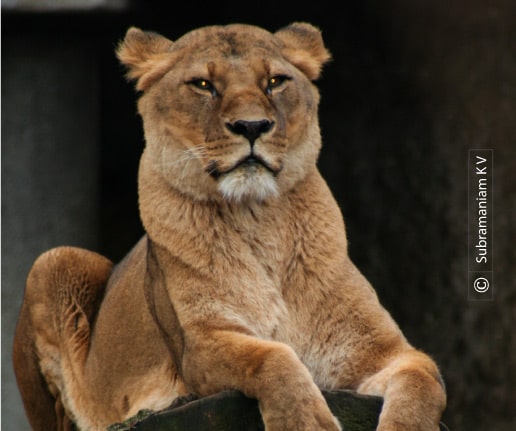
Captured at the historic Artis Zoo in Amsterdam, this striking portrait of a lion reflects a poignant moment of connection. The photographer, visiting the zoo for his daughter’s first excursion, was struck by the animal's composed, almost practiced demeanor as it emerged from its den. While the image highlights the majestic presence of the lion, it also invites reflection on the contrast between the animal's captive environment and its natural habitat. The photograph’s success lies in its intimate framing and the raw, contemplative gaze of the subject, which transforms a routine zoo visit into a powerful narrative on wildlife and conservation.
Subramaniam K V
Originally from Kanyakumari, India, Subramaniam K V is an amateur photographer currently based in Munich, Germany. His passion for the craft was ignited during a work trip to Japan in 2006, leading him to develop a keen interest in documenting animals, birds, people, and the natural world. Driven by the belief that photography is a vital medium for preserving fleeting moments, he continuously refines his technical eye with the ultimate goal of capturing the great wildebeest migration in Masai Mara.
Resonance Score Breakdown
Transparency Note: The resonance score (12.7/20) is calculated based on social engagement metrics collected before the award announcement.
Expert Photography Reviews · 7
The Weight of the Gaze
We build walls to keep the wild at a distance. We call it protection, or perhaps curiosity, but it is mostly a way to ensure we remain the observers rather than the observed.
Read the reflection →The Weight of a Gaze
Can a creature ever truly belong to a space defined by walls, or is the spirit always wandering elsewhere? We often look into the eyes of another and assume we see a reflection of ourselves, a mirror of our own domesticity or desire.
Read the reflection →Reviews & Comments
Share your thoughts about this award-winning photograph. Your reviews contribute to the community engagement score.
The lion’s coat, a dusty ochre reminiscent of Morandi’s muted earth pigments, vibrates against the cool, shadowed recesses of the den, creating a tension that’s almost unbearable. I’m struck by how the amber iris catches the light, glowing like a dying ember in a damp hearth. It’s a somber, heavy palette that doesn’t merely depict a captive beast; it’s a visceral, chromatic ache, reminding one that even in confinement, the wild remains a burning, golden truth.
1/60sec at f/5.6, 300mm, ISO 400. That shutter speed is a gamble at 300mm without stabilization. It’s soft. You’ve traded sharpness for a marginal exposure, and the motion blur in the whiskers proves it. I’ve spent years calibrating sensors, and this lack of crispness irritates me. You wanted intimacy, but you didn’t provide the resolution to back it up. It’s a technical failure. The lion deserves better glass or a faster shutter.
Most zoo photography is forgettable, yet this portrait lingers. The tight framing denies the cage, forcing us into an uncomfortable, direct confrontation with the lion’s weary intelligence. I’ve seen thousands of big cat shots, but the way the light catches the whiskers against that muted, artificial background makes me ache for the wild he’s never known. It’s the subject’s heavy, knowing gaze that earns this its place; it’s a quiet, haunting reminder of what we’ve stolen.
Before the eye identifies the lion, a sudden stillness anchors the chest. It’s the weight of that gaze—a heavy, amber intelligence that doesn’t belong behind glass. I feel a phantom ache in my own jaw, mirroring his quiet, practiced composure. When I return to this a year later, the zoo fades; only the animal’s weary, trapped dignity remains. It’s a haunting reminder of what we’ve stolen, and honestly, it makes me want to look away.
We look into these golden eyes and wonder what stories this lion brought from the wild. Subramaniam didn’t just snap a shutter; he waited until the beast stopped pacing and finally listened. It’s a quiet, heavy gaze that makes me feel a sudden, sharp ache for the vast savannahs he’s never known. We see a king in a cage, yet he holds his dignity. It’s a portrait that asks to be returned to, again and again.
The lion stares. It’s a heavy, tired gaze. I feel a sudden, sharp ache in my chest looking at those eyes. The frame is tight, yet the surrounding darkness breathes. It’s not just a portrait. It’s a cage made of shadow. Nothing here is accidental. The empty corner is not empty. It holds the weight of everything the lion has lost. I’d prefer the silence of the wild, but this stillness will have to do.
The lion’s gaze doesn’t seek us; it anchors a void. In the deep, suffocating blacks surrounding its mane, I feel the crushing weight of the cage. It’s not just a portrait; it’s a confrontation with stolen time. When I look into those eyes, I’m struck by a sudden, cold shame for our voyeurism. The shadow here isn’t merely an aesthetic choice, but the silent, heavy architecture of a life lived in permanent, captive eclipse.