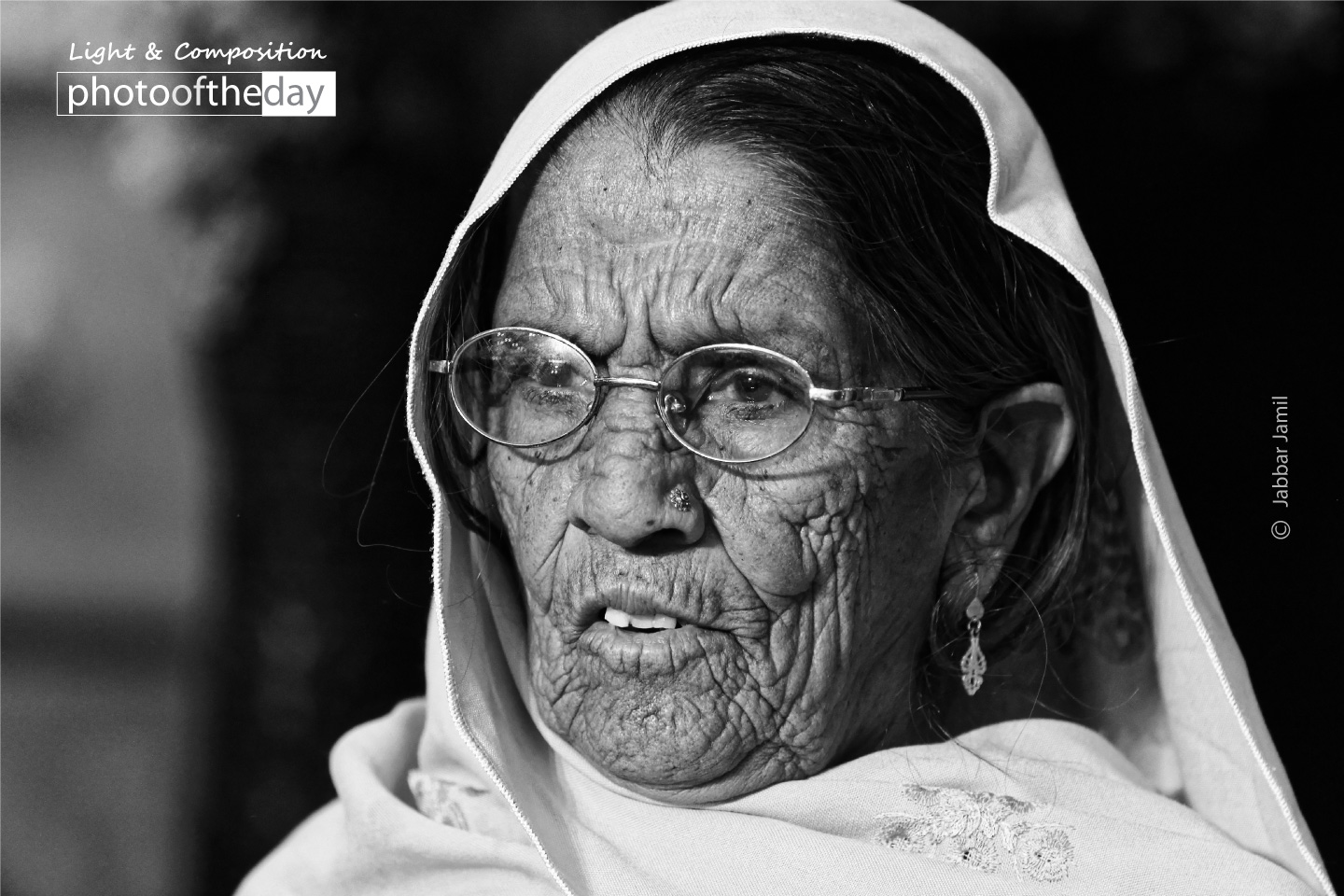
Interesting Face by Jabbar Jamil
This evocative portrait captures the profound narrative etched into the human face through the passage of time. Jabbar Jamil focuses on an elderly subject whose weathered features serve as a living map of life experiences, with every wrinkle appearing to recount a unique, untold story. By isolating the subject's expression, the photographer invites the viewer to contemplate the wisdom that accompanies aging. The image is award-worthy for its raw, empathetic approach to portraiture, transforming a simple study of character into a poignant reflection on the beauty of human history and the depth of the aging process.
Jabbar Jamil
Based in Sialkot, Pakistan, Jabbar Jamil is a dedicated street photographer who views his craft as a vital bridge to the outside world. He utilizes photography as both a creative outlet and a therapeutic practice, often venturing beyond his comfort zone to document the unfiltered realities of his surroundings. Through his lens, Jamil seeks to forge human connections, capturing the authentic, sometimes challenging, stories that define the streets he traverses.
Resonance Score Breakdown
Transparency Note: The resonance score (10.5/20) is calculated based on social engagement metrics collected before the award announcement.
Expert Photography Reviews · 4
The Geography of Salt and Soil
The smell of rain hitting dry, sun-baked earth always brings me back to the feeling of grit between my fingers. It is a coarse, honest texture, the kind that settles into the lines of your palms and refuses to leave until you have scrubbed your skin raw.
Read the reflection →The Map of Every Street
I often find myself tracing the cracks in the pavement of the old quarter, wondering if the stone remembers the weight of the boots that walked it a century ago.
Read the reflection →Reviews & Comments
Share your thoughts about this award-winning photograph. Your reviews contribute to the community engagement score.
The ochre of sun-baked earth clings to these weathered features, echoing the muted, dusty stillness of a Morandi study. It’s the palette of a life spent under a relentless Sialkot sun, where the skin’s deep umber tones vibrate against the cooling shadows of the eyes. I’m truly moved by how the light doesn’t just illuminate; it carves, turning the subject’s history into a tactile, chromatic landscape that feels ancient, heavy, and achingly, beautifully permanent.
The subject’s gaze anchors the frame, yet the composition doesn’t collapse under the weight of its own sentiment. The vertical alignment of the facial furrows creates a rigid, architectural rhythm that forces the eye to track downward. It’s a disciplined study of geometry. I’ve grown weary of portraits that rely on pathos, but the structural integrity here is undeniable. The negative space around the periphery holds the tension perfectly. It’s a rare, precise success.
It’s a shame the jury obsessed over the clarity of these wrinkles. By forcing such clinical resolution, Jamil misses the chance to dissolve the subject into the atmosphere of Sialkot. I’d have preferred a long-exposure blur, letting the face bleed into the background like Sugimoto’s ghosts. Why resolve every pore when you could resolve the passage of time itself? It’s technically competent, sure, but I’m left craving a deliberate, beautiful failure of focus.
Looking at these deep, etched lines, I’m struck by how they mimic the sediment patterns on a reef after a storm. It’s a dry, terrestrial portrait, yet I can’t help but see the refraction of a life lived under pressure. There’s no backscatter here to obscure the truth, just raw, unfiltered clarity. It’s a relief to see a face that hasn’t been washed out by the blue-green filter of the deep. It’s hauntingly beautiful.