In Saffron-coloured Clothing by Liton Chowdhury
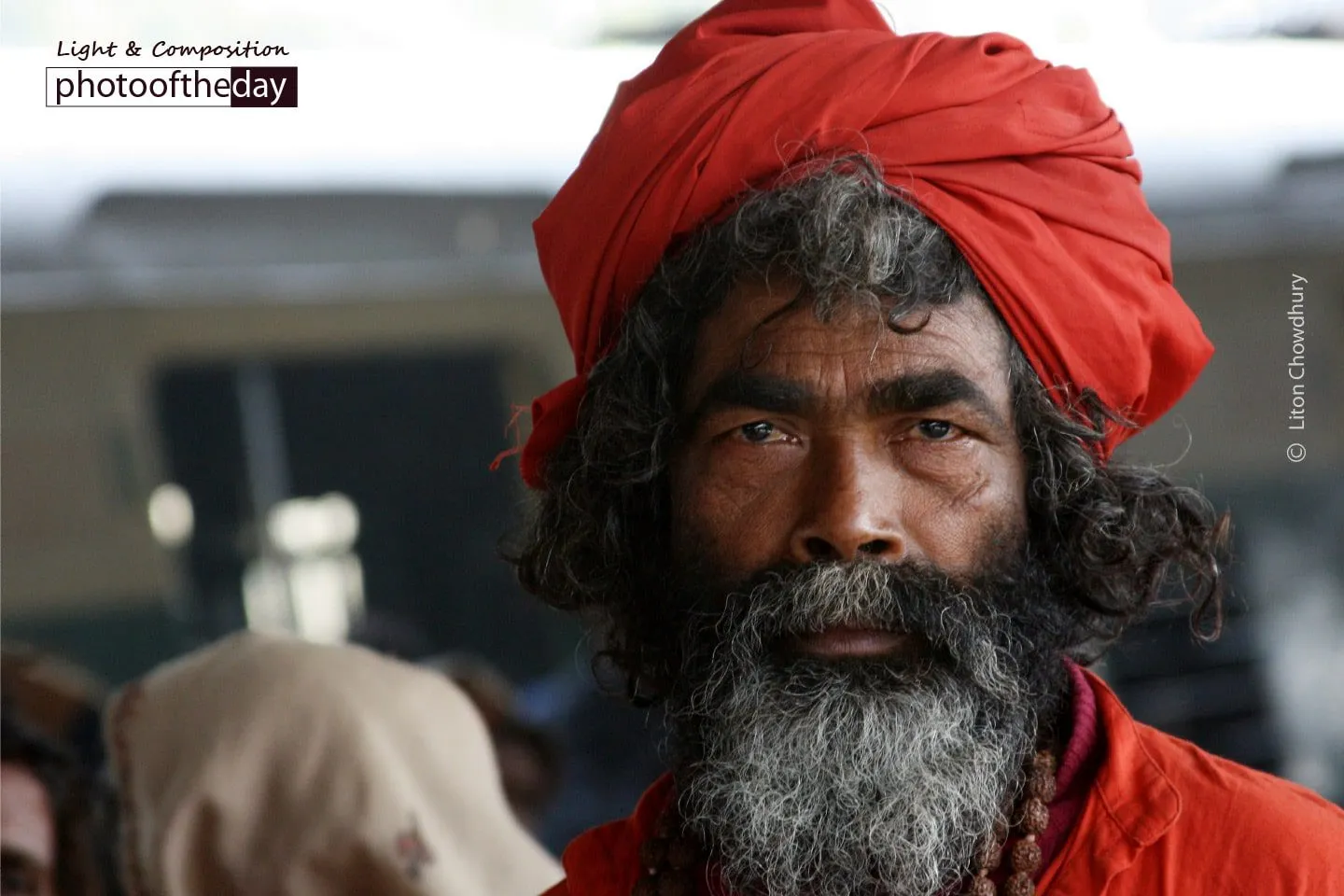
Captured at a bustling railway station while en route to the Gangasagar Mela, this portrait captures a Hindu sadhu in his traditional saffron-coloured robes. The photographer skillfully isolates the ascetic amidst the transit chaos, using the vibrant, symbolic hue of the clothing to draw the viewer's eye. The image serves as a poignant study of faith and detachment, contrasting the spiritual stillness of the monk with the transient nature of the station environment. Its award-worthy quality lies in the evocative storytelling and the respectful, intimate framing of a subject who embodies the ancient practice of sannyasa.
Liton Chowdhury
Based in Kolkata, India, Liton Chowdhury is a dedicated software professional who balances his career with a passionate pursuit of photography. His journey behind the lens began as a heartfelt endeavor to document the formative years of his daughter, who remains his primary muse and most frequent subject. Through his work, Chowdhury explores the intersection of daily life and human emotion, consistently refining his artistic vision while capturing authentic moments of cultural significance.
Resonance Score Breakdown
Transparency Note: The resonance score (10.8/20) is calculated based on social engagement metrics collected before the award announcement.
Expert Photography Reviews · 8
The Stillness in the Rush
I once sat on a wooden bench at Victoria Station for three hours, waiting for a train that was perpetually delayed.
Read the reflection →The Stillness of the Stream
There is a quiet rhythm to the world that only reveals itself when we stop trying to move with the current. We are taught to measure our lives by the speed of our arrival, by the destinations we reach and the stations we pass through.
Read the reflection →Reviews & Comments
Share your thoughts about this award-winning photograph. Your reviews contribute to the community engagement score.
The saffron robes here echo the saturated intensity of Steve McCurry’s iconic portraiture, yet Chowdhury avoids the trap of mere exoticism. By isolating the sadhu against the blurred, kinetic chaos of the Kolkata station, he invokes the spirit of Cartier-Bresson’s decisive moment, though with a quieter, more meditative intent. It’s a rare, haunting stillness. I’ve spent decades cataloging such figures, but the way this monk’s gaze anchors the frame’s frantic energy genuinely caught my breath.
You found a quiet center in that Kolkata station, and it’s rare to see someone hold their ground like that. The chaos of the crowd is just noise; your focus is entirely on the sadhu’s eyes. I felt a sudden, sharp stillness looking at him. You waited for the moment his detachment became real, not just a costume. It’s an honest piece of work. You didn’t just take a picture; you felt his journey.
Of the thousands of portraits I’ve reviewed, most drown in the chaos of a railway station. Chowdhury succeeds because he doesn’t just isolate the subject; he uses the saffron robes as a visual anchor against the grey, indifferent blur of the crowd. It’s a rare, quiet collision of the eternal and the fleeting. I find myself genuinely moved by the sadhu’s gaze—it’s entirely unbothered by the world rushing past him. That’s why this endures.
Kolkata’s chaos is a beast, but Chowdhury found the eye of the storm. That saffron robe cuts through the grey station static like a blade. It’s a clean, sharp isolation. I’ve spent years hunting that stillness in the noise, and honestly, it makes my pulse jump. One tenth of a second later and the crowd would’ve swallowed him whole. He didn’t hesitate. He caught the monk in that perfect, fleeting breath of pure, detached grace.
That saffron robe cuts through the Kolkata station’s gray blur, but it’s the sadhu’s eyes that stop me. He’s not performing for the lens; he’s simply existing within the chaos. I feel a sudden, quiet peace looking at him. It’s clear he allowed this moment, granting the photographer a sliver of his solitude. That’s a rare gift. This face has a whole life in it, held steady against the rush of the world.
There’s a stillness here that I recognize from the blind. It’s the quietude of someone who understands that presence shouldn’t be an intrusion. To capture this sadhu amidst the frantic pulse of a Kolkata station without disrupting his meditation requires a rare, disciplined restraint. I’ve spent weeks waiting for a bird to trust me, and I feel that same earned intimacy in his gaze. It’s not extracted; it’s a shared, fleeting moment of grace.
Saffron robes cut through the Kolkata station’s gray blur, but I’m left uneasy. Why does the sadhu’s detachment feel like a prop for our consumption? We’re told this is spiritual stillness, yet the camera treats his faith as a vibrant aesthetic commodity. Does he know he’s being framed as an exotic relic? It’s a sharp composition, sure, but I feel a cold distance here. Whose gaze are we actually inhabiting when we look at him?
The focal plane here is razor-thin, isolating the sadhu’s weathered skin against the chaotic bokeh of the Kolkata station. At this aperture, the saffron robes bleed into the background, a soft diffraction of light that feels almost sacred. I’m genuinely moved by how the lens resolves the fine, dusty texture of his beard against the blur. It’s a rare moment where the glass captures the stillness of his faith amidst the frantic, transient physics of the crowd.