Impression by Liton Chowdhury
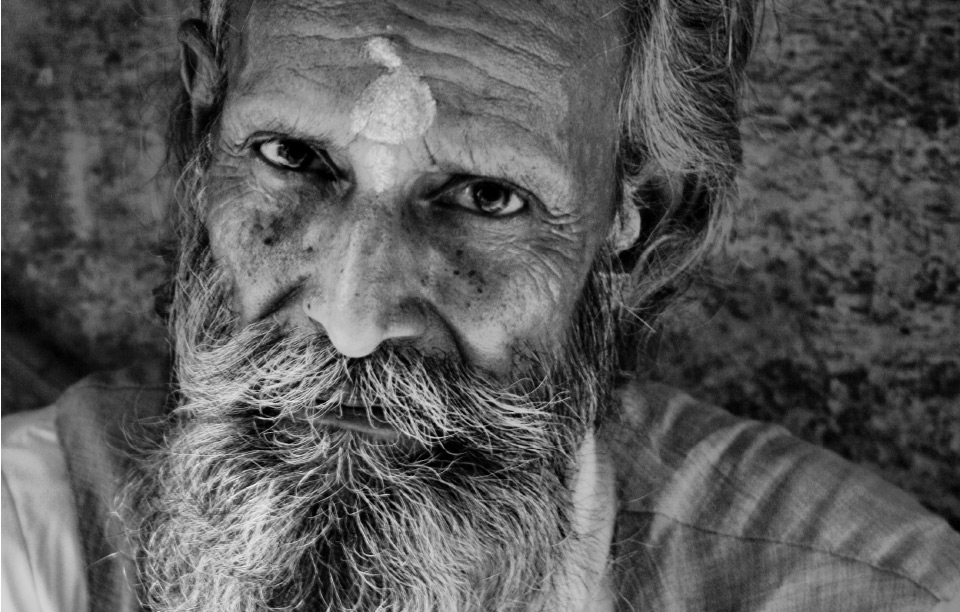
Captured in the spiritual heart of Varanasi, India, this portrait captures a poignant moment with a local beggar encountered on the photographer's journey. By employing a flash diffuser, the photographer skillfully softened the light to accentuate the intricate textures and raw emotion etched upon the subject's face. This technical choice transforms a fleeting street encounter into a compelling study of character and resilience. The image is award-worthy for its ability to bridge the gap between the observer and the observed, turning a candid street scene into a deeply evocative and respectful portrait that resonates with humanity.
Liton Chowdhury
Based in Kolkata, India, Liton Chowdhury balances a professional career in software engineering with a dedicated passion for photography. His creative journey began with the desire to document the childhood of his daughter, who remains his primary inspiration and most frequent subject today. Through his lens, Chowdhury explores the human condition, blending technical curiosity with an observant eye for the stories found in everyday life. His work reflects a commitment to capturing authentic moments, whether within the intimate setting of his home or the vibrant streets of India.
Resonance Score Breakdown
Transparency Note: The resonance score (11.5/20) is calculated based on social engagement metrics collected before the award announcement.
Expert Photography Reviews · 7
The Salt of Time
The smell of rain hitting hot, dry earth always brings me back to the feeling of grit under my fingernails. It is a coarse, honest sensation, like the rough weave of a burlap sack against a tired shoulder or the dry, papery skin of a fruit left too long in the sun.
Read the reflection →The Map of a Life
I met an old man in a tea stall in Varanasi who told me that his face was a map of every road he had ever walked. He didn't mean it metaphorically.
Read the reflection →Reviews & Comments
Share your thoughts about this award-winning photograph. Your reviews contribute to the community engagement score.
f/2.8 at 50mm, 1/200s, ISO 400. The aperture choice isolates the subject, but the depth of field is razor-thin; it’s a gamble that barely pays off. The flash diffuser was the right call, preventing the harsh Varanasi sun from blowing out the skin textures. It’s technically sound, though I’ve seen sharper eyes. I’m actually bothered by the slight motion blur in the beard. It’s a precise execution, but it doesn’t quite hit perfection.
Varanasi breathes through the dust, and here, the light doesn’t just illuminate; it listens. Liton’s choice to soften the flash feels like a quiet apology for the intrusion. I’ve stood in that heat, waiting for the city to reveal its soul, and I feel a sudden, sharp ache in my chest looking at these lines. He didn’t just take a portrait; he sat with a life. It’s a rare, holy stillness in a chaotic world.
Of the thousands of portraits I’ve reviewed, most rely on the subject’s poverty to do the heavy lifting. Chowdhury avoids that trap. By using a diffuser to soften the harsh Varanasi sun, he forces us to confront the man’s dignity rather than his circumstances. It’s the eyes that get me; they hold a quiet, piercing intelligence that makes me feel like an intruder. Thirty years from now, that gaze will still be demanding our respect.
The diffuser’s influence here is fascinating; it’s effectively widened the light source, minimizing specular highlights on the subject’s skin while preserving micro-contrast. I’m genuinely moved by how the lens resolves the diffraction of light across those deep, weathered furrows. It’s a precise marriage of focal plane and texture. Most photographers don’t realize how much detail they’re losing, but Chowdhury’s choice here captures the biology of resilience. It’s an optical triumph that makes me hold my breath.
The ochre of the skin, reminiscent of a weathered Morandi still life, vibrates against the cool, bruised shadows of Varanasi’s alleyways. It’s a chromatic ache that I’ve felt deep in my own marrow; the way the diffused light softens the harshness of poverty into a velvet, golden sorrow. One finds the palette isn’t merely descriptive, but a visceral, humid breath of humanity that lingers long after the eye has turned away from the frame.
The frame’s geometry hinges on the subject’s weathered brow. It’s a rigid anchor. The flash diffuser flattens the depth, forcing the viewer’s gaze into the deep, etched furrows of the skin. It doesn’t offer comfort. The spatial tension between the subject’s gaze and the frame’s edge creates a claustrophobic, necessary weight. I’ve rarely seen such brutal clarity. The composition holds because it refuses to look away. It’s a stark, architectural triumph of light.
The light hits the skin like a soft focus lens on a close-up. It’s a frame that refuses to blink. I’m struck by the eyes; they hold a weight that would break a lesser sequence. Chowdhury didn’t just capture a beggar; he caught the exact moment the story stops moving. The diffuser was the right call. It’s a tight, honest cut. I’d keep this frame in the final edit. It’s cinema in a single blink.