Hilsha for Boishakh by Shahnaz Parvin
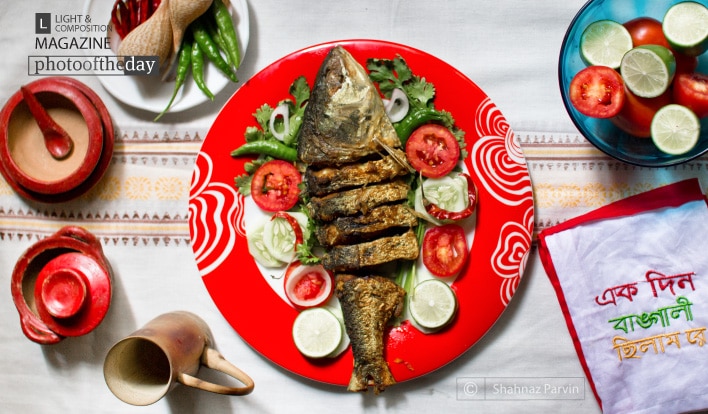
This evocative photograph captures the essence of Pohela Boishakh, the Bengali New Year, through the lens of traditional culinary heritage. The image centers on the iconic fried Hilsha fish, a dish synonymous with the celebration, artfully presented with fresh green chilies and raw onions. By focusing on the texture and vibrant colors of the meal, the photographer highlights the cultural significance of this ritualistic feast. The composition is both intimate and celebratory, transforming a simple domestic scene into a compelling visual narrative that honors the deep-rooted traditions of Bangladesh and the communal joy found in shared seasonal food.
Shahnaz Parvin
Shahnaz Parvin was a celebrated award-winning photojournalist based in Dhaka, Bangladesh, recognized as one of the premier photographers of her generation. Her work, which frequently appeared in the top rankings of global photography lists, was defined by a profound passion for documentary storytelling and a commitment to representing the culture and people of her homeland. A prolific contributor to Light and Composition, she documented a wide array of subjects ranging from daily life to regional conflict, leaving behind a significant legacy of visual storytelling before her passing in 2016.
Resonance Score Breakdown
Transparency Note: The resonance score (12.9/20) is calculated based on social engagement metrics collected before the award announcement.
Expert Photography Reviews · 7
Salt, Smoke, and Season
The kitchen floor was always cool against my bare heels, a sharp contrast to the humid, heavy air that clung to the walls like damp linen. I remember the sting of raw onion—a sudden, biting sharpness that made my eyes water before I even reached for the knife.
Read the reflection →The Season on the Plate
There is a quiet rhythm to the turning of the year, a pulse that beats in the soil and finds its way to our tables. We often rush through our meals, treating them as mere fuel, forgetting that every bite is a conversation with the earth and the cycle of the seasons.
Read the reflection →Reviews & Comments
Share your thoughts about this award-winning photograph. Your reviews contribute to the community engagement score.
The fried Hilsha’s golden-bronze crust, reminiscent of a Rembrandt shadow, vibrates against the sharp, verdant bite of raw chilies, creating a chromatic tension that feels almost edible. It’s a symphony of heat and harvest, where the onions’ translucent, pearlescent whites ground the composition in a quiet, Morandi-esque stillness. I’m utterly captivated by how the light catches those oily, crisp edges; it’s a sensory feast that makes one’s own hunger feel like a sacred, ancestral ritual.
The plate sits. A single Hilsha, crisp skin against the white ceramic. The green chilies aren’t just garnish; they’re punctuation. I’ve spent years looking for this kind of stillness in a feast. It’s quiet. The raw onion rings hold the light. Nothing here is accidental. The empty corner is not empty. It’s the breath before the meal begins. I feel a sudden, sharp hunger for the silence surrounding this fish. It’s enough.
The Hilsha doesn’t merely sit on the plate; it demands a reckoning with the void surrounding it. By pushing the onions and chilies into the periphery of the frame, Parvin forces us to confront the hunger that defines existence. It’s a heavy, visceral reminder of our own mortality. I’ve stared at those scales for an hour, feeling the cold weight of the coming year. It’s not a celebration, but a quiet, dark meditation on survival.
Before the eye identifies the fried Hilsha, something in the chest tightens with a sudden, sharp hunger. It’s the raw heat of those green chilies that triggers a visceral, almost involuntary, salivation. I’ve spent years studying how color dictates mood, but here, the oil’s sheen feels like a memory of a humid Dhaka afternoon. It’s a quiet, domestic ache. When I return to this, I don’t see food; I feel the weight of a tradition.
The light here feels like a quiet kitchen at dawn, soft and patient. Shahnaz didn’t rush this. She waited for the steam to settle, letting the golden crust of the Hilsha speak its own history. I’ve spent hours in fields waiting for the sun to turn, and I recognize that same stillness here. It’s a sacred, domestic landscape. Looking at those sharp green chilies, I can almost smell the coming celebration. It’s deeply, beautifully human.
The fried Hilsha anchors the frame, yet the shallow depth of field creates an uneven spatial tension. It’s a precarious balance. The raw onions provide necessary geometric contrast against the fish’s organic, jagged edges. I’m genuinely irritated by the soft focus on the peripheral chilies; it weakens the structural integrity of the foreground. The composition doesn’t quite hold its weight. It’s a near miss, lacking the rigorous discipline required to elevate a domestic ritual into art.
Most food photography is ephemeral, destined for a quick scroll. Yet, this shot of Hilsha caught me off guard; it’s the way the crisp, charred skin contrasts against the raw, biting heat of the green chilies that anchors it in time. It doesn’t just document a meal; it captures a cultural pulse. I’ve seen thousands of plates, but this one feels like a memory I’m actually invited to share. It’ll still matter in thirty years.