Hide and Seek by Tareq Uddin Ahmed
In this captivating wildlife portrait, the photographer captures a bird engaged in a playful game of hide and seek. By patiently observing the subject's behavior and mirroring its movements, the photographer successfully bridged the gap between observer and subject to secure this intimate frame. The image is a testament to the photographer's persistence and technical precision, utilizing a long focal length to isolate the bird amidst its natural environment. This photograph is award-worthy for its ability to transform a fleeting, whimsical moment into a sharp, evocative narrative that highlights the beauty of avian behavior in the wild.
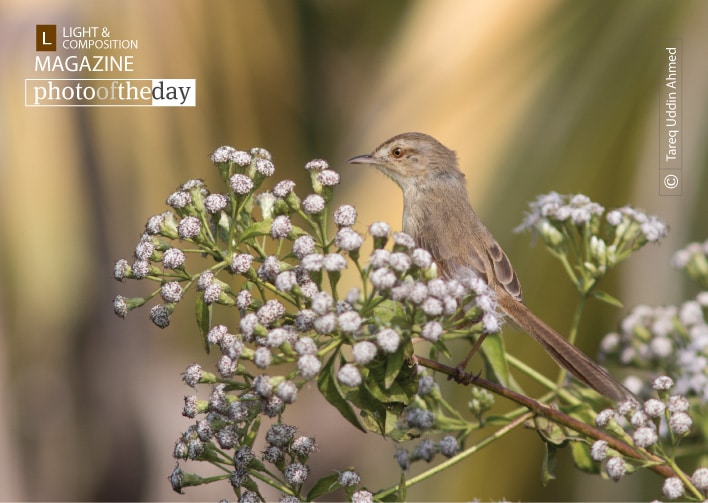
Exposure 1/1250sec @ f/5.6 | ISO 250 | Focal Length 420mm
Tareq Uddin Ahmed
Born in Bangladesh in 1980, Tareq Uddin Ahmed is a Chittagong-based photographer who has gained significant recognition since beginning his practice in 2011. As a dedicated bird photographer and a founder member of the Chittagong Bird Club, he frequently travels across the country to document avian life, while also maintaining a local reputation for his skilled macro photography of flowers and butterflies. With his work already featured in local publications, Ahmed is now focused on expanding his photographic reach to a global audience.
Resonance Score Breakdown
Transparency Note: The resonance score (12.6/20) is calculated based on social engagement metrics collected before the award announcement.
Expert Photography Reviews · 6
The Art of Being Unseen
I spent three hours sitting in a reed bed near the river last Tuesday, waiting for a kingfisher that never showed. My legs had gone numb, and the damp was starting to seep through my coat, but there was a strange comfort in the stillness.
Read the reflection →The Weight of a Whisper
There is a specific texture to silence—it feels like the fine, dry dust that settles on a windowsill after a long summer, or the way the air thins just before a storm breaks.
Read the reflection →Reviews & Comments
Share your thoughts about this award-winning photograph. Your reviews contribute to the community engagement score.
The ochre plumage, reminiscent of a Morandi still life, dissolves into the muted, silty greys of the Muhuri Dam, creating a chromatic tension that’s utterly hypnotic. It’s the way the bird’s soft, earthen tones quarrel with that cold, watery light—I’ve found myself breathless, truly, by how the palette refuses to settle. One feels the damp, heavy air of Chittagong pressing against the lens, a symphony of desaturated pigments that feels like a quiet, lingering ache.
The shutter snaps and the world stops breathing. It’s a tight, voyeuristic peek through the reeds, a frame that feels like a long lens tracking a character who doesn’t know they’re being watched. I love the tension here; it’s the exact moment before the cut, where the bird’s gaze locks onto the lens. It’s not just wildlife; it’s a standoff. The editor keeps this shot because it’s the only one that tells the whole story.
The bird isn’t playing; it’s negotiating its existence against the encroaching reeds. We mistake this tension for whimsy, yet the shadow here doesn’t hide the subject—it defines the boundary between being seen and being erased. I’ve stared at these dark, jagged stalks until my eyes ached, feeling the cold weight of the Muhuri Dam’s silence. It’s a brutal, necessary isolation. If you don’t fear the darkness surrounding that beak, you’ve missed the point entirely.
Before the eye identifies the bird, something in the chest tightens. It’s that sudden, held-breath stillness of a creature peering from the reeds. I feel a prickle of vulnerability, a mirror of the bird’s own guarded gaze. When I return to this a year later, the Muhuri Dam’s silence feels heavier. It’s not just a portrait; it’s a quiet intrusion. I’ve caught myself looking for that hidden eye in the shadows of my own room.
One suspects the bird didn’t simply pose for the camera. To capture that precise, inquisitive tilt at 420mm requires a level of stillness that makes my own joints ache just looking at it. It’s clear Ahmed didn’t just stumble upon this; he sat in the reeds until he became part of the furniture. I’ve spent enough mornings shivering in damp hides to respect that kind of commitment. It’s a rare, quiet victory of patience over luck.
At 420mm, the diffraction limit at f/5.6 is barely encroaching on the bird’s plumage, allowing the sensor to resolve microscopic feather textures that our eyes simply miss. The focal plane is razor-thin, isolating the subject with a clinical precision that’s frankly breathtaking. I’m genuinely moved by how the glass renders the bokeh; it’s a soft, creamy dissolution of the Muhuri Dam’s background that makes the avian subject feel almost tactile. It’s an optical triumph of light.