Enjoy and Eat by Hanan AboRegela
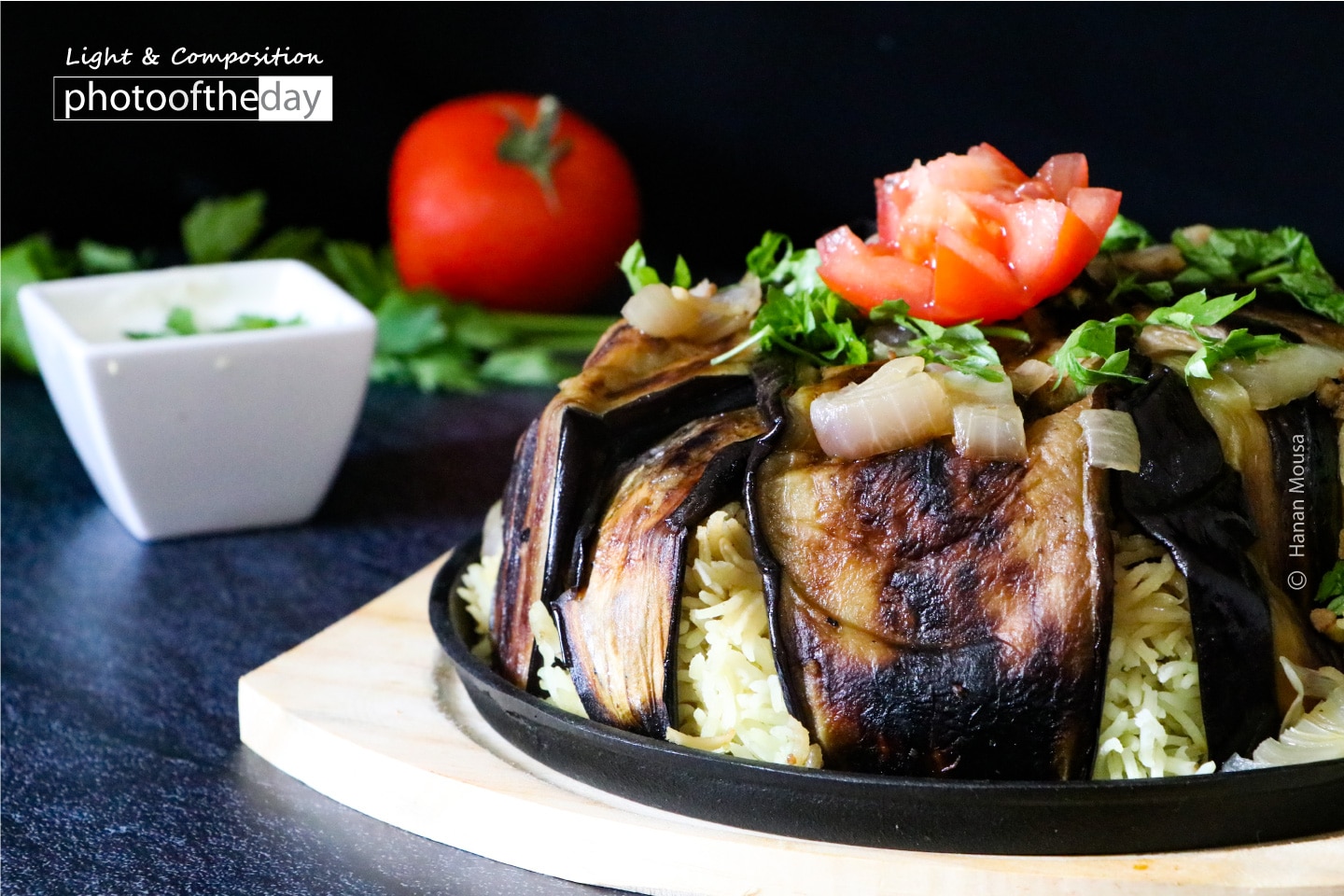
Captured in the soft, natural morning light streaming through a window, this photograph highlights the vibrant essence of Maqlubah, a traditional Palestinian dish. The photographer was drawn to the meal's rich colors and deep cultural significance, choosing to frame the shot to emphasize its appetizing textures. By utilizing natural illumination at ten o'clock, the image achieves a warm, inviting quality that elevates the culinary subject. This work is award-worthy for its ability to transform a domestic scene into a compelling visual narrative, balancing technical precision with a genuine appreciation for the artistry found in everyday food culture.
Hanan AboRegela
Born in Cairo, Egypt, Hanan AboRegela is a dedicated photographer currently based in Al Jubail, Saudi Arabia. After completing her studies in Germanistic at Ain Shams University, she relocated to the Persian Gulf coast, where she has focused her creative energy on mastering the nuances of professional food photography. By meticulously analyzing the techniques of established industry experts, she continues to refine her artistic vision and technical execution, striving to capture the intersection of culture and cuisine through her lens.
Resonance Score Breakdown
Transparency Note: The resonance score (11.3/20) is calculated based on social engagement metrics collected before the award announcement.
Expert Photography Reviews · 6
The Architecture of Memory
We often mistake the act of nourishment for a simple necessity, a brief pause in the relentless clockwork of our days. Yet, there is a quiet architecture to a meal shared or prepared—a layering of history that sits upon the plate like sediment in a riverbed.
Read the reflection →The Table as Territory
The kitchen table is perhaps the most honest map of a household’s social geography. It is where the abstract concepts of culture, heritage, and labor are distilled into something tangible and consumed.
Read the reflection →Reviews & Comments
Share your thoughts about this award-winning photograph. Your reviews contribute to the community engagement score.
It’s technically competent, sure, but that’s the problem. By chasing the perfect exposure of this Maqlubah, AboRegela has settled for a sterile, catalog-ready aesthetic. Where’s the grit? I’d have loved to see the steam blurred into a ghostly, kinetic veil, pushing this closer to Sugimoto’s long-exposure abstractions. Why resolve every grain of rice? By choosing clarity over chaos, the photographer missed a chance to capture the actual, messy heat of the meal. It’s just too polite.
Maqlubah is a dish meant for gathering, yet here it sits in a quiet, lonely light. I look for the hands that flipped the pot, the person who labored over the steam, but they’re absent. It’s technically sound, sure, but it feels like a meal waiting for guests who never arrived. I’m hungry for the human story behind the recipe. Where’s the life? It’s a pretty plate, but it doesn’t tell me who they are.
Morning light hits the Maqlubah. It’s a quiet ritual. The frame is full, yet I find myself looking at the edges. The table surface holds the weight of the meal. It’s not just food. It’s the pause before the first bite. I’ve felt this stillness in my own kitchen. Nothing here is accidental. The empty corner is not empty. It’s a breath. It’s a rare, honest silence in a busy world. I’m grateful for it.
The saffron-stained rice glows with the golden, melancholic warmth of a Vermeer interior, where light doesn’t merely illuminate but breathes life into the aubergine’s deep, bruised violet. It’s a chromatic feast that makes my heart ache for the quiet dignity of a shared table. One finds the interplay of ochre and burnt umber so intoxicating, it’s as if the very air in Al Jubail has been distilled into this singular, shimmering, and deeply resonant palette.
The frame isolates the Maqlubah, but I’m distracted by the threshold beyond. That morning light hitting the table reveals a domestic datum I recognize instantly. It’s not just about the food; it’s the way the fenestration dictates the rhythm of the meal. I’ve spent years studying how light defines volume, and honestly, the warmth here makes me miss my own kitchen. It’s a quiet, spatial honesty that’s rare in such a tightly composed shot.
Morning light here doesn’t invite; it interrogates the Maqlubah, exposing the grain of the rice like a geological survey. It’s too bright, too eager to please. I’ve spent my life chasing the places where light dies, yet this frame refuses to let the shadows breathe. It’s technically precise, sure, but it’s afraid of the dark. I find myself craving a void, a silence where the plate might finally stop shouting its own domestic importance.