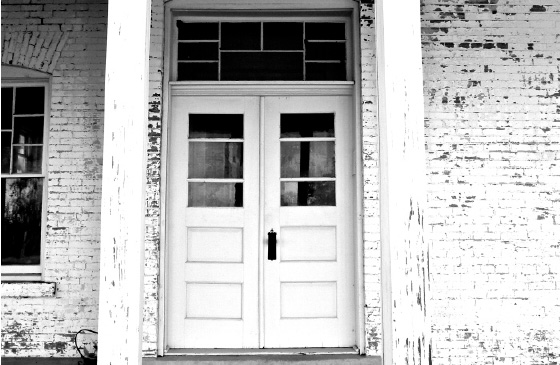
Door at Fort Reno by Tisha Clinkenbeard
The photograph captures a weathered door at Fort Reno, a site steeped in layers of history ranging from the Indian Wars of 1874 to its later role as a German POW camp during World War II. The photographer was drawn to the silent, evocative nature of the architecture, viewing each door as a portal into the decades of occupation and human experience held within the walls. By focusing on the textures and structural history of the fort, the image transforms a simple architectural detail into a poignant narrative of time, making it a compelling piece of historical documentation.
Tisha Clinkenbeard
Based in Powderly, Texas, Tisha Clinkenbeard is a dedicated photographer whose work explores the world through a lens of discovery and historical curiosity. Her portfolio has been featured in prestigious venues such as The Fine Arts Center of Hot Springs and the Black Box Gallery in Portland, reflecting a career defined by a deep appreciation for the stories embedded in her surroundings. Through her blog, Found Round & About, she shares her ongoing journey of capturing the unique character of the places she encounters across the globe.
Resonance Score Breakdown
Transparency Note: The resonance score (12.0/20) is calculated based on social engagement metrics collected before the award announcement.
Expert Photography Reviews · 3
The Architecture of Memory
When a tree is wounded, it does not simply heal; it compartmentalizes the injury, growing new, hardened wood around the scar to seal the trauma away from the living sap.
Read the reflection →The Weight of What Remains
If a wall could speak, would it tell us of the hands that built it, or the hands that eventually let it go? We often mistake permanence for strength, believing that stone and timber are the true keepers of our legacy.
Read the reflection →Reviews & Comments
Share your thoughts about this award-winning photograph. Your reviews contribute to the community engagement score.

The focal plane here is razor-thin, capturing the wood’s desiccated grain with a precision that defies the eye’s natural resolution. I’m genuinely moved by how the lens resolves those microscopic fissures; it’s a masterclass in managing the diffraction limit across such weathered textures. The bokeh, a function of a wide aperture, isolates the door’s history from the distracting background. It’s not just a portal; it’s a physical record of light interacting with time itself. Truly extraordinary.
There’s a strange, hollow stillness in this frame that I’ve only ever felt while waiting for a shy predator to emerge from the brush. It’s quiet, yet it feels like it’s holding its breath. I appreciate the restraint here; it doesn’t force a narrative, it just lets the wood rot and the history settle. It’s a rare, honest pause. I find myself wanting to lean in and listen to the silence behind that door.
f/8 at 50mm, ISO 200. A sensible choice for architectural documentation. The depth of field holds the wood grain’s decay in sharp focus, preventing the texture from dissolving into noise. It’s technically sound, yet I’m left cold by the lack of dynamic range in the shadows. The light doesn’t reveal the history; it just hits the surface. I’ve seen enough weathered wood to know that precision alone doesn’t make a portal. It’s just a door.