Desert Reverie by Anastasia Markus
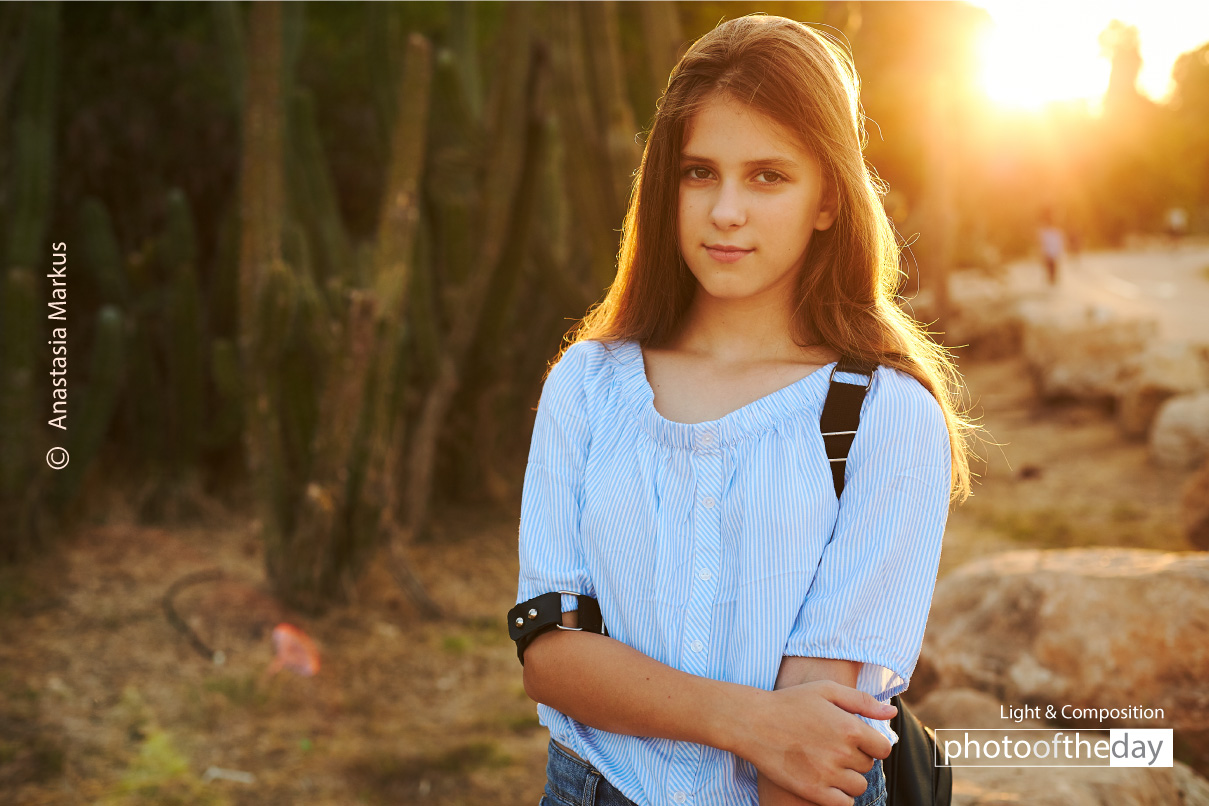
Desert Reverie captures a young girl in a moment of quiet contemplation amidst a vast desert landscape. Bathed in the golden, soft light of the setting sun, the subject stands framed by towering cacti, creating a poignant contrast between youthful innocence and the stoic, timeless resilience of the arid environment. The photographer masterfully utilizes the natural light to emphasize the serene atmosphere, resulting in a composition that feels both intimate and expansive. This image is award-worthy for its evocative storytelling and the delicate balance achieved between the human subject and the raw, natural beauty of the desert backdrop.
Anastasia Markus
Born in Donetsk, Ukraine, Anastasia Markus transitioned from a background in business to a dedicated career in photography, specializing in children’s, family, and wedding portraiture. After a decade-long hiatus, she has returned to the craft with a renewed passion for artistic growth and competitive excellence. Currently based in Beer Sheva, Israel, she views photography as a continuous journey of learning and discovery, using the spirit of international competition to push the boundaries of her creative expression.
Resonance Score Breakdown
Transparency Note: The resonance score (7.7/20) is calculated based on social engagement metrics collected before the award announcement.
Expert Photography Reviews · 3
The Resilience of the Arid
The creosote bush survives in the desert by spacing itself out, each plant maintaining a precise, invisible territory to ensure its roots have enough moisture to endure the long drought.
Read the reflection →Where the Silence Settles
To whoever made this, I have been trying to find the words to tell you what it feels like to be small in a place that is so very large. We spend our lives trying to fill the rooms we inhabit with noise, with clutter, with the frantic need to be noticed.
Read the reflection →Reviews & Comments
Share your thoughts about this award-winning photograph. Your reviews contribute to the community engagement score.

Framing a portrait with cacti at fifty millimeters requires the subject to stand dangerously close to the spines. It’s a precarious choice. I’ve spent enough time in arid scrub to know that proximity like this usually demands clearing the brush, which destroys the habitat. Did she move those plants to get the shot? It’s a pretty composition, but I can’t help feeling anxious for the girl’s skin. I prefer my nature left exactly where it grows.
The golden hour in Beer Sheva is a fickle beast, yet here the light sits perfectly on the subject’s face. One suspects Markus didn’t just stumble upon this. She’s clearly spent hours enduring that relentless desert heat to catch the shadows exactly where they belong. I’ve been scorched in similar scrubland, and frankly, it’s rarely this rewarding. It’s a quiet, disciplined piece of work. She’s earned her keep here, and that’s no small feat.
Most desert portraits rely on the tired trope of isolation, but this one avoids the trap by anchoring the girl’s gaze against the rigid, vertical geometry of the cacti. It’s the tension between her soft posture and those unforgiving thorns that makes me stop and breathe. Of the thousands of portraits I’ve reviewed, this one lingers because it doesn’t just document a landscape; it captures a fragile, human defiance that will still feel relevant in thirty years.