Corn Rice by Juhi Saxena
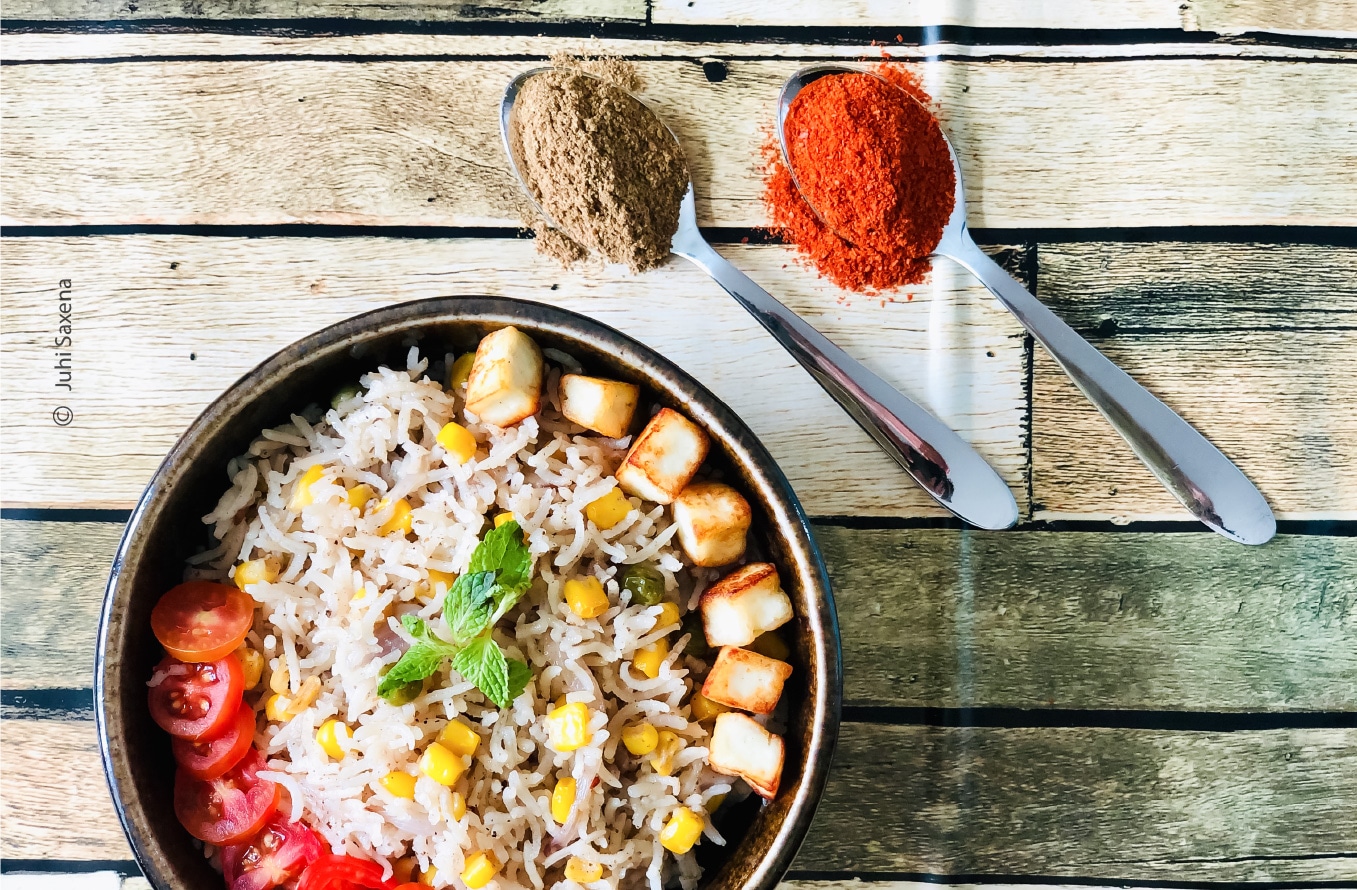
Captured in a moment of culinary simplicity, this photograph highlights a homemade Corn Pulao, a one-pot dish elevated by the vibrant addition of cottage cheese and cherry tomatoes. The photographer focuses on the essential role of spices, artfully incorporating two spoons laden with seasoning to emphasize the depth of flavor. By choosing a clean, intimate composition, the image transforms a quick, everyday meal into a visually delectable experience. The thoughtful arrangement and soft lighting make this a standout piece of food photography, showcasing how simple ingredients can be presented with both elegance and narrative intent.
Juhi Saxena
Originally from India and currently based in Singapore, Juhi Saxena is a dedicated food photographer and blogger who transitioned into the craft in 2019 following a career in the IT industry. As a mother of two, she specializes in creating and documenting nutritious, appealing meals for children, sharing her culinary expertise through her blog. Her work is defined by a passion for food storytelling and a commitment to refining her photographic technique within the vibrant food industry.
Resonance Score Breakdown
Transparency Note: The resonance score (11.6/20) is calculated based on social engagement metrics collected before the award announcement.
Expert Photography Reviews · 8
The Weight of Sustenance
It is 3:14 am. The house is quiet enough that I can hear the hum of the refrigerator, a mechanical heartbeat in the dark. I am thinking about how we feed ourselves when no one is watching.
Read the reflection →The Alchemy of Sustenance
Why do we feel that the most profound truths are found only in the monumental, in the grand architecture of history or the vastness of the sea?
Read the reflection →Reviews & Comments
Share your thoughts about this award-winning photograph. Your reviews contribute to the community engagement score.
The soft, diffused light grazing the grains of rice and the vibrant cherry tomatoes creates a domestic intimacy I find truly comforting. It’s not just about the food; the placement of those spice-laden spoons acts as a portrait of the cook’s hand, absent but felt. They’re the essential architecture of this meal. By focusing on these tactile, everyday objects, the frame tells me exactly who is in the kitchen, even without a face in sight.
You’ve captured the quiet dignity of a home-cooked meal. It’s not just food; it’s the care put into a Tuesday night. I’m drawn to those two spoons of spice—they feel like a signature, a human hand reaching into the frame. Because you didn’t over-style it, I can almost smell the steam rising. It’s honest. You waited for the light to settle, and it shows. I’d sit at this table in a heartbeat. That’s a rare thing.
At f/2.4, the iPhone X sensor struggles with the diffraction limit, yet here it resolves the granular texture of the corn kernels with surprising fidelity. The focal plane is razor-thin, isolating the spices while the background dissolves into a soft, computational bokeh. I’m genuinely moved by how the light catches the moisture on those tomatoes; it’s a tactile, visceral brilliance that makes me hungry. It’s a triumph of optics over the inherent limitations of mobile hardware.
It’s a tidy composition, though one wonders if the spices were tossed about until the light hit just right. I’ve spent enough hours shivering in damp fields to know that convenience rarely yields soul. This feels like a quick kitchen snap, not a meal earned through long, hungry observation. It’s technically competent, I suppose, but I’m left craving the grit of a photographer who actually waited for the steam to settle. It’s just too clean.
Most food photography is just glossy, hollow artifice. Of the thousands I’ve reviewed, this succeeds because it doesn’t try to be a magazine spread. The spoons aren’t just props; they’re the narrative heartbeat, grounding the dish in the messy, tactile reality of cooking. It’s honest. I’d actually want to eat this, which is a rare feeling for me. It’s a quiet, enduring reminder that the best meals aren’t staged, they’re lived. That’s why it lasts.
The diagonal alignment of the spoons creates a necessary fulcrum, anchoring the chaotic scatter of corn and tomatoes. It’s a rigid geometry that saves the frame from collapsing into mere clutter. The negative space at the periphery provides the required breathing room. I’m genuinely irritated by the uneven lighting on the cottage cheese, yet the structural discipline holds. It doesn’t rely on sentiment. The composition succeeds because it refuses to be soft.
It’s a relief to see such vibrant reds and yellows. Down where I spend my time, those wavelengths are stolen by the water column within meters. Here, the cherry tomatoes and corn retain their warmth, unburdened by the refractive index or the backscatter that ruins my own shots. I’m genuinely envious of how easily this light hits the spices. It’s a clean, dry world, and honestly, it’s a beautiful change from the deep blue abyss.
The frame breathes. It’s a tight, rhythmic close-up where the spoons act as a visual cut, directing the eye toward the heat of the spices. I’m genuinely hungry looking at this. The composition holds the tension of a prep scene before the chaos of service begins. It’s a quiet, cinematic beat. The iPhone X captured the texture perfectly; it’s the kind of shot an editor keeps because it tells you everything about the meal’s soul.