Cookies by Ahmed Galal
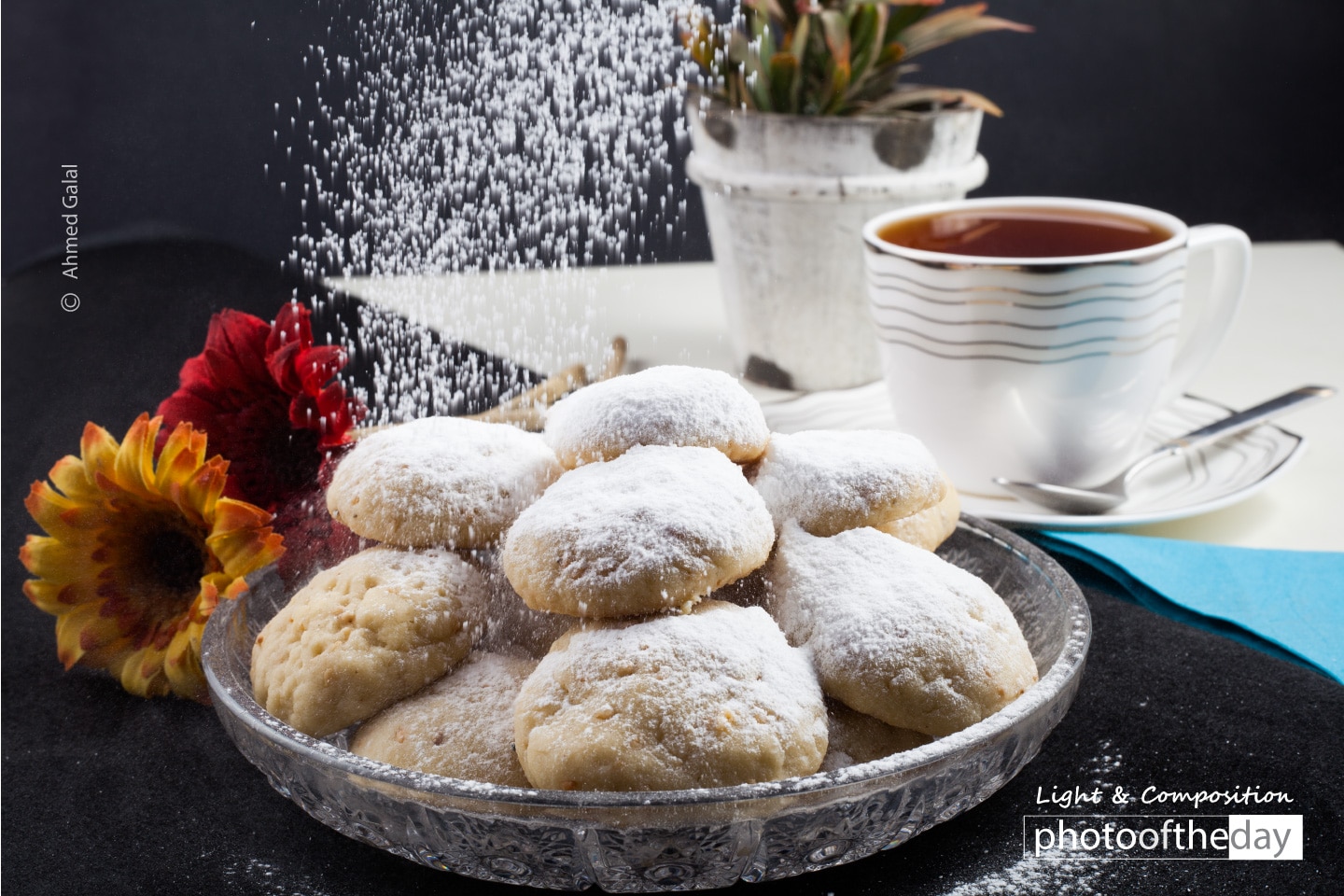
Captured just before the Eid El-Fetr holiday, this photograph elegantly documents the spirit of the first morning following the month of Ramadan. The composition employs simple, intentional styling to evoke the quiet joy of a celebratory breakfast, where tea and cookies serve as the centerpiece of a long-awaited feast. By focusing on the textures and cultural significance of these traditional treats, the photographer captures a poignant moment of transition from fasting to celebration. The image is award-worthy for its ability to convey profound cultural meaning through a minimalist, clean aesthetic that resonates with viewers globally.
Ahmed Galal
Born in Cairo in 1990, Ahmed Galal has navigated a diverse professional path, eventually establishing his own advertising agency to bring fresh, creative concepts to the industry. His work is deeply informed by a dual passion for marketing and photography, allowing him to blend technical precision with compelling visual storytelling. When not developing new projects in the advertising sector, he frequently travels to Sinai, drawing inspiration from the landscape to fuel his artistic pursuits.
Resonance Score Breakdown
Transparency Note: The resonance score (9.7/20) is calculated based on social engagement metrics collected before the award announcement.
Expert Photography Reviews · 8
The Quiet After the Fast
The desert locust remains in a state of solitary phase for months, moving quietly and feeding modestly, until a sudden shift in environmental cues triggers a transformation into a gregarious swarm.
Read the reflection →The Architecture of Return
There is a particular rhythm to the end of a long silence. After the days of turning inward, of paring life down to the marrow, the world begins to bloom again in small, tactile ways.
Read the reflection →Reviews & Comments
Share your thoughts about this award-winning photograph. Your reviews contribute to the community engagement score.
It’s technically clean, but I’m left craving a fracture in that clinical stillness. Why resolve every crumb of these cookies with such rigid, commercial precision? I’d have loved to see a long exposure turn the steam from the tea into a ghostly, ephemeral veil. It’s a safe, polite documentation. I find myself wishing the photographer had dared to blur the edges of this celebration, letting the cultural weight dissolve into something far more visceral and haunting.
Before the eye identifies the cookies, a sudden stillness settles in the chest. It’s the physiological echo of a long-awaited release. The soft, powdered textures trigger a phantom sweetness on my tongue, grounding me in the quiet relief of a morning feast. When I return to this, I feel the lingering exhaustion of the fast finally dissolving. It’s a rare, intimate grace; I’ve never felt so comforted by a simple plate of tea and crumbs.
The circular geometry of the cookies anchors the frame, creating a necessary fulcrum against the linear rigidity of the table edge. It’s a disciplined arrangement. The negative space doesn’t merely exist; it breathes, balancing the heavy texture of the sugar-dusted surfaces. I’ve grown weary of cluttered food photography, but this restraint holds. The spatial tension is precise. It’s a rare moment where the frame doesn’t collapse under the weight of its own sentiment.
The light here isn’t forced; it’s a soft, morning glow that feels like a long-held breath finally released. I’ve spent enough dawns waiting for the world to wake up to recognize that stillness. Ahmed didn’t just arrange cookies; he listened to the quiet transition of a holy month ending. It’s a humble, sacred breakfast. Looking at the tea’s steam, I feel a sudden, sharp ache for the simple, shared peace of an Egyptian morning.
The focal plane here is razor-thin, isolating the crumb structure of the kahk with surgical precision. At this magnification, the diffraction limit hasn’t softened the sugar’s crystalline edges, revealing a texture the naked eye usually misses. I’m genuinely moved by how the bokeh, a function of a wide aperture, renders the tea glass into a soft, amber glow. It’s a beautiful intersection of physics and celebration; the light’s behavior across those surfaces is, quite frankly, extraordinary.
There’s a quiet dignity in these cookies, but I’m left searching for the hands that shaped them. It’s a beautiful still life, yet it feels like a missed connection. I’ve spent my life looking for the person behind the ritual; here, the table is set, but the host is absent. It’s technically perfect, sure, but I ache for the flour-dusted fingers of the grandmother who made these. Where is the life behind the feast?
You’ve captured the quiet relief of a long fast ending. I can almost smell the tea and the sugar. It’s not just food; it’s the physical weight of a tradition finally being honored. I’ve sat at tables like this, and you’ve nailed that specific, hushed anticipation of the first morning. Because you didn’t overcomplicate the frame, the humanity of the moment breathes. There’s something honest happening here. You waited, and I can feel it.
We look at these cookies and we don’t just see sugar; we see the end of a long, quiet hunger. Ahmed Galal has listened to the silence of the dawn after Ramadan. It’s a portrait of a feast that hasn’t happened yet, but it’s already full of relief. I feel a sudden, sharp ache for my own family’s table. It’s a photograph that asks to be returned to, because it’s really about the joy of waiting.