Cathedrals of the Rails by Wilfried Claus
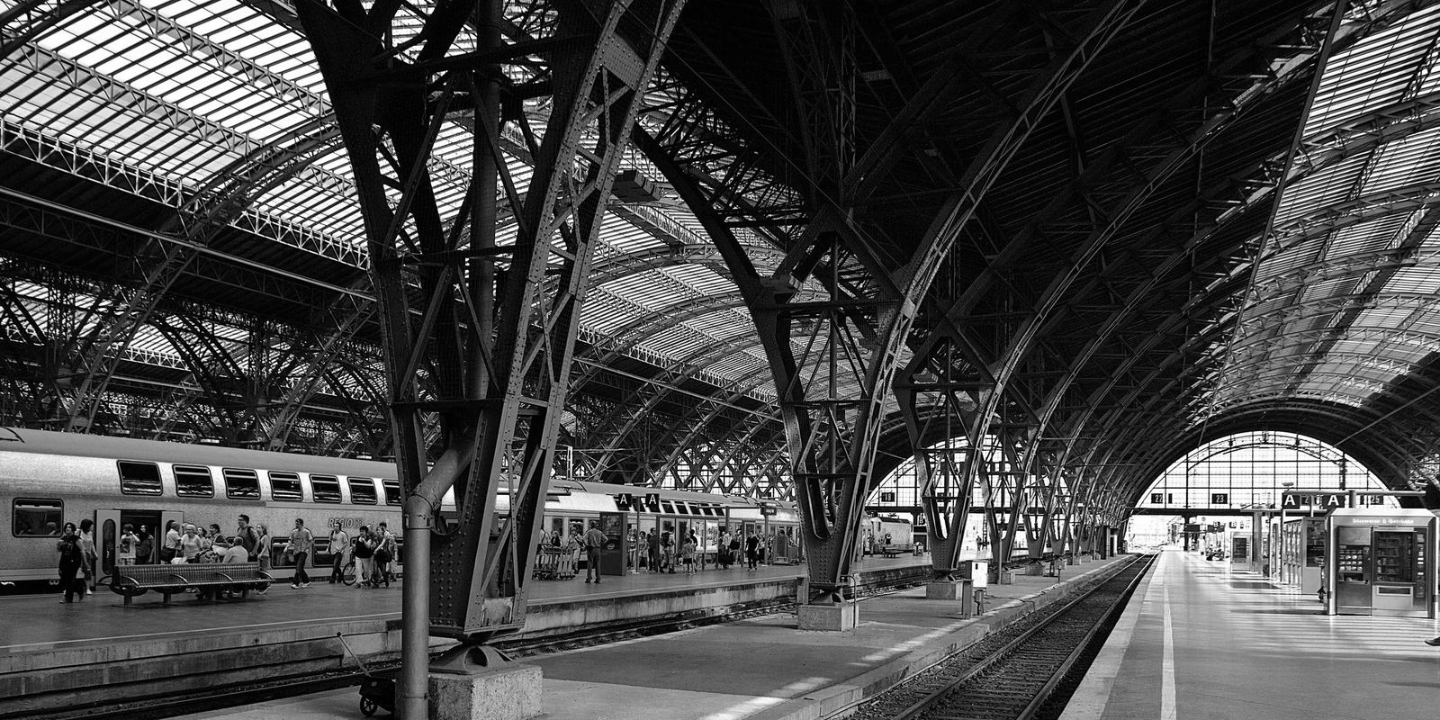
Captured within the sprawling expanse of Leipzig station, this photograph highlights the architectural grandeur of Europe’s largest terminus. The photographer masterfully frames the massive steel and glass structure, emphasizing the filigree quality of the ironwork against the midday sun. By focusing on the interplay between the industrial scale of the station and the delicate, elongated shadows cast across the platforms, the image transforms a functional transit hub into a breathtaking 'cathedral for the railway.' This award-worthy composition succeeds through its precise technical execution and its ability to elevate a common urban space into a moment of serene, structural beauty.
Wilfried Claus
Born in Cologne in 1947, Wilfried Claus transitioned to a dedicated photographic career following his retirement from a long tenure as a teacher and headmaster in 2009. He has since established a professional studio, focusing primarily on portraiture while expanding his portfolio to include architectural documentation and theatre photography. His work often reflects his deep engagement with his local community, including his involvement in transforming an old factory into a vibrant theatre and exhibition space. Based in Pulheim, Claus continues to refine his craft through diverse projects that capture both human character and structural history.
Resonance Score Breakdown
Transparency Note: The resonance score (7.0/20) is calculated based on social engagement metrics collected before the award announcement.
Expert Photography Reviews · 4
The Architecture of Transit
We often mistake transition for a void. We view the hallway, the platform, or the waiting room as mere containers for the journey, places to be endured while we wait for the real life to begin elsewhere. Yet, there is a profound weight to these spaces.
Read the reflection →The Echo of Departures
It is 3:15 am, and the house is holding its breath. In the dark, the distance between where we are and where we want to be feels like a physical weight.
Read the reflection →Reviews & Comments
Share your thoughts about this award-winning photograph. Your reviews contribute to the community engagement score.
It’s refreshing to see light behave so predictably. Up here, the air doesn’t steal the red spectrum or scatter particles into a muddy haze. The ironwork’s clarity is startling; I’m used to fighting the refractive index of water just to keep a subject sharp. Those elongated shadows across the platforms are gorgeous, though I find myself wishing for a bit of bioluminescence to break the industrial stillness. It’s a clean, honest geometry I rarely get to see.
Leipzig’s ironwork echoes the industrial romanticism of early Moholy-Nagy, yet the SIGMA’s sensor renders these shadows with a clinical precision that feels entirely contemporary. It’s a delicate balance; the filigree steel recalls the structural obsession of the New Objectivity movement, but the light here is softer, almost reverent. I’ve spent decades staring at train sheds, but the way these elongated shadows slice across the platform actually made me catch my breath. It’s a rare, quiet triumph.
Leipzig’s iron bones feel cold here. Claus captures the grandeur, sure, but he strips away the transit hub’s true pulse. Where are the people? By erasing the commuters, he turns a public space into a sterile monument. It’s technically sharp, yet it feels like a ghost town. I’m left wondering: why are we so obsessed with architecture that excludes the human experience? Does a cathedral mean anything if nobody is allowed to pray inside?
1/125sec at f/5, 17mm. A standard wide-angle choice for a cavernous space. The Sigma SD1 sensor handles the dynamic range of the Leipzig glass roof well, but f/5 is a compromise. It’s not sharp enough at the corners to justify the diffraction trade-off. I’m actually annoyed by the slight softness in the ironwork. It’s a functional capture, but it doesn’t push the glass to its limit. It’s technically safe, and that’s a shame.