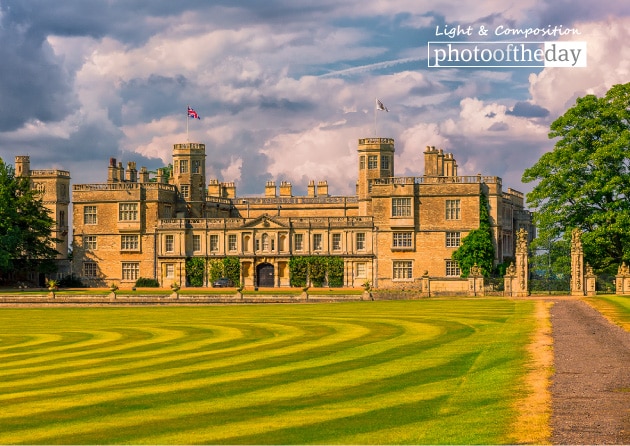
Castle Ashby by Dariusz Stec
Captured in July 2016, this photograph of Castle Ashby highlights the historic grandeur of the Northamptonshire estate. The image serves as a study of the architectural heritage that defines this civil parish, once established to support the Marquess of Northampton’s seat. By focusing on the interplay between the estate's storied past and the natural light of a summer afternoon, the photographer emphasizes the enduring elegance of the village. The composition is award-worthy for its ability to transform a traditional landscape into a narrative of historical significance, showcasing a keen eye for structural detail and the atmospheric essence of rural England.
Dariusz Stec
Based in Northampton, United Kingdom, Dariusz Stec is a dedicated portrait and documentary photographer with a lifelong passion for the craft that began with a Smena-8m camera in 1985. His artistic journey has evolved from early darkroom experimentation to a sophisticated focus on capturing the soul of his subjects and the decisive moments of candid events. Alongside his son, Adam Stec, he operates Stec Studios, where they strive to blend technical mastery with an intuitive approach to portraiture and fashion, consistently seeking to reveal the deeper narratives behind every frame.
Resonance Score Breakdown
Transparency Note: The resonance score (12.0/20) is calculated based on social engagement metrics collected before the award announcement.
Expert Photography Reviews · 5
The Weight of Stone
I remember sitting on a low stone wall in a village near Northampton, watching an elderly man struggle to open a heavy iron gate. He didn't rush.
Read the reflection →The Weight of Time
Stone does not speak, yet it carries the memory of every hand that shaped it. We often walk past walls and arches as if they are merely scenery, forgetting that they are witnesses to the slow turning of seasons and the quiet departure of generations.
Read the reflection →Reviews & Comments
Share your thoughts about this award-winning photograph. Your reviews contribute to the community engagement score.

The light hits the stone like a slow pan across a silent set. It’s a locked-off shot, steady and heavy with history. I’m struck by how the shadows anchor the frame; they’re the silence between lines of dialogue. Stec didn’t rush the exposure. He let the afternoon sun do the blocking, creating a rhythm that feels eternal. It’s the frame the editor keeps because it’s already finished. I’d watch this scene for hours.
The stone of Castle Ashby holds a heavy, ancient silence. He stood there in the long, golden afternoon, waiting for the shadows to stretch just enough to reveal the weight of the masonry. It’s a quiet, patient study. I’ve felt that same stillness in Northamptonshire, where the air seems to thicken with history. Looking at how the light clings to those carved edges, I can’t help but feel a sudden, sharp ache for the past.
Castle Ashby’s stone facade demands a sense of weight, yet here the light flattens the masonry, stripping away the tactile resistance of the grit. It’s a clean composition, but it misses the threshold—that vital transition from the manicured lawn into the cool, dark interior. I’m left wanting the shadow to reveal the depth of the fenestration. It’s pretty, sure, but it doesn’t capture the cold, heavy reality of living within those thick, historic walls.
The geometry of Castle Ashby’s facade dictates the frame’s internal rhythm. Vertical stone mullions anchor the composition, creating a rigid grid that refuses to buckle under the soft summer light. It’s a disciplined exercise in spatial tension. The negative space above the roofline provides the necessary relief, preventing the architecture from suffocating the viewer. I’ve rarely seen such precise alignment. It doesn’t rely on sentiment; it relies on the cold, hard logic of the frame.
f/8 at 1/250s, ISO 100, 24mm. A predictable choice for architectural documentation. The aperture provides sufficient depth to render the stonework with clinical precision, yet it lacks the nuance required to separate the facade from the sky. It’s technically competent, sure, but it’s safe. I’ve seen this exact light a thousand times in Northampton. It doesn’t challenge the architecture; it just records it. I find the lack of risk here genuinely exhausting.