Before by Evdokiya Witwicki
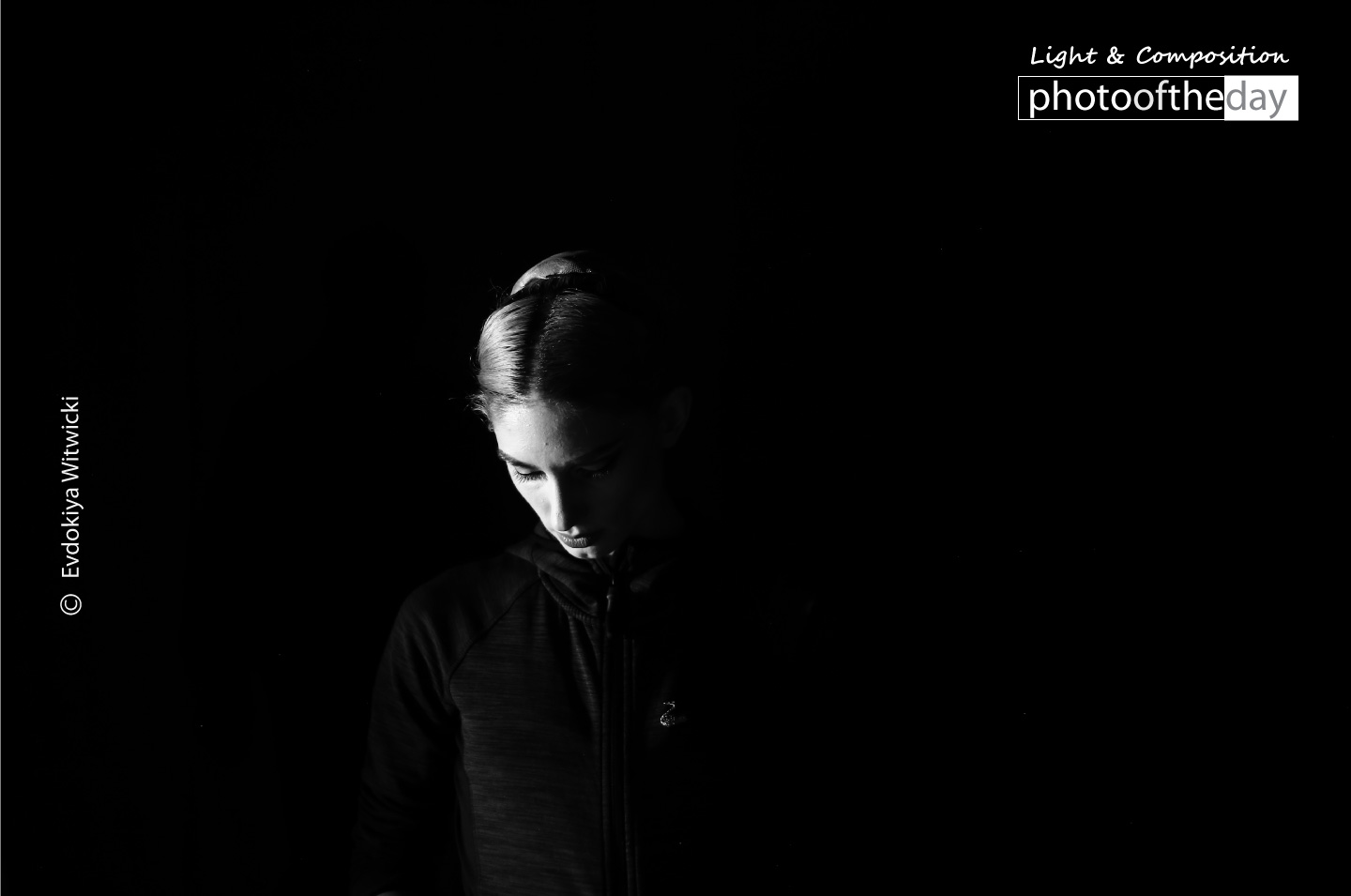
Captured in Moscow on February 21, 2020, this evocative portrait documents a quiet moment of preparation during a rehearsal for 'The Swan Lake.' The photographer frames soloist Elizaveta Taranda as she pauses beneath the glow of a projector, her attention momentarily captured by her phone. This image is award-worthy for its masterful balance of stillness and anticipation; the photographer captures a rare, intimate intersection of professional focus and personal solitude, transforming a routine backstage break into a profound study of human concentration and artistic dedication.
Evdokiya Witwicki
Born in Moscow 35 years ago, Evdokiya Witwicki balances a multifaceted career as both a professional photographer and an art educator within local schools. Her diverse portfolio reflects a deep appreciation for the natural world and the human condition, ranging from serene landscapes of mountains and seas to poignant, emotional portraiture and reportage. Driven by a passion for travel and discovery, she brings a sensitive, observant eye to her work, capturing the quiet beauty found in everything from ancient gardens to the fleeting expressions of her subjects.
Resonance Score Breakdown
Transparency Note: The resonance score (10.0/20) is calculated based on social engagement metrics collected before the award announcement.
Expert Photography Reviews · 4
The Quiet Before the Bloom
There is a sacred weight to the moments that precede a beginning. We often celebrate the crescendo, the final movement, or the brilliant display of light, but the true depth of a life is found in the quiet preparation.
Read the reflection →The Weight of the Interval
In the study of physics, we are taught that energy is never truly lost; it merely shifts its form, moving from the kinetic rush of motion into the quiet potential of rest. We spend our lives obsessed with the performance, the grand arc of the leap, or the finality of the bow.
Read the reflection →Reviews & Comments
Share your thoughts about this award-winning photograph. Your reviews contribute to the community engagement score.
The vertical axis of the dancer’s spine bisects the frame, creating a perfect tension against the horizontal sweep of the stage lights. It’s a 1:2 ratio of shadow to illumination that grounds the composition. The phone’s glow acts as a secondary focal point, a precise geometric anchor in the negative quadrant. I’m genuinely moved by how the diagonal of her arm resolves the spatial equation. It’s a beautifully solved problem of light and form.
Degas’s dancers were always caught in the frantic, sweaty labor of the wings, but Witwicki finds a different stillness. The projector’s harsh, artificial glow against Taranda’s skin recalls the stark chiaroscuro of early film noir, yet it’s the blue light of the phone that anchors this in our century. It’s a haunting, quiet collision of eras. I’ve spent decades looking at backstage portraits, but this sudden, intimate isolation genuinely stopped me in my tracks. It’s brilliant.
The dancer’s neck is angled, her gaze fixed on the screen. It’s a moment of stillness, but I’m looking for the tension in her trapezius that signals the impending exertion of the stage. She’s resting, yet the potential energy is coiled. It’s not the explosive peak of a jump, but it’s the quiet, physiological calm before the storm. I’ve felt that exact silence in the locker room. It’s the right frame. It’s perfect.
The theater’s backstage is a brutal datum of industrial steel and shadow, yet here, the light doesn’t just illuminate; it carves. That harsh projector beam hitting the dancer’s frame creates a threshold between the mundane phone screen and the impending performance. It’s a rare, honest capture of spatial tension. I’m struck by how the void behind her feels heavy with history. It’s not just a portrait; it’s the architecture of anticipation itself, perfectly rendered in cold light.