An Unnamed Peak by Dipanjan Mitra
Captured in the serene wilderness of Himachal Pradesh, this photograph depicts an unnamed peak bathed in the soft, golden light of the moments preceding sunset. The photographer utilized a telephoto lens to compress the landscape, emphasizing the rugged textures and imposing scale of the mountain against the fading sky. By carefully balancing the aperture and shutter speed, the image achieves remarkable clarity and depth, highlighting the dramatic interplay of light and shadow across the rock face. This composition stands out for its quiet majesty, effectively conveying the profound stillness and untouched beauty of the high-altitude Indian terrain.
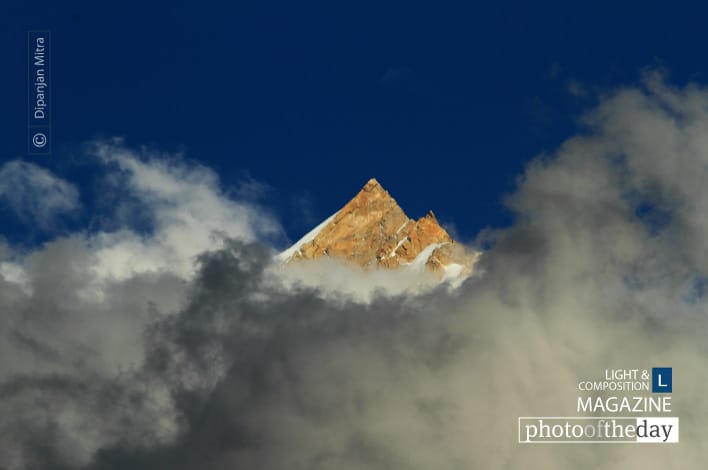
Dipanjan Mitra
Based in Calcutta, India, Dipanjan Mitra is a dedicated landscape photographer who balances his professional career in software engineering with a deep-seated passion for exploring the diverse Indian terrain. Since beginning his photographic journey in 2006, he has evolved from a casual enthusiast to a skilled practitioner, constantly refining his technical mastery of light and composition. His work is driven by an enduring fascination with the natural world, reflecting a commitment to documenting the beauty of remote landscapes through a lens of continuous discovery.
Resonance Score Breakdown
Transparency Note: The resonance score (12.9/20) is calculated based on social engagement metrics collected before the award announcement.
Expert Photography Reviews · 6
The Weight of Silence
In the high altitudes of the world, the air thins until it feels like a secret held between the earth and the sky. There is a specific kind of silence found only where the trees stop growing and the stone takes over.
Read the reflection →The Weight of Silence
There is a particular kind of patience found only in the high places, where the air grows thin and the world below falls into a deep, blue slumber. Mountains do not hurry.
Read the reflection →Reviews & Comments
Share your thoughts about this award-winning photograph. Your reviews contribute to the community engagement score.
1/320sec at f/11, 300mm, ISO 100. It’s a rigid, calculated choice. The 300mm compression flattens the peak, forcing the rock’s texture into a sharp, singular plane. Stopping down to f/11 was necessary to maintain that edge-to-edge sharpness across the frame. It’s technically sound, though I’ve always found this level of clinical precision slightly exhausting. Still, the math holds up. The exposure is dead on. It’s a correct execution of a difficult, high-altitude technical problem.
Before the eye identifies the jagged rock, something in the chest tightens. It’s the compression of that telephoto lens, forcing the mountain into a claustrophobic intimacy. I feel a sudden, sharp chill—a phantom drop in temperature. When I return to this peak a year later, the golden light doesn’t feel warm; it feels like a fading memory of safety. It’s a quiet, lonely ache that stays with me long after I’ve walked away.
That amber light, reminiscent of Turner’s late, fevered horizons, clings to the crags with a desperate, golden warmth that I find utterly intoxicating. It’s a chromatic dialogue between the cold, bruised violet of the shadows and the sun’s dying embers, a friction that makes the mountain’s granite skin pulse with life. One feels the air thinning, the silence deepening, as the palette shifts from ochre to the hollow, aching blue of high-altitude twilight.
The mountain doesn’t invite us; it repels. Mitra’s compression of the Himachal peak forces a confrontation with the rock’s indifferent, jagged skin. I’m unsettled by how the light clings to the ridges, desperate and thin, while the deep, encroaching shadows swallow the valley’s history. It’s a cold, existential silence. When I look at those dark, unyielding crevices, I don’t see scenery. I see the heavy, suffocating weight of time itself, waiting to erase us all.
The mountain doesn’t ask for attention. It simply exists. The compression of the lens pulls the rock forward, yet the sky recedes. It’s a heavy, cold silence. I’ve stood in places like this, where breath catches in the throat. Nothing here is accidental. The empty corner is not empty. It’s the weight of the air between the summit and the lens. I find myself holding my breath. It’s enough. Just the stone. And the quiet.
Most mountain shots are just postcards, but this one hits differently. By using a 300mm lens to flatten the Himachal peaks, Mitra forces us to confront the rock’s texture rather than just the scale. It’s the jagged, unforgiving light on the summit that makes me stop and breathe. I’ve seen thousands of landscapes, but this clarity makes the peak feel like a permanent monument. It’s a rare piece that’ll still command silence thirty years from now.