Alone by Subhashish Nag Choudhury
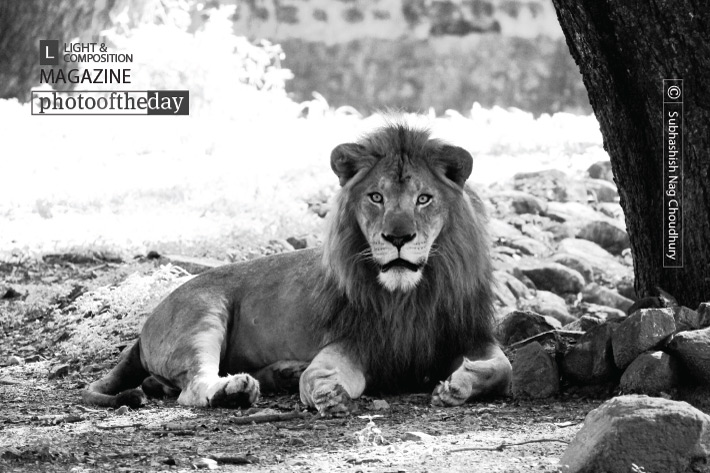
Captured at the Nandankanan Zoological Park in Bhubaneswar, this poignant wildlife portrait explores the isolation of a captive animal. Using a 250mm focal length, the photographer isolates the subject, emphasizing a sense of profound loneliness that invites the viewer to reflect on the struggles of life within a confined space. The image is award-worthy for its empathetic narrative and technical precision, successfully translating the subject's perceived emotional state into a powerful visual commentary on the ethics of captivity and the silent, heavy reality of those living behind bars.
Subhashish Nag Choudhury
Based in Kolkata, India, Subhashish Nag Choudhury balances a professional career in information technology with a deep-seated passion for photography. He views the camera as a vital tool for artistic expression, constantly seeking to capture the beauty of nature, wildlife, and landscapes through his unique perspective. Driven by a desire to travel the world, he frequently experiments with diverse photographic styles, consistently striving to document the interesting moments and scenes he encounters throughout his global explorations.
Resonance Score Breakdown
Transparency Note: The resonance score (12.6/20) is calculated based on social engagement metrics collected before the award announcement.
Expert Photography Reviews · 7
The Weight of Silence
I spent this morning trying to fix a broken latch on my back gate. It was a simple task, or so I thought, but the metal was stubborn and rusted shut.
Read the reflection →The Weight of Quiet
There is a particular kind of stillness that does not come from peace, but from the long endurance of waiting. We often mistake silence for an absence of sound, yet there is a heavy, resonant quality to the quiet that gathers in the corners of a life lived within boundaries.
Read the reflection →Reviews & Comments
Share your thoughts about this award-winning photograph. Your reviews contribute to the community engagement score.
Before the eye identifies the animal, a sudden stillness settles in the chest. It’s a heavy, rhythmic quiet. The shallow depth of field forces a claustrophobic intimacy; I feel the creature’s gaze pressing against my own skin. When I return to this, I don’t see a zoo anymore. I see the exhaustion of a soul waiting for a horizon that never arrives. It’s haunting. I’ve caught myself holding my breath, just like them.
The frame holds a heavy silence. A single creature, caught in the blur of a cage. It’s the space between the bars that hurts. I’ve spent minutes staring at the grey void behind the subject. It doesn’t offer comfort. It offers only the weight of absence. Nothing here is accidental. The empty corner is not empty. It’s a hollow, aching room. I feel a sudden, sharp coldness in my chest. It’s quiet. Too quiet.
Of the thousands of wildlife portraits I’ve reviewed, most rely on the animal’s ferocity. This one succeeds because it captures the crushing weight of stillness. The tight 250mm crop forces us into the subject’s private space, turning the enclosure’s blur into a suffocating wall. It’s haunting. I’ve looked at this for years, and it still makes my chest ache. It’s not just a technical capture; it’s a permanent record of a soul waiting for an exit.
We look into these eyes and we don’t see a beast; we see a prisoner. Subhashish didn’t just point a lens; he sat with the weight of this creature’s silence. It’s a heavy, aching portrait that makes my own chest tighten. When we study the isolation framed in that 250mm reach, we realize the bars aren’t just iron—they’re a stolen life. I’ve rarely felt such profound, quiet grief captured in a single, lonely frame.
The frame’s geometry is compromised by the subject’s placement. It’s too centered, lacking the spatial tension required to justify the negative space. The bars create a rigid grid, yet the animal’s posture doesn’t align with these vertical lines. It’s a missed opportunity for true structural harmony. I’m honestly frustrated by the lack of geometric rigor here. The composition doesn’t hold the weight of the subject. It’s technically precise, but it’s visually static and ultimately unanchored.
At f/6.3, the 250mm focal length compresses the background, rendering the cage bars into soft, blurred lines that don’t distract from the subject’s eye. It’s a delicate balance; the diffraction limit hasn’t compromised the fine texture of the fur. I’m genuinely moved by how the lens resolves that singular, weary gaze. It’s a sharp, optical reminder that while we’ve captured the light perfectly, the animal’s isolation remains painfully, physically real. It’s hauntingly precise.
Shadow isn’t merely the absence of light here; it’s the cage itself. Choudhury’s lens forces us into the animal’s claustrophobic silence, where the darkness doesn’t just frame the subject—it consumes its agency. I’ve stared at those eyes for an hour, and it’s haunting how the deep, encroaching blacks swallow the creature whole. It’s a brutal, honest meditation on confinement. When I look at this, I don’t see wildlife; I see the weight of a stolen existence.