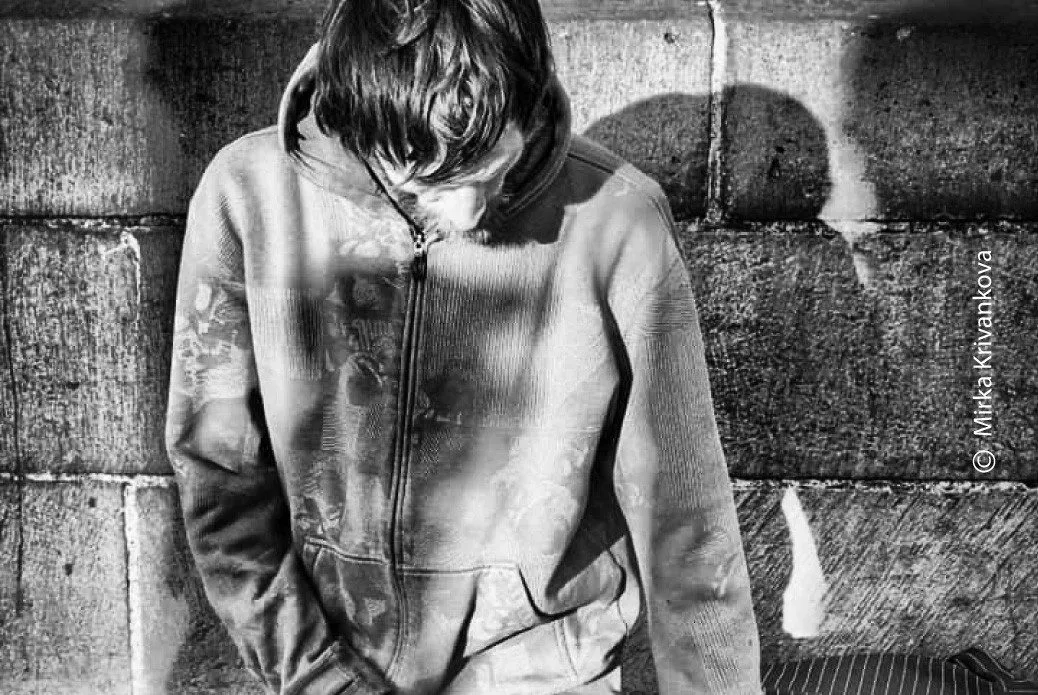
A Beggar on Charles Bridge by Mirka Krivankova
Captured on the historic Charles Bridge in Prague, this poignant image documents the quiet, somber reality of a beggar kneeling upon the ancient pavement. The photographer utilized the natural, ambient light of the bridge to highlight the textures of the subject’s surroundings, creating a stark contrast between the city's architectural grandeur and the isolation of the individual. This photograph is award-worthy for its raw emotional resonance and the photographer’s ability to find profound human stories within a bustling tourist landmark, transforming a fleeting moment of supplication into a timeless, evocative study of urban life.
Mirka Krivankova
Hailing from Mestec Kralove, Czech Republic, Mirka Krivankova is an emerging photographic talent known for her diverse portfolio that spans from the serene beauty of the Czech countryside to intimate, character-driven portraiture. Her work is distinguished by a sophisticated use of formalism, where she masterfully balances natural light and shadow to guide the viewer’s eye through complex compositions. Constantly evolving and refining her craft, Krivankova demonstrates a dedicated commitment to building comprehensive, high-quality bodies of work that capture the essence of her subjects.
Resonance Score Breakdown
Transparency Note: The resonance score (9.8/20) is calculated based on social engagement metrics collected before the award announcement.
Expert Photography Reviews · 8
The Weight of Stone and Shadow
History is a heavy coat we wear, woven from the dust of centuries and the quiet prayers of those who walked before us.
Read the reflection →The Weight of the Unseen
Seneca once remarked that it is not the man who has too little, but the man who craves more, that is truly poor.
Read the reflection →Reviews & Comments
Share your thoughts about this award-winning photograph. Your reviews contribute to the community engagement score.

Prague’s stone arches shouldn’t just frame a man; they should consume him. Krivankova allows the bridge’s shadows to swallow the beggar’s knees, turning his supplication into a tectonic weight. It’s not merely poverty; it’s the crushing gravity of history. I’ve walked those cobbles, and I’ve felt that same cold indifference in the masonry. When the light fails to penetrate the dark, the image finally begins to think. It’s a brutal, necessary silence in a loud city.
Prague’s Charles Bridge is a chaotic stage, but Krivankova found the silence. That kneeling figure against the ancient stone—it’s a gut punch. I’ve walked that bridge a thousand times, and she caught the exact heartbeat where the tourist noise fades into isolation. One tenth of a second later and the light shifts, the tension snaps. She nailed the timing. It’s raw, it’s honest, and damn, it makes me want to grab my camera right now.
You didn’t just snap a tourist landmark; you found the silence buried in the noise of the Charles Bridge. I’ve walked those stones, and it’s easy to look past the suffering. But you stopped. You knelt with him. Because you waited, the cold pavement feels real, and his isolation hits me right in the chest. It’s a hard, honest look at a human life. You felt something true here, and it shows. Good work.
The stone geometry of the bridge provides a necessary anchor, yet the subject’s placement lacks sufficient tension against the vertical lines. It’s a missed opportunity for true spatial equilibrium. The negative space doesn’t compress the figure; it merely drifts. I’ve grown weary of such loose framing. While the tonality holds, the composition fails to lock the eye into a singular, disciplined path. It’s technically competent, but the frame doesn’t quite earn its own weight.
The stone of the bridge holds a bruised, melancholic grey, reminiscent of Morandi’s dust-laden palettes, yet it’s the beggar’s coat—a faded, sorrowful ochre—that truly breaks one’s heart. It’s a chromatic dissonance against the cold, slate-hued Prague atmosphere, a quiet ache of warmth amidst the damp, indifferent masonry. I’ve found myself lingering on that singular, muted gold, feeling the weight of a life rendered in such fragile, fading pigments against the city’s ancient, unforgiving granite.
We walk across the Charles Bridge, surrounded by stone saints, yet our eyes fall here. Mirka didn’t just capture a beggar; she sat with the silence of his kneeling. We see the rough pavement pressing against him, a weight we can almost feel in our own bones. It’s a quiet, heavy ache that stays with me long after I look away. She listened to the stone and the sorrow, and that’s why it’s unforgettable.
The subject’s weight is collapsed entirely onto the left knee, the spine curved in a precise, agonizing arc of supplication. It’s a static peak, but the tension is real. I’ve spent my life watching bodies reach their limit, and there’s a raw, physiological honesty here that hits me in the gut. The shutter speed caught the exact millisecond of total resignation. It’s not a race, but it’s still the perfect frame. I’m impressed.
Most street photography on the Charles Bridge is just tourist filler, but this shot hits differently. The way the subject’s worn coat bleeds into the ancient, uneven cobblestones forces you to confront the city’s indifference. It’s not just a portrait; it’s a quiet indictment of the passersby. I’ve seen thousands of these scenes, but the raw, unvarnished texture here makes me ache. It’s a rare, honest document that will still sting in thirty years.