A Beautiful Sunset by Bahar Rismani
As the sun began to dip behind the rugged peaks, the photographer sought the reflective tranquility of the water to capture the fading light. Facing the rapidly encroaching darkness, she carefully composed the scene to emphasize the dramatic interplay between the golden horizon and the darkening landscape. This image is award-worthy for its masterful balance of light and shadow, showcasing a keen eye for atmospheric conditions and the ability to transform a fleeting moment into a timeless, evocative visual narrative that celebrates the natural beauty of the Iranian highlands.
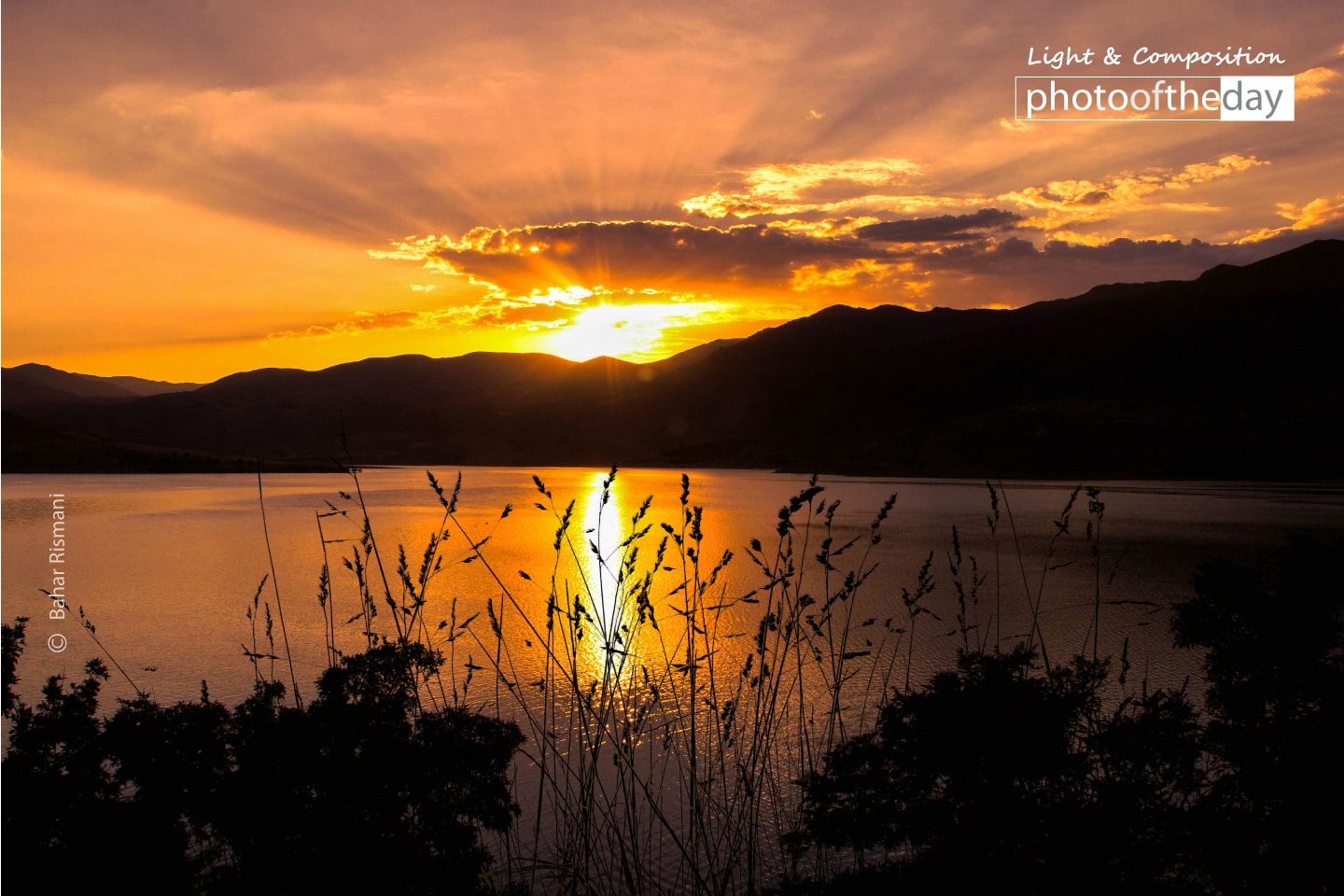
Exposure 1/100sec @ f/16 | ISO 100 | Focal Length 18mm
Bahar Rismani
Born in 1982 in the Kurdish city of Mahabad, Iran, Bahar Rismani is a dedicated photographer with a passion for preserving cultural heritage. Though she holds a bachelor’s degree in accounting, her true calling lies in documenting the lives and traditional attire of Kurdish women, a mission she has pursued for seven years. Through her evocative portraiture and travel photography, she works to safeguard ancient customs from fading into obscurity, blending artistic expression with a profound commitment to her community's history.
Resonance Score Breakdown
Transparency Note: The resonance score (11.2/20) is calculated based on social engagement metrics collected before the award announcement.
Expert Photography Reviews · 7
The Edge of the Commons
We often mistake the horizon for a boundary, a line where the world simply stops. But in the geography of human settlement, the horizon is where the known territory meets the wild, the place where we negotiate our relationship with the land that sustains us.
Read the reflection →The Hour When Shadows Lengthen
I often find myself standing at the edge of the Vltava, or perhaps it is the Seine, watching the day surrender its grip on the stone facades.
Read the reflection →Reviews & Comments
Share your thoughts about this award-winning photograph. Your reviews contribute to the community engagement score.
It’s a shame the jury obsessed over clarity here. By stopping down to f/16, the photographer surrendered the chance to let the light bleed or the water dissolve into abstraction. I’m genuinely frustrated by the missed opportunity to embrace the blur of the Iranian highlands. Why resolve every peak when the light is already dying? It’s far too safe. I’d have preferred a long exposure that pushed this beyond a postcard into something truly visceral.
The rugged peaks of Mahabad don’t just frame the scene; they dictate the mood. That golden light bleeding across the water feels like a quiet conversation between the earth and the dying day. I’m struck by how the stillness of the lake mirrors the vast, ancient silence of the mountains. It’s hauntingly beautiful. Without these jagged silhouettes, the light would lose its weight. The landscape isn’t a backdrop here—it’s the soul of the entire frame.
The light here doesn’t just fall; it lingers, heavy with the cooling air of the Iranian highlands. Bahar stood in the silence as the sun surrendered to the peaks, waiting for the water to mirror that final, golden pulse. It’s a quiet surrender. I’ve felt that same ache in my chest when the shadows lengthen, knowing the day is slipping away. She didn’t rush the shutter. She simply listened until the land finally spoke.
We look at these rugged peaks and we don’t just see a sunset; we hear the silence of the Iranian highlands. Bahar Rismani listened to the land before she clicked the shutter. The way the golden light clings to the water feels like a whispered secret between the earth and the sky. It’s haunting, really. I find myself wanting to sit by that shore, just to see what the mountains might tell me next.
1/100sec at f/16, ISO 100, 18mm. Stopping down to f/16 on a 60D sensor invites diffraction, yet the sharpness holds. It’s a calculated risk that pays off in depth. I’ve spent years fighting the diffraction limit, so seeing it handled with this level of restraint is actually refreshing. The wide focal length captures the scale of the highlands without distortion. It’s a technically sound argument for the landscape. The numbers don’t lie; this works.
The light in Mahabad is hitting those peaks, but I’m looking for the pulse. It’s a beautiful landscape, sure, but where’s the friction? Cartier-Bresson would’ve waited for a silhouette to break that water’s surface. It’s technically clean, but it’s too quiet for me. I need a human heartbeat, a sudden movement. One tenth of a second later and the shadow has moved, the frame has collapsed. It’s pretty, but it’s missing the street’s raw, unrepeatable chaos.
The golden light hits the Mahabad peaks, but I’m left cold. Why does this landscape feel so sanitized, so scrubbed of the human history etched into these highlands? It’s a pretty postcard, sure, but who is the intended audience for this silence? I’ve seen enough sunsets that ignore the weight of the ground they sit upon. Does the beauty here exist to distract us, or does it simply refuse to acknowledge the actual, messy world?