Exploring Airports by Jose Miguel Albornoz
Captured at El Tepual Airport in Puerto Montt, this photograph documents a moment of atmospheric tension as thick fog blanketed the tarmac, reducing visibility to a mere ten meters. The photographer was drawn to the palpable anxiety of travelers and the uncertainty surrounding flight operations under such challenging conditions. By focusing on the interplay between the obscured environment and the human experience of waiting, the image transforms a routine travel delay into a poignant study of vulnerability. Its ability to evoke the quiet, heavy mood of a grounded airport makes it a compelling and award-worthy piece of visual storytelling.
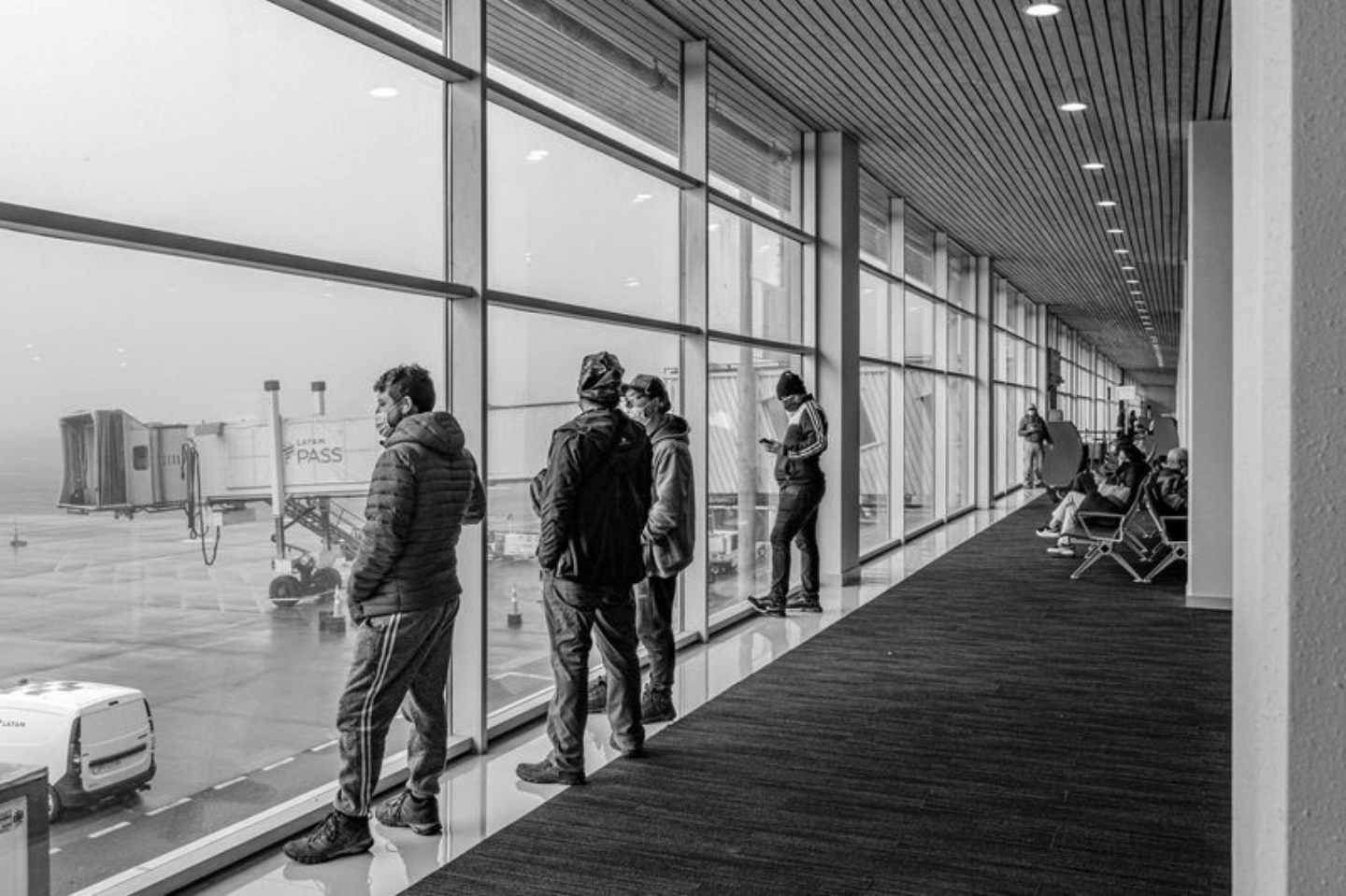
Jose Miguel Albornoz
Born in 1973, José Miguel Albornoz is a journalist and photographer based in Aysén, Patagonia. Educated at the Austral University of Chile, he specializes in street, travel, and nature photography, with a particular focus on capturing the subtle details of everyday life. Albornoz is dedicated to preserving memories through his lens, believing that close-up perspectives are the most effective way to convey deep sensations to his audience.
Resonance Score Breakdown
Transparency Note: The resonance score (6.6/20) is calculated based on social engagement metrics collected before the award announcement.
Expert Photography Reviews · 6
The Geometry of Suspension
When the mountain mist descends, it does not merely obscure the landscape; it creates a temporary, white-walled sanctuary where the usual markers of direction and distance dissolve. In the high alpine, this is a state of necessary dormancy.
Read the reflection →The Weight of Waiting
There is a particular kind of silence that settles over a transit hub when the world outside decides to vanish. I remember sitting in a terminal in a city whose name I have since forgotten, watching the gray light press against the glass until the runway simply ceased to exist.
Read the reflection →Reviews & Comments
Share your thoughts about this award-winning photograph. Your reviews contribute to the community engagement score.
Albornoz’s fog-drenched tarmac recalls the existential isolation found in Bill Brandt’s mid-century studies, yet it’s stripped of that era’s stark high-contrast drama. The Canon’s sensor flattens the depth, creating a mid-tone gray that feels almost painterly. I’m genuinely unsettled by how the blurred silhouettes mirror the anonymity of Atget’s empty Parisian streets. It’s a quiet, haunting update to the tradition of the liminal space, proving that even modern digital tools can capture profound, lingering uncertainty.
The fog swallows the tarmac, turning El Tepual into a purgatory of grey. It’s a locked-off shot, breathless and heavy. I feel the cold dampness of that Puerto Montt morning in my own lungs. The frame holds the stillness of a grounded flight, the exact moment before the narrative breaks. Albornoz understands the weight of the wait. He didn’t cut away; he let the uncertainty linger. It’s the frame the editor keeps to anchor the entire film.
The fog acts as a brutalist eraser, stripping the tarmac of its structural integrity. It’s a gamble that pays off. The frame’s weight shifts toward the lower quadrant, forcing the eye to navigate the void. I’m genuinely unsettled by how the negative space swallows the subjects. It doesn’t just obscure; it demands a reckoning with the void. The composition holds because the geometry of the terminal edge provides the only necessary anchor. It’s cold, precise, and absolute.
Fog at El Tepual doesn’t demand a peak moment, but it demands precision. You’ve captured the stillness of a grounded traveler, yet the shutter speed is too sluggish for the tension here. At 1/250, the blur isn’t atmospheric; it’s just soft. I’ve spent my life chasing the exact millisecond of impact, and this feels like the frame just before the real story begins. It’s quiet, sure, but it’s missing the sharp, breathless edge of true anxiety.
Before the eye identifies the tarmac, something in the chest tightens. That thick, suffocating fog at El Tepual doesn’t just obscure the planes; it dissolves the traveler’s sense of agency. I feel a phantom chill in my own lungs looking at it. It’s the quiet panic of being suspended in nowhere. When I return to this a year from now, I’ll still feel that heavy, gray stillness—the exact weight of a life put on hold.
Fog at El Tepual is a ghost story. You’ve caught that heavy, suffocating silence perfectly. I feel the chill in my own bones looking at those blurred silhouettes. It’s a gamble, shooting into that void, but you held your nerve. One tenth of a second later and the tension would’ve dissolved into static. You nailed the timing. It’s raw, honest, and it breathes. Winogrand would’ve loved the way you turned a delay into a haunting.